
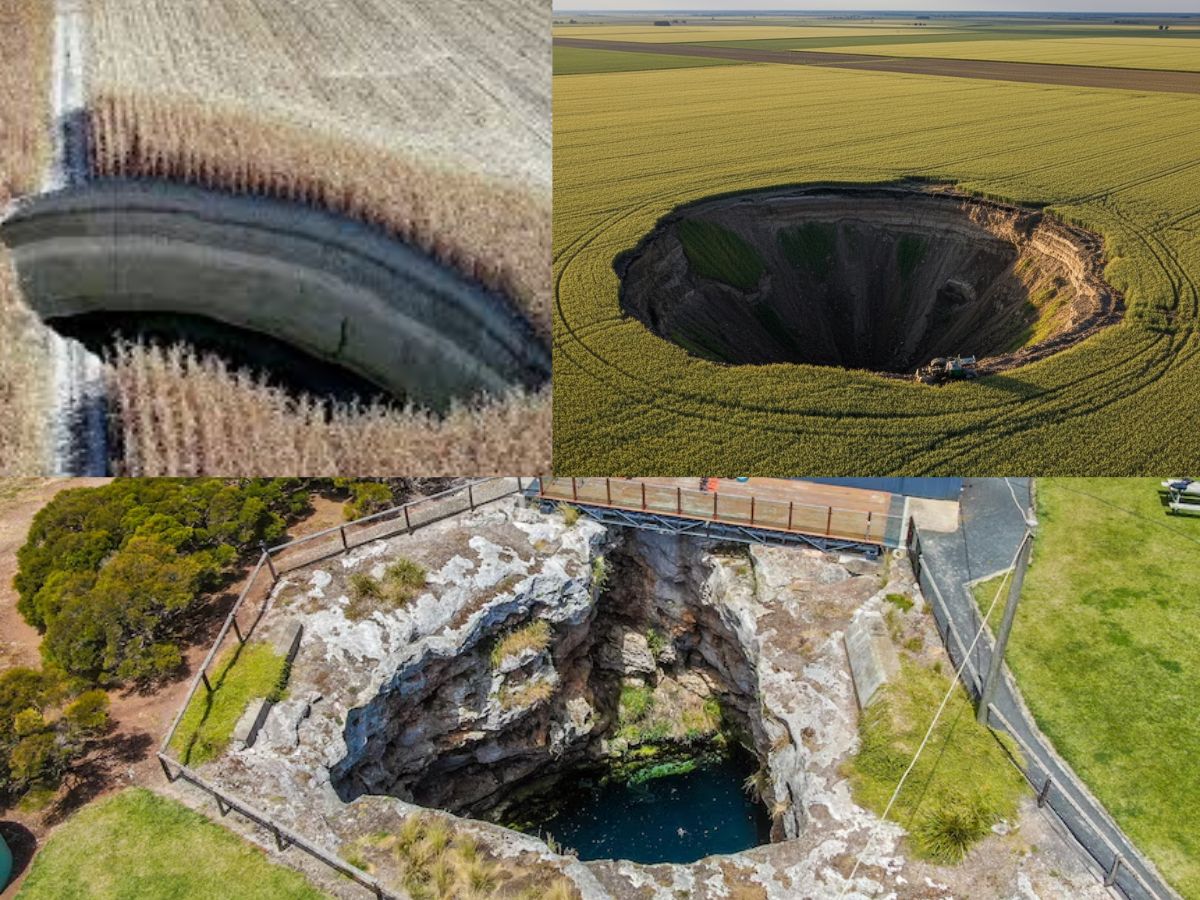
Central Turkey’s wheat fields are disappearing into the ground. New drone footage shows the Konya Plain covered with nearly 700 huge sinkholes, some over 100 feet wide and hundreds of feet deep. The problem is growing, with more than 20 new giant holes appearing in the Karapınar district in just the past year.
A recent analysis by Turkey’s Disaster and Emergency Management Authority confirms the scale of the crisis, identifying 684 sinkholes across the agricultural region. What began as a handful of incidents in the early 2000s has now become a relentless and expanding threat to farms, crops, and local communities.
What’s causing these monster sinkholes to form?
Geologists blame one main cause: the rapid loss of groundwater. The Konya Basin, an important farming area, is quickly running out of underground water, mostly because of heavy irrigation for water-hungry crops like sugar beet and corn. Decades of overuse, often using illegal wells, have lowered the water table by tens of meters.
This creates a hidden cavity underground. When the supporting groundwater vanishes, the soil and rock layers above can no longer hold their own weight. They suddenly collapse, creating the dramatic and dangerous sinkholes that are terrifying local farmers.
How is climate change making it worse?
The water crisis caused by humans is being intensified by drought. NASA observed that Turkey’s water reservoirs in 2021 were the lowest in 15 years. Farmers are compelled to pump more water for crops since there is less rain to replenish subterranean aquifers, which exacerbates the land collapse.
Also Read: Kyle Richards Reveals She Fell Hard in Secret Romance After Mauricio Umansky Split
What is the impact on people and the land?
The immediate threat is to life, livestock, and farmland. Farmers report the terror of seeing their crops vanish into the deep pits without warning. Beyond the sudden holes, a slower disaster is unfolding across a much wider area. Research from Konya Technical University’s Sinkhole Research Centre shows that by the end of 2021, a staggering 1,850 areas were experiencing land subsidence, or a gradual sinking of the earth’s surface. This widespread subsidence damages infrastructure and is a warning sign of potential future collapses.
What is being done to stop it?
Authorities recognize that controlling groundwater extraction is the only long-term solution. The focus is now on cutting down illegal well drilling and promoting better water practices among farmers. But reversing so many years of depletion is incredibly hard. Scientists continue tracking the sinking plain, knowing the collapse will continue while the water table declines.
FAQs
Q: How many sinkholes are there in Turkey’s Konya region?
A: There are 684 sinkholes in the Konya Plain, according to an official analysis, and over 20 sizable new ones have formed in the last year alone.
Q: Why are so many giant sinkholes appearing?
A: The main cause is excessive groundwater withdrawal for farming, which creates hollow pockets below the surface. Ongoing drought and climate change are greatly intensifying the problem.
Q: How big are these sinkholes?
A: They are massive. Many are over 100 feet (about 30 meters) wide and can be hundreds of feet deep.
Q: Is this a new problem?
A: The crisis accelerated in the early 2000s. Until the late 1990s, only a few sinkholes existed. Now, dozens form every year as groundwater levels continue to plummet.