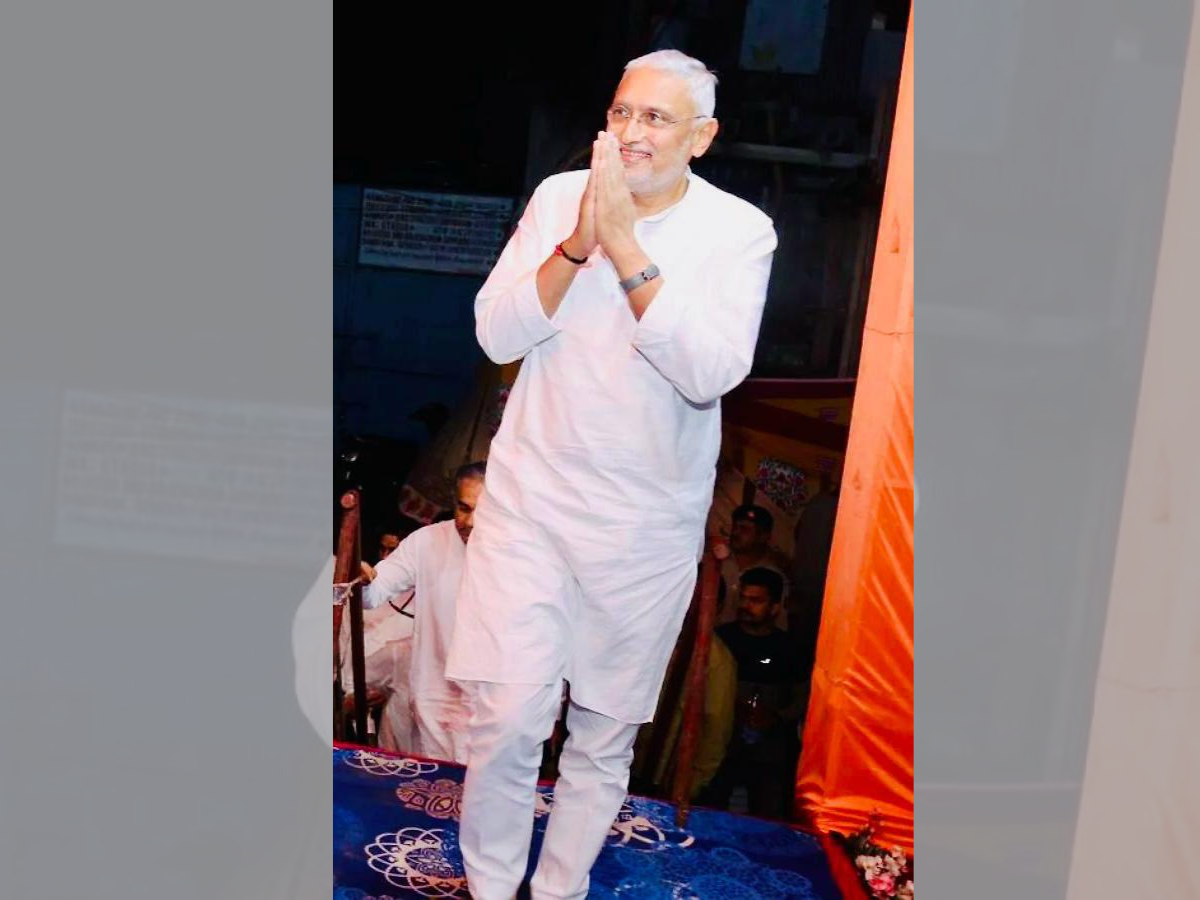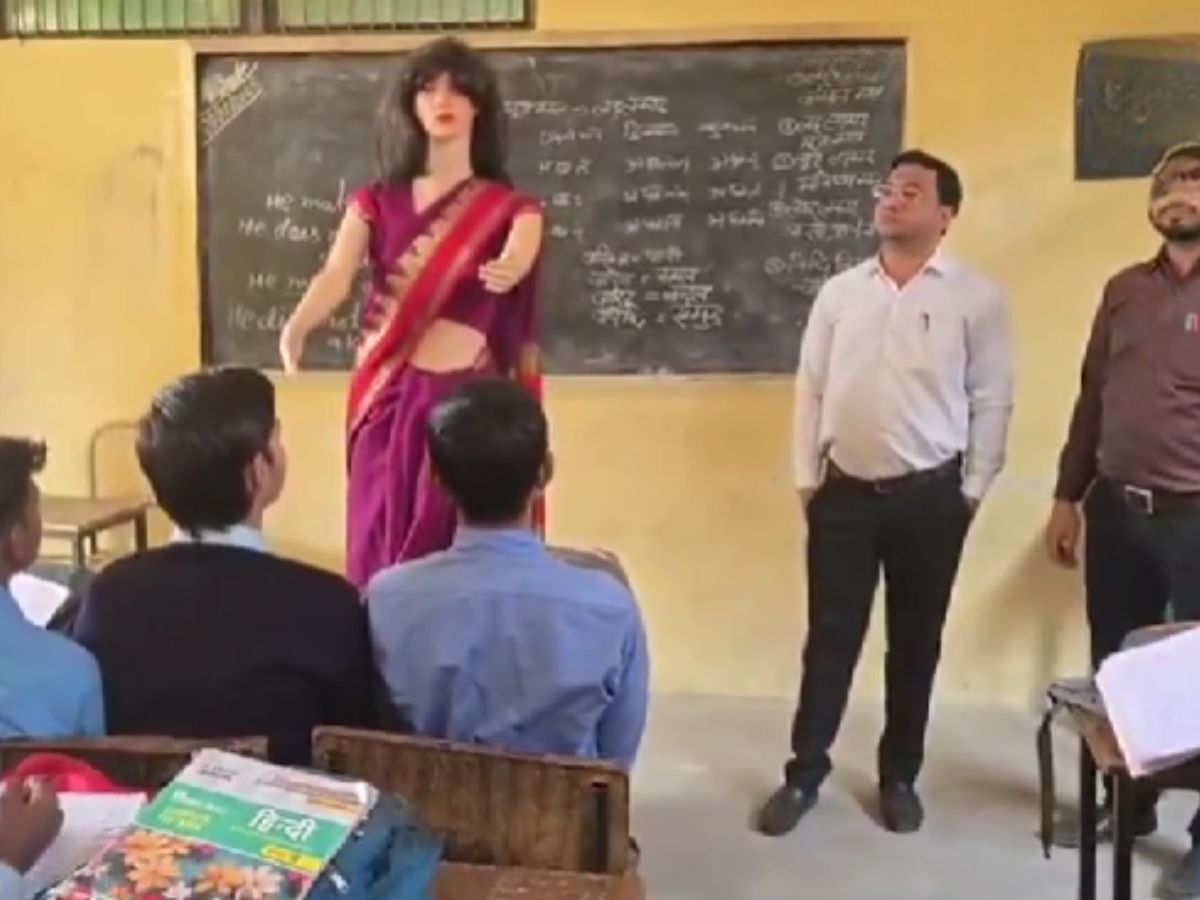
The future of educational technology is being rewritten, not in Silicon Valley, but right in the heartland of India. In a stunning display of localized innovation, 17-year-old Aditya Kumar from Bulandshahr, Uttar Pradesh, created an AI-powered robot teacher named Sophie for a mere ₹25,000.
This breakthrough says everything about the accessibility and affordability of AI development, especially in critical sectors such as education.
Sophie, a brainchild of a Class 12 student at Shiv Charan Inter College, can act as an extremely adept substitute teacher.
#WATCH | Bulandshahr, UP | A 17-year-old student from Shiv Charan Inter College, Aditya Kumar, has built an AI teacher robot named Sophie, equipped with an LLM chipset.
The robot says, “I am an AI teacher robot. My name is Sophie, and I was invented by Aditya. I teach at… pic.twitter.com/ArJYSsf39F
— ANI (@ANI) November 29, 2025
Fitted with an LLM chipset-the same core behind global AI leaders-Sophie can answer questions ranging from complex arithmetic to national history, showing her usefulness across different subjects.
The traditional barriers to AI-prohibitive costs, complex infrastructure, and specialized resources-are clearly falling. Aditya’s success underlines an important shift: AI is moving out of expensive corporate labs and into the hands of bright, resourceful individuals.
By optimizing existing LLM technology for inference on low-cost hardware, he has built a practical, in-classroom tool that acts as an excellent case study for “frugal innovation.”
Sophie Robot Starts School Duties
Sophie’s immediate integration into her own school is already serving day-to-day needs in terms of filling in for instructors and clearing student doubts.
Talking in Hindi and unable to write as of now, Aditya’s road map to add these functions promises an even more complete educational aid.
This robot teacher is more than a technological marvel. It’s a scalable model for better educational outcomes in under-resourced schools around the world. Rather than wait for top-down, multi-million-dollar government programs, bottom-up innovation like this provides immediate, cost-effective solutions.
Aditya’s invention proves that the power of AI is no longer dictated by the size of one’s budget but by resourcefulness and passion. As LLM technology miniaturizes and becomes more efficient, we can look forward to a rapid democratization of smart educational tools, transforming classrooms everywhere with affordable, locally developed, and highly effective robotic assistance.
Also Read: Randeep Hooda & Wife Lin Laishram Expect First Child After 2 Years of Marriage
What is LLM Chipset?
An LLM Chipset is basically a custom processor that allows for efficient running of Large Language Models. It performs AI functions like text generation, translation, and reasoning much faster than normal chips.
These chipsets are more power-efficient with higher performance for AI-driven applications.
Can AI Robot Made by 17-year-old Survive for Long?
It can survive long-term, but only if it’s built with durable hardware and maintained regularly. Of course, a 17-year-old is perfectly capable of developing a fine AI robot, but the lifetime totally depends on the quality of sensors, batteries, design, and effective software updates.
It would last for many years with proper care, upgrades, and checks regarding safety-just like any machine.