
On a sweltering summer day in 2022, wildlife photographer Sharvan Patel stood motionless beside a dry waterhole on the periphery of Rajasthan’s Tal Chappar Sanctuary. A herd of blackbucks lingered uncertainly around the shallow pit, their hooves sinking into dust. A mongoose briefly fluttered in, only to retreat when its nose hit the muddy trickle remaining at the bottom.
Sharvan lifted his camera, but the gravity of the moment was greater. “That day, while watching life wither for the absence of water, I swore to myself that I would restore water to wildlife in the desert,” he remembers.
What started with that promise would then become a movement of creating ponds all over Rajasthan’s arid landscape, converting barren expanses into oases where animals could drink, rest, and flourish.
A chance find
Sharvan was not always a conservationist. He first started off as a wildlife photographer, running after shots of raptors and deer along Rajasthan’s semi-arid expanses. One such photo trip to Tal Chappar turned everything around.
A bank manager and occasional wildlife buff friend of Sharvan had brought him along on a duty of auditing in the proximity of the sanctuary. As his friend was occupied checking the skies for birds of prey, Sharvan noticed something on the ground a newly constructed pond, referred to locally as a khaili.
Intrigued, he dropped to his knees and started to measure the pond’s length and breadth using his naked hands. Forest guards soon showed up. Sharvan showered them with queries, and they told him that the pond was an experiment, made to supply water to animals in the driest of months.
Initially, animals avoided it. But within weeks, it was the hub: hares stopped to drink, mongooses rushed in, peafowl pranced along its rim, and even shy blackbucks started visiting.
Sharvan was intrigued. He went back to his village of Melwa with the pictures seared into his brain. To him, this patch of water revealed something more than any photograph ever could.
The first pond that changed everything
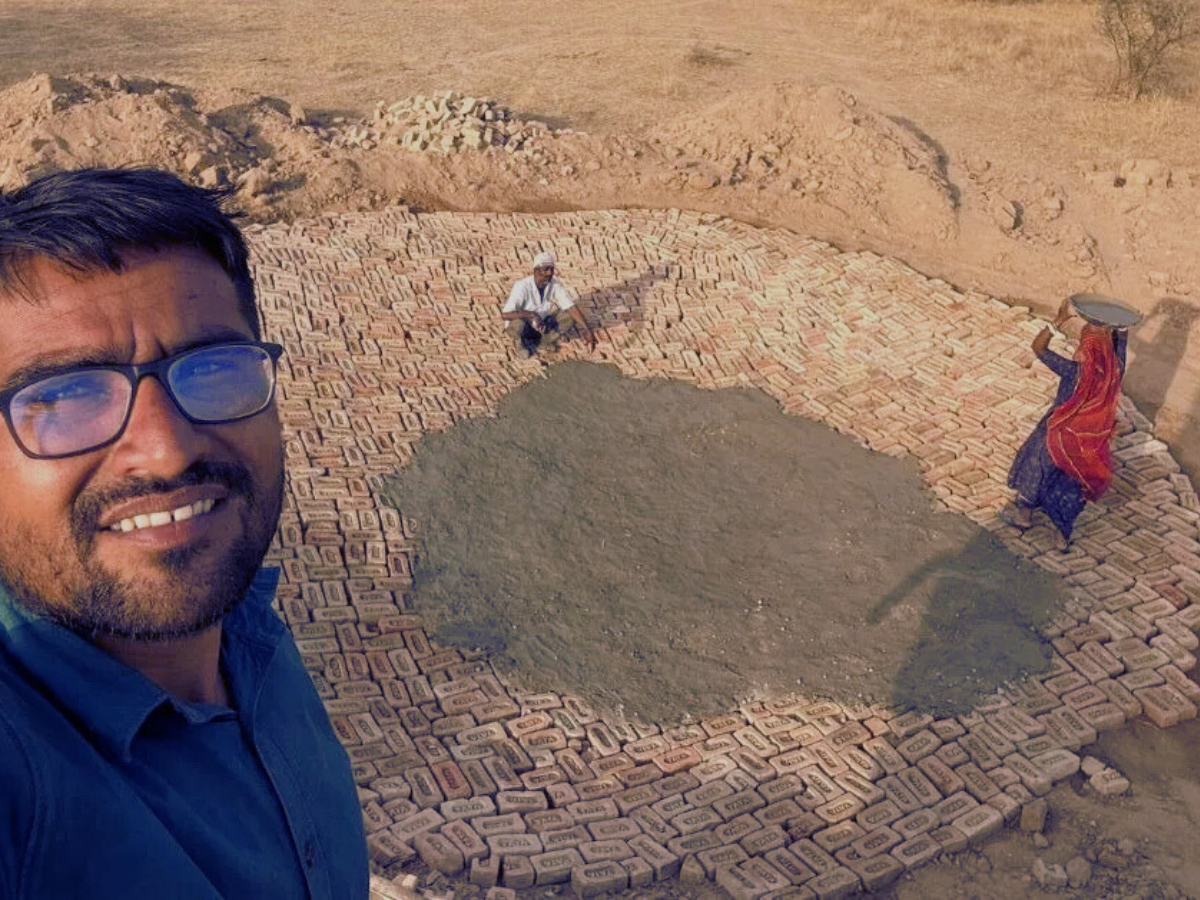
During the following summer, Sharvan chose to construct a pond himself using a small group of his friends. It was small in area, only half a foot deep, and patterned after the typical village ponds he had seen growing up. They employed soil available locally, mixed cement to prevent seepage, and constructed an embankment to collect the rainwater.
Nothing happened at first. Barely any visits; days passed by. The pond remained stagnant, nearly forgotten. Then one evening, Sharvan’s camera traps caught a miracle: blackbucks curving elegantly to drink, birds of prey flying overhead, and nocturnal mongooses padding in under the night cover.
Thrilled, Sharvan recorded the process and uploaded it on the internet. The clip went viral and triggered a flood of messages. Villagers, influencers, and wildlife enthusiasts asked him to recreate the initiative in their regions. “Do it here,” they implored. “The animals are parched.”
Cost of keeping ponds alive
Construction of ponds was just half the task. Maintaining them full during Rajasthan’s hot summers was even more challenging.
Temperatures shot up between March and July, and natural water disappeared. The lone lifeline was tankers. In April, says Sharvan, a tanker used to cost approximately Rs 1,000. By June, it reached Rs 2,000, with the closest government reservoir 20–25 kilometers away. It was punishing and costly in terms of logistics, but without these tankers, the ponds would empty and the animals would be left with nothing once again.
Also Read: Jwala Gutta’s Viral Gesture: Donating Breast Milk Daily for Newborns
Smallest contributions, big changes
In order to keep the ponds alive, Sharvan and his team initiated a small yet strong campaign: asking individuals to donate as little as Re 1 per day. The concept, proposed by his friend Yashovardhan Sharma, was that whenever people have an economic stake, they also have an emotional stake.
They formed a WhatsApp group named ‘One Rupee Per Day for Wildlife Conservation.’ Soon enough, support started trickling in, and the concept turned into a full-fledged movement. Almost 1,000 people joined up, giving Rs 365 a year each.
“These small but regular donations paid for habitat restoration, conservation of threatened species, and even farm practices in the vicinity,” says Yashovardhan, secretary of Rajasthan’s environment cell of INTACH (Indian National Trust for Art and Cultural Heritage). “This has helped us to mobilize funds for plantation activities, refilling watering holes, and the eradication of invasive species.”
Also Read: Adiyogi: The 112-Foot Statue That Holds the Secret to Inner Transformation Goes Viral