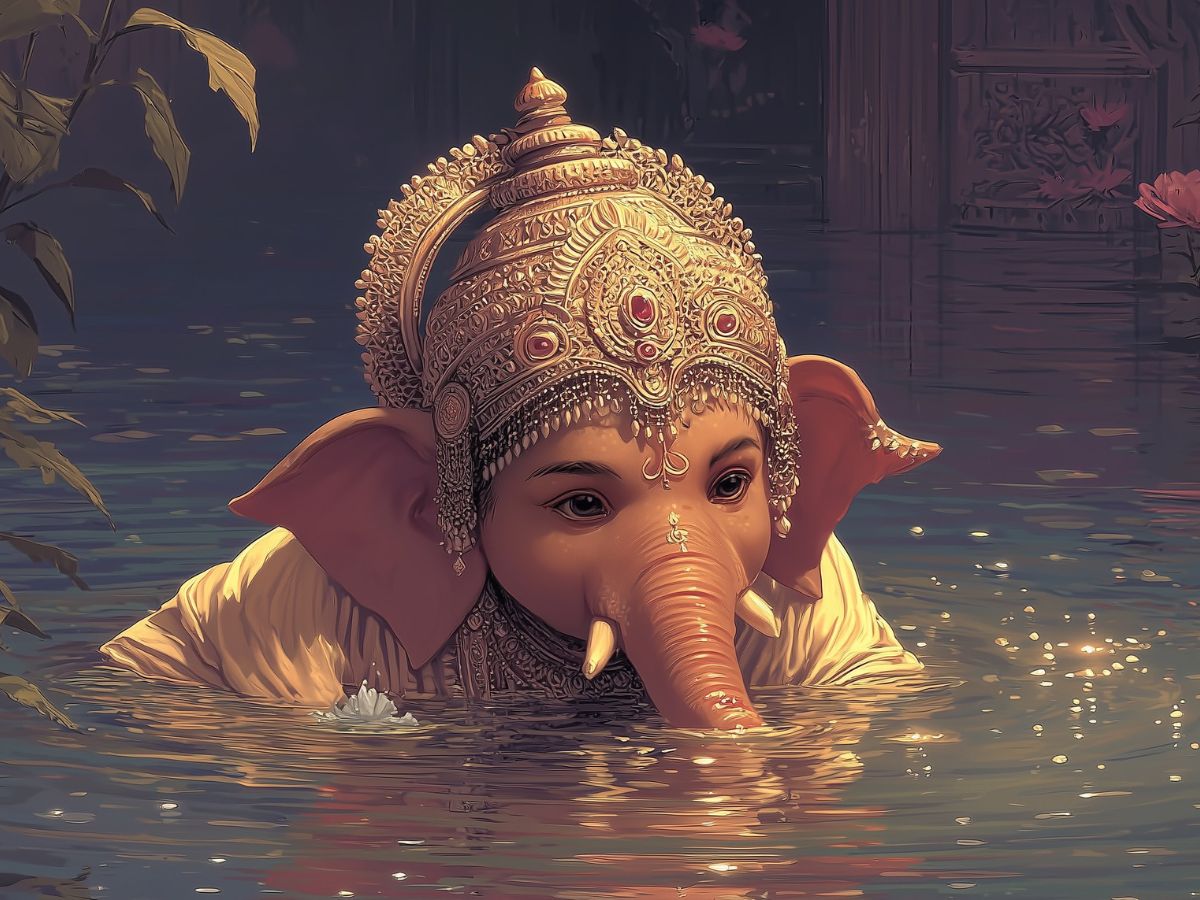
Every year, the nation celebrates Ganesh Visarjan with enthusiasm and religious vigor. On the day of ‘Ganesh Visarjan’, devotees immerse the idols of Lord Ganesh in the water, symbolizing his departure from Earth. Many use the PoP idols for the immersion, which contaminates the water. To deal with the problem, the government vouches for eco-friendly Ganpati idols every year.
These idols disintegrate easily during visarjan and go back into the earth without causing harm to the environment. Environmentalists point out that such a shift is crucial to safeguard aquatic life.
Employing natural clay and hues guarantees that worship of Lord Ganesha is always accompanied by nature care.
ALSO READ: Ganesh Visarjan 2025: Auspicious Timings, Rituals, and Method of Idol Immersion
How Green Idols Dissolve
Eco-friendly Ganpati idols are crafted from Shadu Mati (natural clay) or red soil. They are biodegradable, non-toxic, and dissolve within hours or a few days, unlike PoP idols that take months. Painted with vegetable-based or water-soluble colours, they leave no harmful traces in water. Once dissolved, they simply blend back into the soil.
Idols That Grow Into Plants
Plantable idols take it a step forward. Seeded with them are the idols which grow into greenery once submerged. These idols can be put by families in gardens, community water tanks, or pots where the clay feeds plants rather than contaminating water bodies. Regular clay idols, too, can be composted, making the soil richer and ending a natural loop of worship and sustainability.
ALSO READ: How To Perform Ganesh Visarjan? Key Rituals, Do’s and Don’ts
Why Eco-Friendly Visarjan Matters
Green visarjan not only saves rivers and aquatic life but also lowers municipal waste management issues. Civic bodies in cities like Pune and Mumbai are encouraging citizens to opt for clay or seed idols for this purpose. By not using PoP, devotees save natural resources and avoid nasty pollution.
Ganesh Chaturthi is a festival of devotion and unity. With plantable idols, the celebration joy continues without disfiguring the earth. The increased trend towards clay and plantable Ganpatis turns the festival into an emblem of belief as well as sustainability.