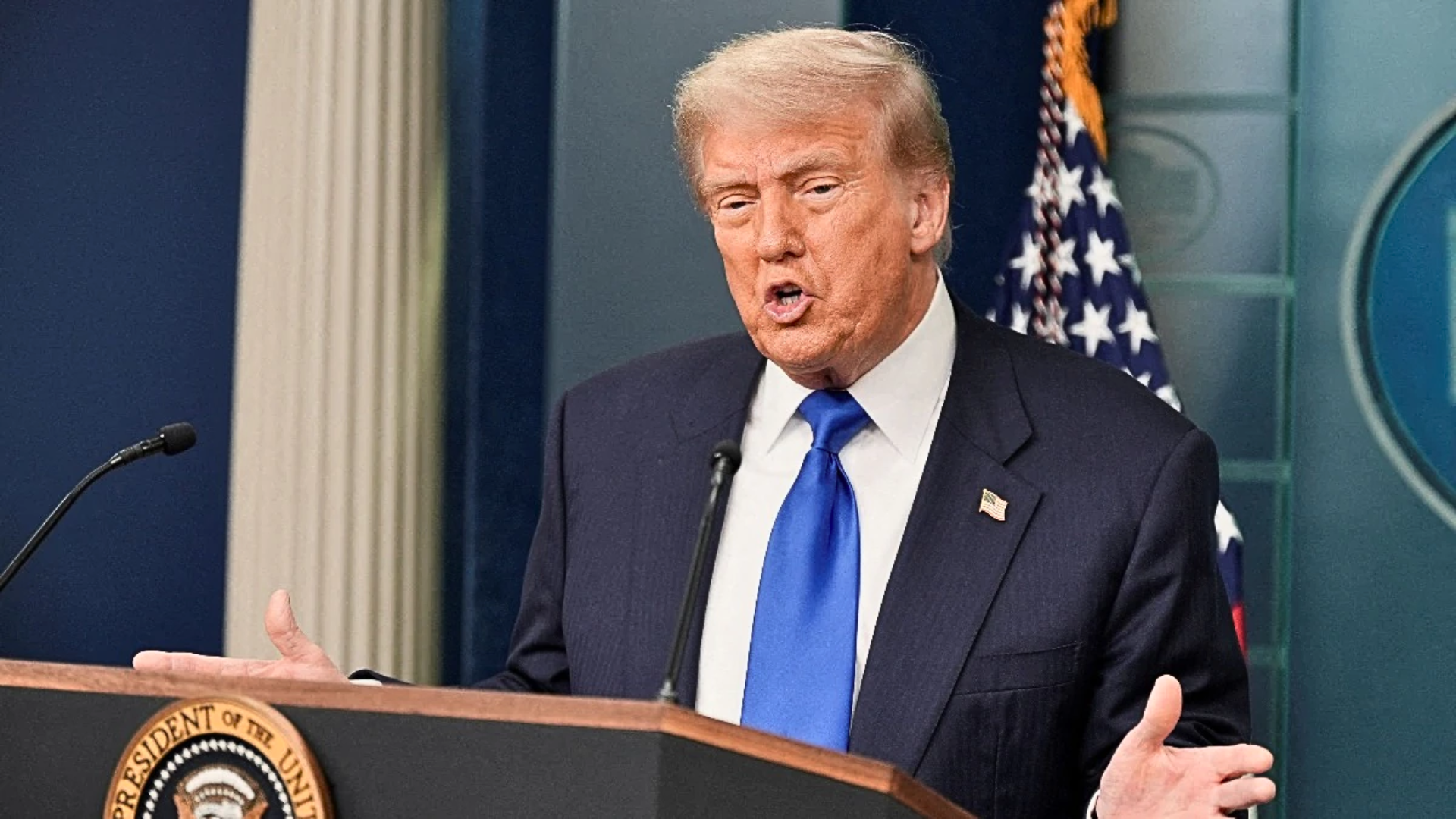
Over 20 states sued US President Donald Trump for freezing more than $6.8 billion in funding for after-school, summer programs and other programs.
Lawsuit Filed by 24 States and D.C. in Federal Court
Attorney generals or governors of 24 states and the District of Columbia had filed a lawsuit against the Trump administration in federal court in Providence, Rhode Island. They had stated that the US department of education and the office of management (OMB) and Budget created havoc in schools across America by freezing funds for six programmes vetted by Congress.
North Carolina Attorney General Jeff Jackson told ABC News, “This is plainly against the law.” He went on to explain from a legal standpoint that this is “against the Constitution, against the Impoundment Act. This is not a hard case”.
Impoundment Control Act Requires Executive to Report Withholdings
Under the Impoundment Control Act, 1947, Congress should record and consider the executive branch withholdings of budget authority. This means the President should report to Congress any withholdings of such.
While the Trump government has been attacking Ivy League universities frontally, freezing millions and billions of dollars in grants, the freeze also reached the funds utilized to sustain migrant farm workers and education for their children, recruiting and training teachers, English language ability training and educational enhancement, in addition to the after-school and summer programs.
Lawsuit Says Funds Were Due by July 1, But Denied Last-Minute
The suit against Trump stated that his government was obliged by law to send the funds to the states by July 1, according to Reuters. Rather, the education department informed them on June 30 that the funds would not be forthcoming under those programs as required by the deadline on grounds of a change in administration.
At the time, an OMB spokesperson reportedly said, “ongoing programmatic review” of education funding and said initial findings showed what he termed as a misuse of grant funds to “subsidize a radical leftwing agenda.”
The department also objected to the grant funds being utilised to fund scholarship for foreign students and LGBTQ-topical lessons.
Democratic States Say Students and Programs Are Being Harmed
The Democratic states complained that the freeze has led to summer school and after-school programme cancellations and suspension of other programs with limited time for the schools to make up the gaps in their budget.
The states have contended that the Trump administration breached the US Constitution by refusing to respect Congress’s exclusive power to spend and disregarded the federal administrative law by freezing the funds without any rational reason.
Violation of the Impoundment Control Act Also Alleged
They also alleged that the administration did not comply with the Impoundment Control Act, which does not allow the executive branch to unilaterally decline spending authorized by Congress except through specified procedures.
The North Carolina Attorney General stated that the huge impact of the moratorium could also lead to the dismissal of roughly 1,000 educators in the district.
“Everybody knows when it comes to juvenile crime, you want a safe place for teenagers to be able to go, to be able to keep them out of trouble,” Jackson said, adding that elimination of after-school programmes across the US has never been considered a “good idea”.
Loss of Funds Could Deepen Inequality in Poor School Districts
Alabama State Superintendent of Education Eric Mackey said that this will affect the students with the “greatest need”. He told ABC News, “The loss of funding for those rural, poor, high poverty school districts, is just going to be, you know, more fuel for the fire that makes it more difficult to educate children in those communities.”
Christy Gleason, executive director of Save the Children Action Network, which provides after-school programming for 41 schools in rural areas of Washington and across the South, where the school year is set to begin as soon as August, said, “Time is of the essence.”
“It’s not too late to make a decision, so the kids who really need this still have it,” she added.