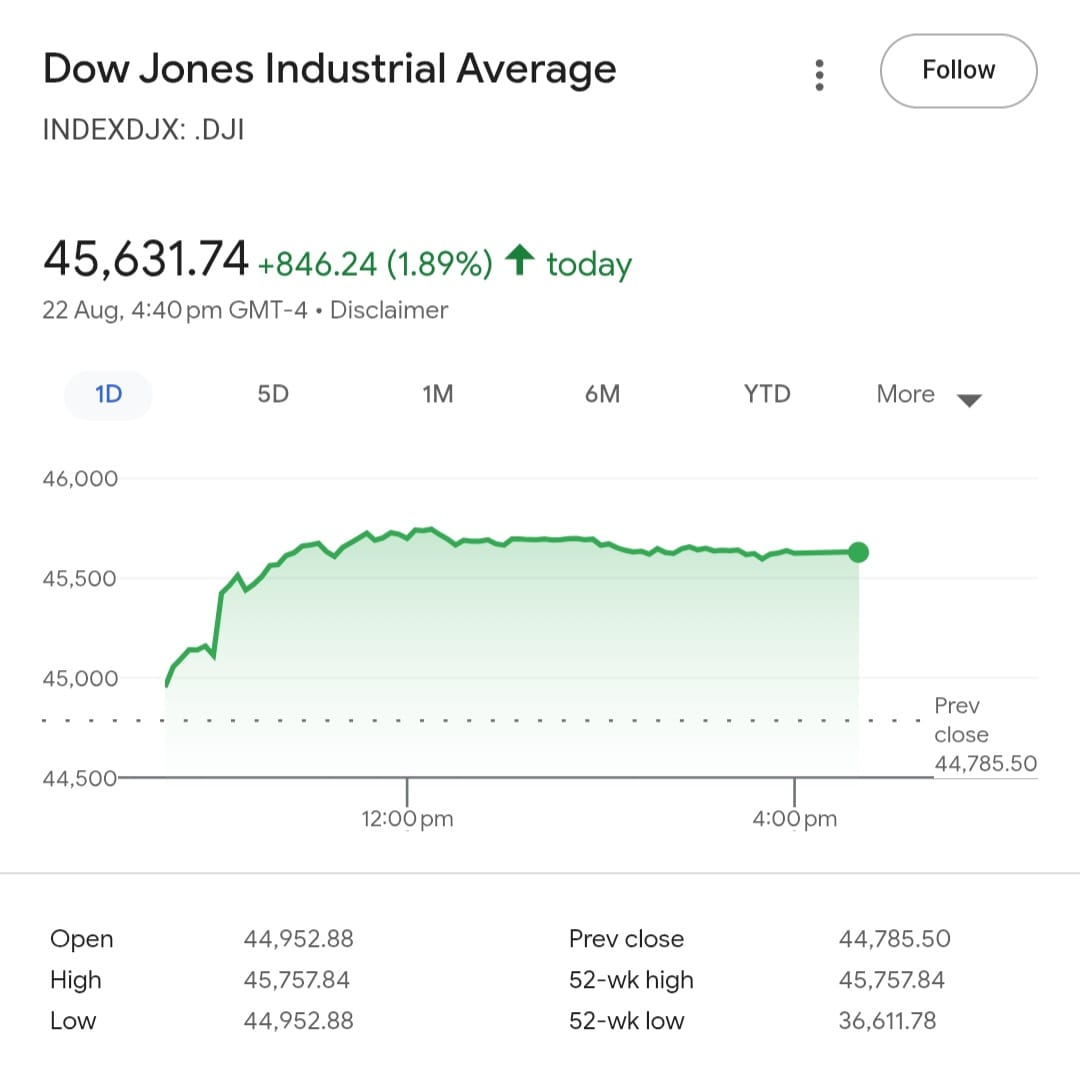
US Fed Chairman Jerome Powell’s address at Jackson Hole yesterday gave a clear indication that the Federal Reserve is leaning in favor of September interest rate cuts, which triggered a sharp rally in US stock indices. The markets could smell dovish all along and Dow jumped almost 900 points, S&P 500 rose 1.6%, and Nasdaq rose almost 2%, as investors rebuilt for softer monetary conditions in the future. Financials, homebuilders, and small-cap stocks were among the largest winners, as traders stayed positive on near-term borrowing costs and credit access.
Why Expect a Rate Cut
Powell’s comments highlighted rising vulnerabilities in the labor market, characterizing recent employment statistics as exhibiting “an unusual kind of balance” that could shift into runaway dismissals and higher joblessness unless remedied early. Although inflation continues to be a concern because of tariffs, Powell and senior Fed officials contended these inflation pressures would be temporary, therefore permitting easing policy if downside employment risks become more pronounced. Notably this is the first time the Fed chair adressed the tariffs’ impact, although denying any long term impacts on infaltion.
ALSO READ | US Markets: Mixed Closures Characterise a Nervous Trading Week
Market pricing changed abruptly following Powell’s remarks, with futures now predicting a virtually 90% probability of a September rate cut, the probability rose from 75% prior to his comments. That consensus is driven by recent weakness in labor market data and the Fed’s view that it is no longer required to hold higher rates given economic momentum has eased.
ALSO READ | Hon’ble Trump, You Messed With The Wrong Country!
Implications of a Rate Cut in the Short Term
- Lower Borrowing Costs: Reduced rates will lower the cost of borrowing for both consumers and businesses, stimulating spending and investment.
- Improvement in Stock Prices: Stocks gain as cash flows in the future are valued more, with sectors that are affected by the cost of borrowing—such as financials and real estate—standing to benefit.
- Employment Support: Loosening credit is the purpose of the Fed in providing support for hiring and averting sharp spikes in unemployment, stabilizing the employment market.
- Short-term Growth Relief: While an immediate economic boost can be offered by a cut in rates, experts warn that the action is a short-term relief; its effectiveness will depend on the permanence of inflationary pressures and supply-chain problems.
- Softer Dollar and Treasury Yields: Investors expect reduced returns on American assets, which can benefit exporters but can spur volatility in bond and foreign exchange markets.
ALSO READ | ‘Nothing-doing, Mr. Trump’, PM Modi’s Clear Message on Agro-Dairy
What to Conclude
Powell’s dovish rhetoric has established firm expectations of a September rate cut, driving instant US stock gains and hopes for near-term growth. All experts concur the move will lift sentiment and shore up markets temporarily, however, but emphasize that continuous employment and inflation news, notably the September jobs and inflation reports will decide how sustainable these gains are.