
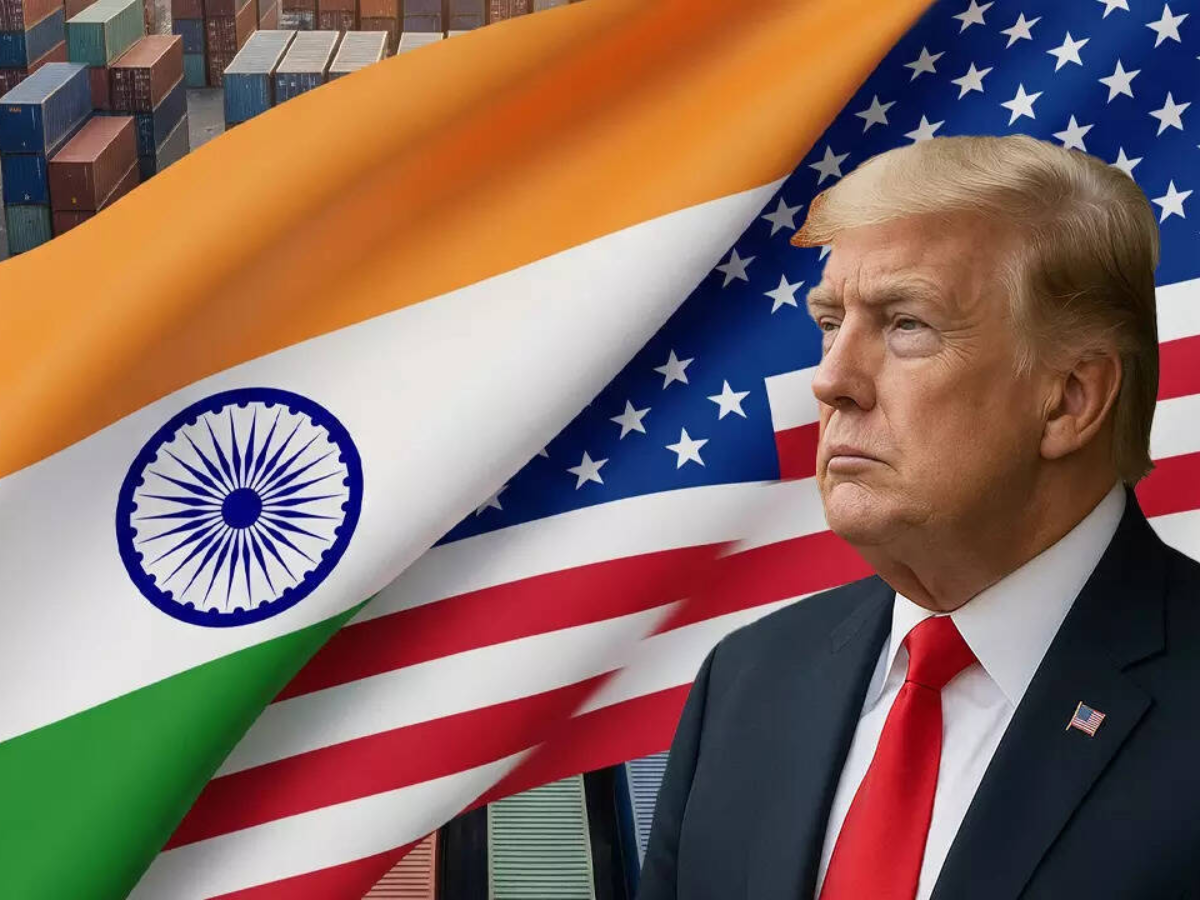
In a sharp escalation of trade tensions, US President Donald Trump on Tuesday warned of a “very substantial” increase in tariffs on Indian goods just days after imposing a 25% duty. The move, he said, is in direct response to New Delhi’s continued purchase of discounted Russian crude oil, which he claimed is “fuelling the war machine.”
In a CNBC interview, Trump rejected India’s reported offer of zero tariffs on American products, calling it inadequate given India’s oil trade with Moscow. “They’re buying massive amounts of Russian oil and reselling it for big profits… That’s not good enough,” he stated.
Economic Fallout and Political Shockwaves
The proposed hike is expected to hit several key Indian export sectors including textiles, engineering, seafood, chemicals, and leather. According to HSBC, the tariffs could lower India’s GDP growth by 0.3 percentage point, while the commerce ministry estimates 10% of Indian exports will be affected in the July–September quarter.
ALSO READ: OpenAI Launches Open-Weight AI Models on AWS for Developers Worldwide
India’s stock markets reacted negatively to the development. The BSE Sensex dropped by 0.38%, and the rupee weakened by 0.17% against the US dollar. Nearly half of India’s $85 billion exports to the US are now under threat.
The situation also marks a dramatic shift in diplomatic tone. Once hailed for their personal chemistry, Trump and Prime Minister Narendra Modi appear increasingly at odds. Indian opposition leader Jairam Ramesh remarked, “This friendship has turned out to be expensive.”
India Pushes Back, Cites Western Hypocrisy
India’s Ministry of External Affairs hit back with a strongly worded statement: “It is unjustified to single out India… The very nations criticizing India are themselves indulging in trade with Russia.” Citing data, the MEA noted the EU’s €78 billion trade with Russia in 2024 and continued US imports of Russian uranium and palladium.
Even former US Ambassador Eric Garcetti defended India, saying the US initially encouraged such purchases under a price cap. Experts warned that Trump’s comments could undo decades of bipartisan progress in US-India relations.
New Delhi’s Multi-Pronged Strategy
Amid the rising tensions, India is taking steps to shield its economy. Commerce Minister Piyush Goyal met with exporters and proposed sector-specific support like reducing MSME borrowing costs and cutting certification fees. A new Export Promotion Mission is also under consideration.
ALSO READ: Tesla Leases 51,000 Sq Ft Office in Gurugram for ₹40 Lakh/Month
In a policy shift, India may grant the US limited market access in dairy—historically a sticking point. Imports under consideration include cheese varieties not produced in India and plant-based condensed milk.
India is also working to reposition its Russian oil purchases as a stabilizing force for global markets rather than a geopolitical stance. Officials argue that global oil realignments were triggered by Western sanctions, not Indian policy.
Exporters are being urged to invest in branding to withstand future tariff shocks. Marine export firms, for example, are exploring job-linked support schemes to retain capacity.
Diplomatic Tightrope Ahead
Despite the provocative rhetoric, India is treading carefully. Back-channel diplomacy led by National Security Advisor Ajit Doval and Foreign Minister S. Jaishankar continues, with no plans to escalate the situation publicly.
With US elections looming in late 2025, India hopes Trump’s threats are more electoral theatre than enduring policy. But the next few days will be critical in defining whether diplomacy or discord shapes the future of US-India ties.