
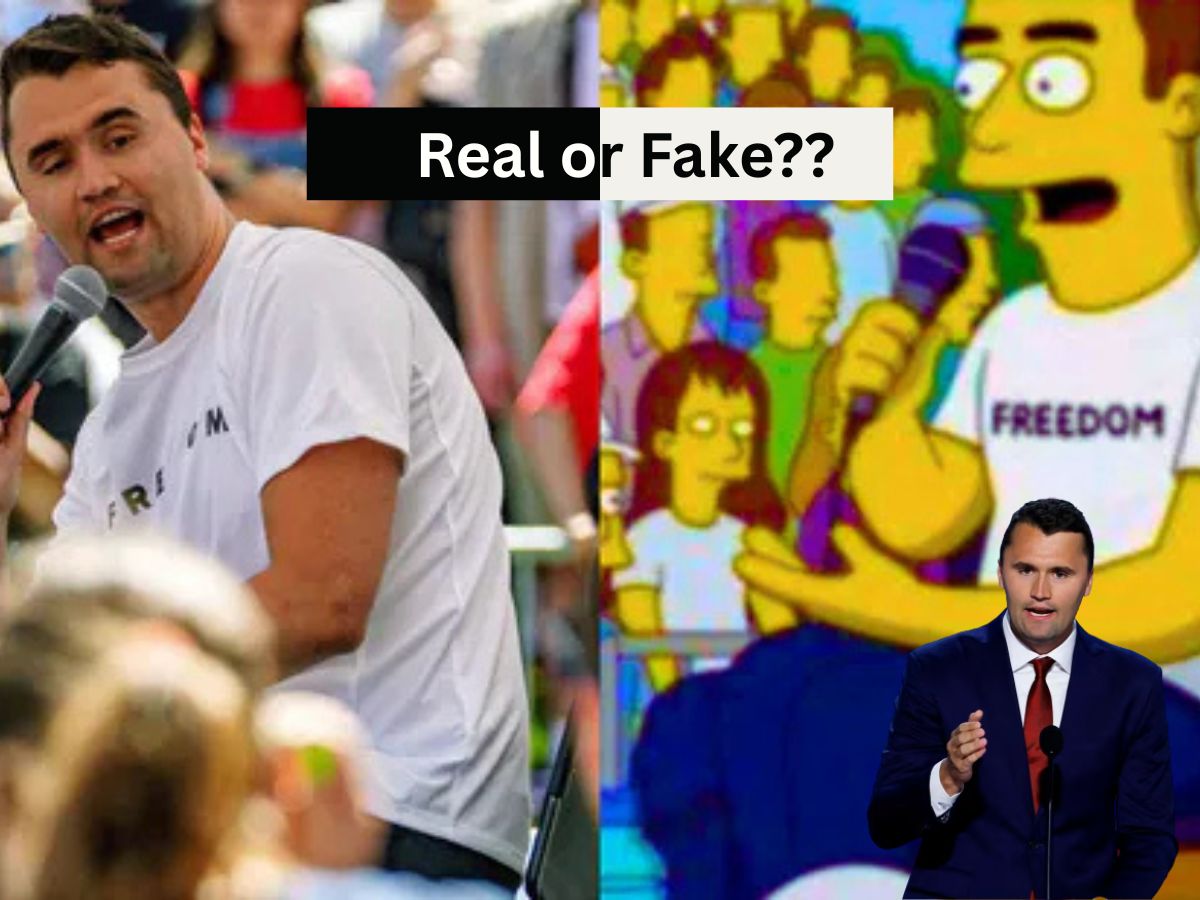
The internet has gone viral with the assertion that the classic cartoon show “The Simpsons” had predicted the assassination of US right-wing activist Charlie Kirk. This rumour however has been debunked amid sweeping misinformation. Recent developments featured Charlie Kirk shot and killed while addressing Utah Valley University, which resulted in a flood of social media claims claiming that the show had actually predicted this tragedy years earlier. A thorough analysis, however, shows such claims to be unsubstantiated and heavily driven by AI-generated photos and misleading propaganda.
Viral Disinformation and AI Image Manipulation
After the shooting, a picture of Charlie Kirk at the time of his shooting was edited into Simpson-style cartoon form with the aid of AI technology. This quickly went viral on platforms such as X (formerly Twitter) with captions implying the show’s notorious predictive ability. The posts boldly asserted, “The Simpsons aired his assassination years ago,” implying supernatural ability of the creators. Have a look on some of the following the viral posts:
https://twitter.com/MelGibsonFanHub/status/1970914060716929111?ref_src=twsrc%5Etfw
But experts and community fact-checkers quickly called out on the images as a fake. Interestingly, the artwork created by AI had background characters without faces, a sign of clear evidence of AI manipulation and not original content from the show. These twisted elements clearly refute any rightful connection between the cartoon and the horrific incident.
The Simpsons’ Renowned Legacy for “Predictions”
Although these exact assertions are untrue, “The Simpsons” has a historically well-documented record of strangely predicting actual events years in advance. Developed by Matt Groening and first airing in 1989, the series’ satirical and frequently predictive style is comprised of:
- Foreseeing the 2020 COVID-19 outbreak and “murder hornets” in a 1993 episode involving the “Osaka Flu” and killer bees.
- Lisa Simpson’s dress in the 2000 episode similar to Kamala Harris’ inauguration outfit in 2021.
- Lady Gaga’s 2017 Super Bowl halftime show stunt of being lowered onto the field from the top of the stadium.
- A 1996 prophecy of Cypress Hill performing with the London Symphony Orchestra in 2024.
All of these eerie accuracies have solidified the show’s reputation for “predicting” the future but tend to be coincidences or satirical observations and not specific forecasts.
False Rumours Regarding Unaired Episodes
In addition to AI-generated photographs, another viral rumour implied that “The Simpsons” contained an unaired episode on Charlie Kirk’s assassination, held back in case the tragedy occurred. This rumour also has no supporting evidence or quotes from the show’s creators, disproving it as mere conspiracy gossip.
The Influence of Viral Falsehoods
The dissemination of such misinformation not only influences public perception but also uses sensitive incidents as advantage for sensationalism. Fact-checking groups and social media forums encourage users to think critically about viral content, particularly pictures generated by AI software with the capability for realistic but fictionalised presentations.
Summing Up
“The Simpsons” never predicted of Charlie Kirk’s assassination as viral statuses have suggested. The photo circulating online is a digitally modified work with the use of AI, not based on the show’s original content. Although “The Simpsons” has long coincidentally reflected some events in real life, this particular instance is a stark case of misinformation fuelled by the tools of the digital age. Caution against such viral lies continues to be necessary in order to preserve fact-based discourse in the digital age. The interest in “Simpsons” prophecies will obviously continue, but this event highlights the necessity of vigilant examination before believing outlandish statements on the internet.