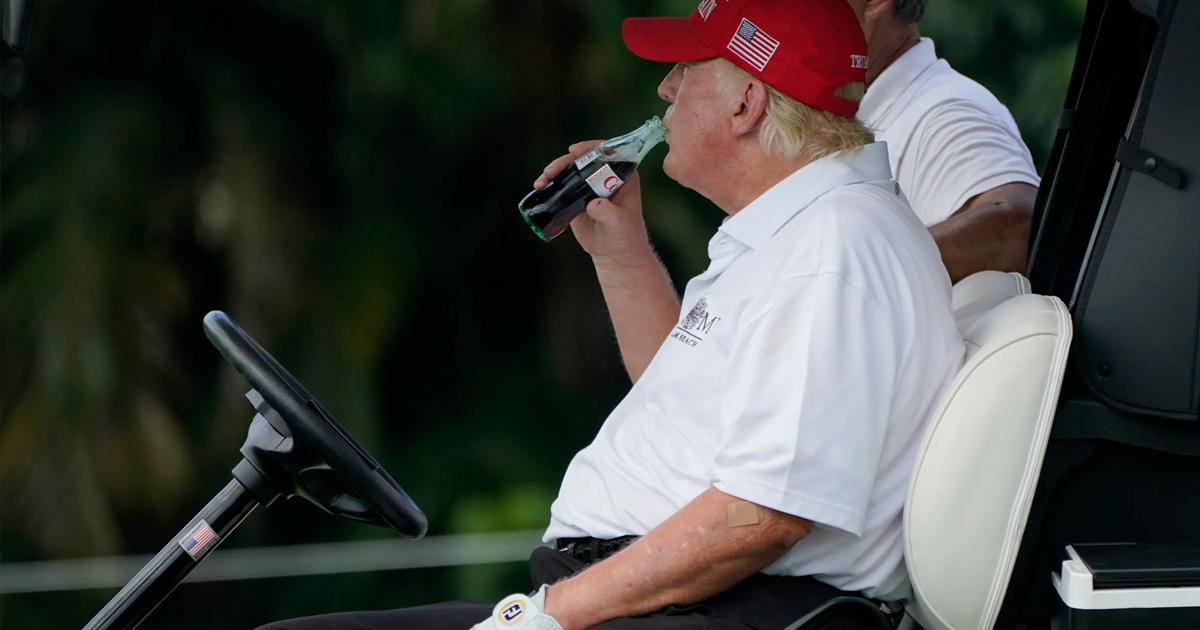
US President Donald Trump caused a stir on Wednesday when he said that Coca-Cola has committed to substituting high-fructose corn syrup (HFCS) with cane sugar in the company’s US offerings. The announcement came via a post on Truth Social, in which Trump stated, “I have been speaking to Coca-Cola about using REAL Cane Sugar in Coke in the United States, and they have agreed to do so… This will be a very good move by them — You’ll see.”
Though Coca-Cola has not made an official announcement of any recipe modification, the soft drink giant recognized Trump’s remarks. A representative stated, “We appreciate President Trump’s enthusiasm,” and added, “More information on new innovative offerings within our Coca-Cola product portfolio will be coming soon.”
Today, the United States Coca-Cola drinks are made with HFCS, a typical sweetener used in processed foods. Compared to that, much of the world, Mexico and the UK being key examples, employs sugar cane. Trump’s statement directly relates to his larger health-based agenda, the Make America Healthy Again (MAHA) movement, spearheaded by Health Secretary Robert F. Kennedy Jr.
MAHA seeks to purify the food supply in America by pressuring companies to take artificial additives like synthetic dyes, seed oils, and HFCS out of their products. The MAHA Commission presented a recent report that identified HFCS as a cause of increasing rates of children’s obesity and other diseases. The commission highlighted clean ingredient profiles and transparent labeling in processed foods and beverages.
Even as the political pressure for the shift gathers steam, health professionals have warned against exaggerating the health gains of the change. Nutritionists contend that while cutting overall added sugar consumption is a must, the metabolic distinction between HFCS and cane sugar is minimal.
Nevertheless, Trump’s declaration has resonated with health-mindful consumers who have been calling for “cleaner labels” and fewer ingredients in everyday items for years. If Coca-Cola does go ahead with the reformulation, it would represent a symbolic turn toward ingredient openness on the part of one of America’s most beloved brands.
Regardless of whether or not the reformulation occurs, the controversy has again brought the responsibility of corporations to the forefront of America’s health crisis.