
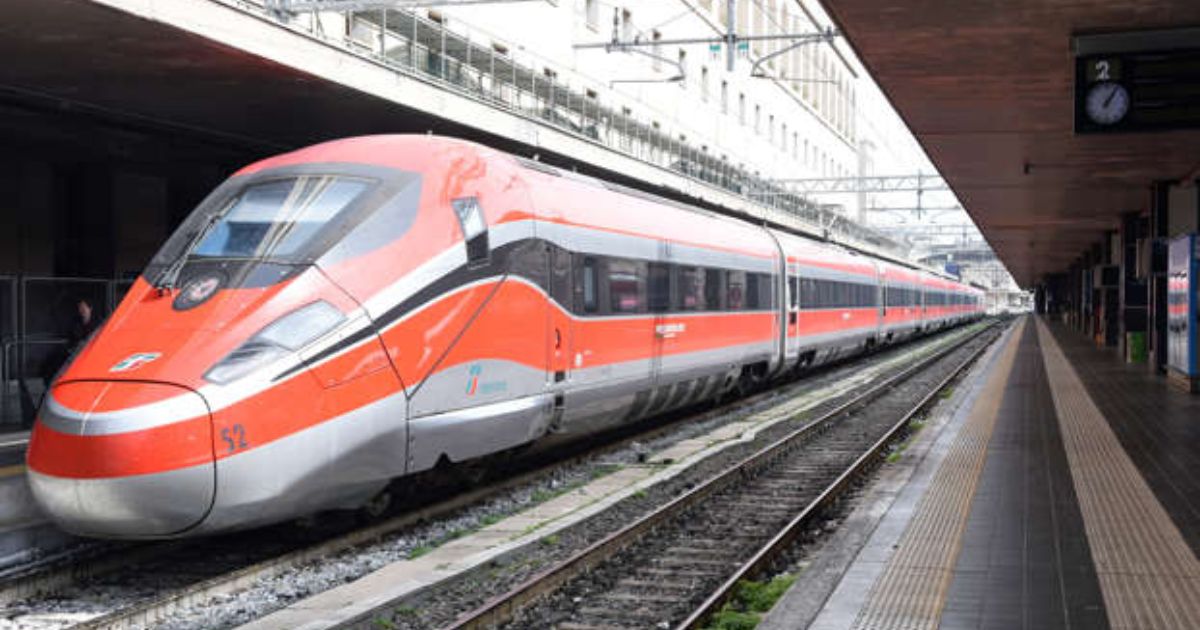
Super-fast trains are no longer the standard future concept already changing the way people travel between nations at lightning pace. With China leading the way through its revolutionary maglev technology, high-speed rail is now the spine of fast, efficient, and green transportation. Across Europe and Asia, nations are in a race to take the title of the world’s fastest trains, and the outcome is astounding.
The Future of Travel on Tracks
At the center of this speed competition is China’s Shanghai Maglev (Shanghai Transrapid), the world’s fastest train to be in operation today. With an average of 251 km/h, it can go as fast as 460 km/h, and has even reached a breathtaking 501 km/h on test runs. Constructed with German engineering know-how from Siemens and ThyssenKrupp, this train is a testament to innovation.
But China does not stand alone. Countries such as Japan, Germany, France, and even India are putting their stamp in the high-speed rail global race. Every new model is not only about speed, but also engineering innovation, comfort to passengers, and inter-border connectivity.
World Speedsters on the Track
These are the world’s fastest trains, pushing human imagination of traveling to new extremes:
Shanghai Maglev (China):- Top speed: 460 km/h (record: 501 km/h)
CR Harmony (China):- Top speed: 350 km/h
CR Fuxing (China):- Top speed: 350 km/h (record: 420 km/h in tests)
DB ICE 3 Series (Germany):- Top speed: 350 km/h
SCNCF TGV (France):- Top speed: 320 km/h
JR Shinkansen (Japan):- Top speed: 320 km/h
E5 and H5 Shinkansen (Japan):- Newer models constructed by Hitachi and Kawasaki, capable of 320 km/h
ICE International (Germany/Netherlands/Belgium/France):- Specifically designed for long-distance travel at 330–350 km/h
TGV Duplex (France):- Double-deck trains reaching 320 km/h with record-breaking previous speeds
Vande Bharat Express (India):- India’s pride in semi-high-speed travel, running at 180 km/h, built for efficiency and passenger comfort
India Joins the High-Speed Race
While nations such as China and Japan lead the high-speed league, India has entered the limelight with its Vande Bharat Express. Although it is not yet in the 300+ km/h club, it is India’s initiative to develop a modern, fast, and low-cost rail network. Bullet trains are in the pipeline, which may in the near future put India on the list of leaders of high-speed rail.
These rail speed demons reveal to us what transportation of the future will be all about: fast, nimble, and eco-friendly. As new technologies develop, soon enough trains will be breaking the 600 km/h barrier, and flying between cities will become less relevant than ever.
ALSO READ: Untold Story of Shinkansen: Speed, Safety & Secrets in Photos – Know All About Japan’s Bullet Train