
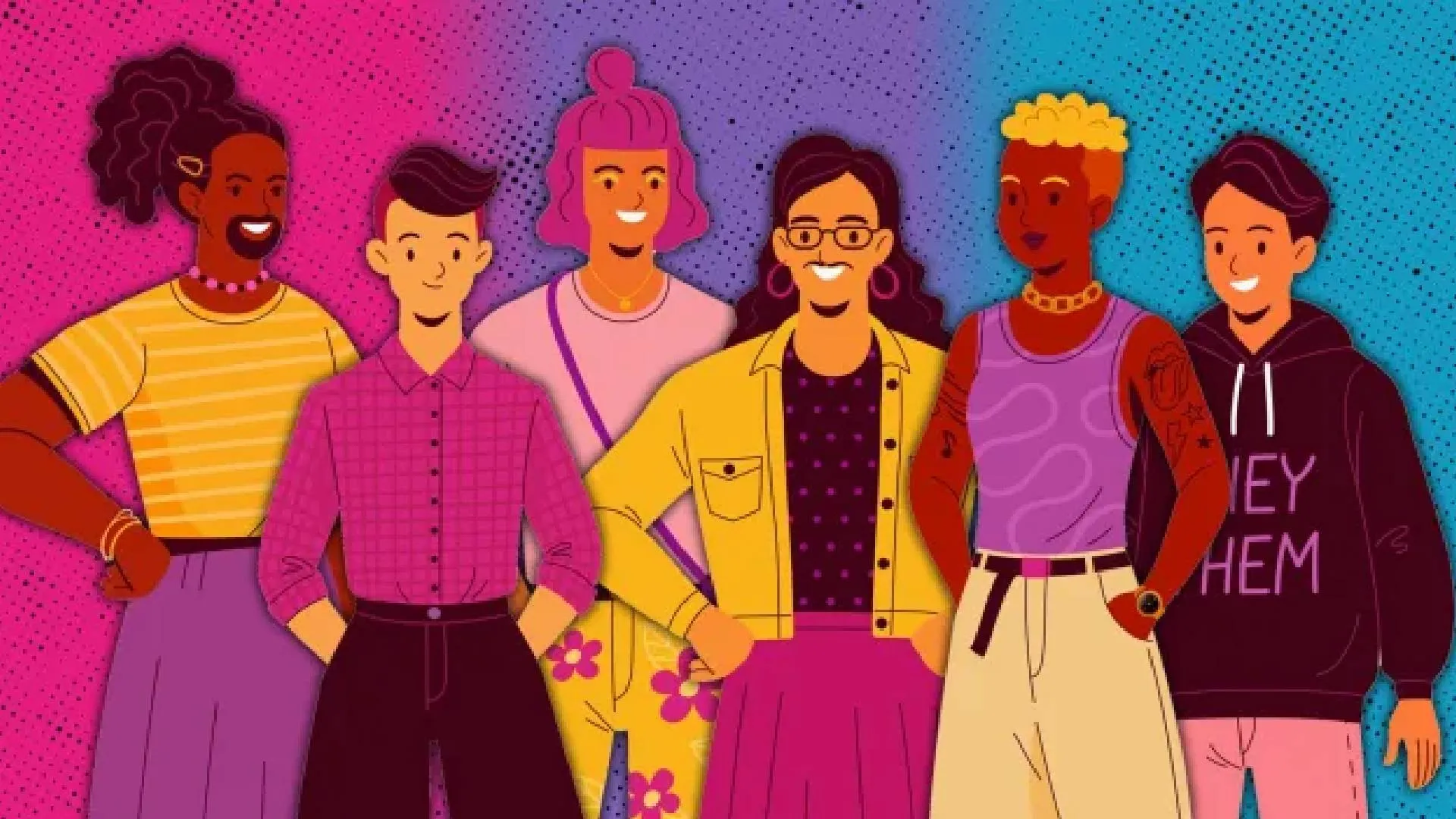
The term “androgynosexual” reflects a growing awareness of diverse sexual orientations, offering a language to describe attraction to individuals exhibiting both masculine and feminine traits. This term enhances self-expression and belonging for LGBTQ+ individuals.
As society becomes more inclusive of diverse sexual identities, new terms like “androgynosexual” are emerging to reflect these changes. This term, though not widely known, is gaining popularity. Individuals use it to describe their attraction to people who display both masculine and feminine traits. Androgynosexuality refers to a sexual, romantic, or emotional attraction to individuals who exhibit both traditionally feminine and masculine characteristics.
Defining Androgynosexuality
Androgynosexuality, unlike bisexuality, which describes attraction to more than one gender, or pansexuality, which defines attraction without regard to gender, specifically focuses on individuals who embody androgyny.
Androgyny blends qualities typically associated with both genders, which can manifest in physical appearance, gender expression, or behavior. Androgynosexual individuals are primarily attracted to the fusion of traits, regardless of the person’s assigned gender at birth.
Expanding Language for Diverse Identities
The growing recognition of androgynosexuality reflects a broader shift towards accepting diverse sexual orientations. It provides a new way for people to describe their unique attractions and allows for greater self-expression and self-acceptance, particularly within the LGBTQ+ community.
While terms like “queer,” “bisexual,” or “pansexual” are often used as umbrella terms, many individuals prefer to use more specific labels to communicate their sexual preferences. This personal choice allows for greater precision in identifying attraction to specific characteristics, like androgyny.
Shaping Sexual Preferences Through Representation
Dr. Luke Brunning, a lecturer in Applied Ethics at the University of Leeds, explains that greater representation of non-binary, transgender, and gender-nonconforming individuals could influence sexual preferences. This increased visibility may make androgynous traits more desirable.
As the concept of androgyny continues to gain recognition, androgynosexuality offers another avenue for individuals to articulate their sexual orientation and experience greater inclusivity.
AI Meets Wildlife: AI Breakthrough in Decoding Animal Communication
NatureLM, developed by the Earth Species Project, uses AI to decode animal communication, fostering deeper human-animal understanding. It identifies species, context, and unfamiliar communication patterns, highlighting AI’s potential in environmental conservation. Ethical challenges and energy demands remain critical as AI tackles biodiversity and climate issues.
The researchers take a huge stride in filling the gaps between humans and animals with AI. The NatureLM, as an AI model, was devised by the Earth Species Project for decoding animal communication. This development has the great potential to make a new future for the people in terms of observing animal behavior and rights.
AI Decodes Animal Communication
NatureLM will recognize not only which species are “speaking” but also, for instance, the age of the animal or whether it’s signaling distress or play. In addition to the above potential applications, NatureLM has been proven to be good at analyzing patterns in communication between previously unknown species. By learning a mix of human language, environmental sounds, and other sources of data, NatureLM strives to unlock mysteries within the animal kingdom, establishing closer ties between people and nature.
The generative AI, good with human languages’ translations, is even being put to work interpreting the “languages” of animals. In this regard, scientists claim that prairie dogs use a combination of nouns and adjectives to describe predators. Scientists have even come close to telling apart bird songs from alarm calls and determining specific identifiers some species use to refer to one another.
Difficulties in Deciphering Animal Idioms
Translating animal communication is not without its hurdles. Unlike human translation, where both the source and target languages are well-defined, animal languages remain largely unknown. However, AI models like NatureLM are beginning to identify patterns, giving researchers hope that this puzzle can be solved over time.
Connecting Through Nature’s Language
Katie Zacarian is the CEO for the Earth Species Project. Speaking after a demonstration at the Axios AI+ Summit about NatureLM, she said “AI provides one avenue toward profound understanding of animals and the consequent development of deeper empathy for and connection with them.” However, the persisting biodiversity crisis underscores the ongoing need to rebuild our connection with nature, with projects like NatureLM more germane than ever.
NatureLM reflects a larger trend: AI is going to play an increasingly important role in tackling environmental issues. Recently, the Microsoft corporation unveiled SPARROW, a fully solar-powered, low-power sensing, acoustically monitored system to measure biodiversity in remote areas of global importance. New technologies with their capabilities epitomize the potential of AI to mitigate climate change, habitat destruction, and other such crucial global issues.
However, the energy requirements of AI systems are also a challenge in themselves. Balancing carbon neutrality with the need to advance these projects is challenging for tech companies. Ethical concerns about how AI should be responsibly used have also been kept at the center of discussions, to ensure that humans and the environment benefit from such innovations.
Humans are increasingly realizing that it is possible to talk to animals with the help of tools such as NatureLM. This invention could usher into human history a new era of understanding and sympathy in its relationship with nature.