
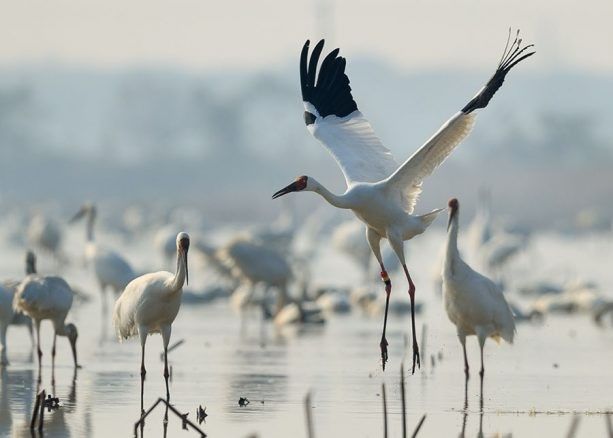
JAIPUR: Every year, the skies over India witness a spectacular migration of one of the world’s most elegant and endangered birds—the Siberian crane. Known for its pure white plumage and graceful flight, the Siberian crane (Grus leucogeranus) travels thousands of kilometers from its breeding grounds in Siberia to spend the winter in India. This remarkable journey is not just a display of endurance but also a crucial survival strategy for these birds.
WHY THEY MIGRATE TO INDIA
Siberian cranes breed in the cold, tundra regions of Siberia during the summer. As winter approaches, temperatures drop dramatically, and the water bodies in their breeding areas freeze over, reducing access to food such as roots, tubers, and aquatic plants. To survive the harsh winters, these cranes undertake a long migration to warmer regions.
India, with its temperate climate and abundant wetlands, provides an ideal wintering ground. The famous Bharatpur Bird Sanctuary (Keoladeo National Park) in Rajasthan historically served as a key stopover for these birds. Wetlands in states like Uttar Pradesh, Punjab, and Odisha also provide food, shelter, and safety during the winter months.
THE ECOLOGICAL SIGNIFICANCE
The presence of Siberian cranes in India is a testament to the country’s rich biodiversity and the critical role of wetlands in maintaining ecological balance. These birds feed on aquatic plants, small fish, and insects, helping control the population of certain species and contributing to the health of wetland ecosystems. Their migratory pattern also makes them important bio-indicators, reflecting the state of wetlands and the broader environmental conditions along their migration route.
CHALLENGES AND CONSERVATION EFFORTS
The Siberian crane is critically endangered, with numbers declining due to habitat loss, hunting, and climate change. Draining of wetlands, pollution, and disturbances in India and along their migratory path pose significant threats to their survival.
To protect these cranes, conservation initiatives like the International Crane Foundation and the Convention on Migratory Species have been actively involved in monitoring, habitat restoration, and awareness programs. India has also designated protected wetlands and implemented community-driven conservation projects to ensure safe wintering habitats for these majestic birds.
CULTURAL AND SCIENTIFIC IMPORTANCE
For birdwatchers, ecologists, and photographers, the arrival of Siberian cranes is a spectacle of nature that attracts enthusiasts from across the globe. Their journey is studied to understand migration patterns, climate impacts, and wetland health. In addition, these cranes hold cultural significance in several regions, symbolizing purity, grace, and endurance, inspiring local communities and conservationists alike.
The migration of Siberian cranes from Siberia to India is more than a seasonal journey; it is a lifeline for the survival of this critically endangered species. Their presence highlights the importance of preserving wetlands and protecting ecosystems that support not only these cranes but countless other species. By safeguarding their wintering grounds in India, we ensure that future generations can witness the awe-inspiring flight of these majestic travelers.