
Washington/Tel Aviv:
The decision came barely a fortnight after Trump hailed the agreement as a diplomatic breakthrough. According to The Wall Street Journal, Secretary of State Marco Rubio and Secretary of War Pete Hegseth briefed Trump shortly before he left for the NATO summit in Ankara that Iran had deployed anti-ship missiles and drones against vessels using the southern shipping route.
Three commercial ships, including a liquefied natural gas tanker, were reportedly struck within hours. The briefing reportedly convinced Trump that Iran was no longer negotiating in good faith.
By the time he arrived in Turkey, the White House had begun dismantling key concessions under the accord signed at the Palace of Versailles. Washington revoked Iran’s licence to export oil, launched successive strikes on Iranian positions near the Strait of Hormuz and warned that civilian infrastructure, including electricity and desalination facilities, could also be targeted if attacks continued.
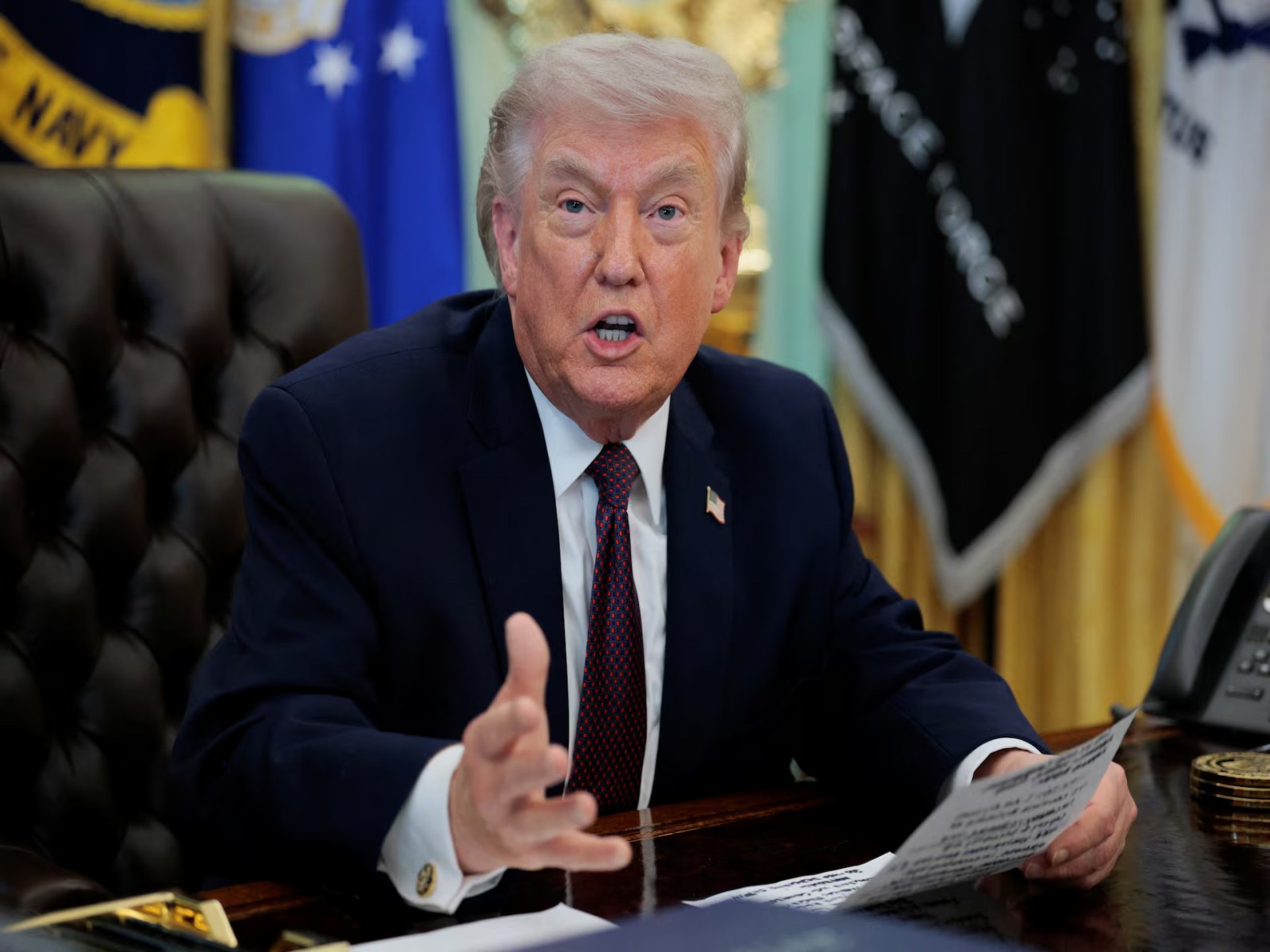
“To me, I think it’s over,” Trump said in Ankara. “I don’t want to deal with them. They’re liars, they’re cheats, they’re sick people.”
Iran rejected Washington’s account, accusing the US of violating the agreement by unilaterally creating a shipping corridor through the strait without consulting Tehran. An Iranian diplomat said the move justified attacks on vessels using the route.
The dispute has exposed ambiguities in the interim accord, which guaranteed freedom of navigation but did not clearly specify who would coordinate or police shipping through the waterway, which carries about one-fifth of global oil shipments.
US officials said the American Navy had helped more than 125 commercial vessels travel through a southern route along Oman’s coast. Many ships reportedly sailed at night with their automatic identification systems switched off while remaining in contact with naval assets.
Tehran opposed the arrangement and insisted that vessels use a northern route closer to the Iranian coast.
Following the maritime attacks, US forces struck more than 170 Iranian military targets over two days. Hegseth warned that operations could go “even more, and even deeper”, while Vice President JD Vance said: “If they shoot at ships, we’re going to knock the hell out of them.”
Iran retaliated by targeting US military installations in Bahrain, Kuwait, Qatar and Jordan.
Amid the escalation, Israeli Prime Minister Benjamin Netanyahu warned that the conflict was far from over and said Israel was preparing for further challenges.
“The Iranian regime has been dealt a severe blow, and our policy is clear that Iran will not possess nuclear weapons, whether with or without an agreement,” Netanyahu said at an Israeli Air Force graduation ceremony. “The war is not over yet, and new challenges are emerging before us.”
Israeli military chief Lt Gen Eyal Zamir said major operations could still lie ahead, while Defence Minister Israel Katz warned that Israel would return “with even greater force” if military action resumed.
Netanyahu also said Israeli forces would remain deployed in Lebanon for as long as necessary.
Separately, Israel has reportedly shared intelligence with Washington alleging that Iran has developed a fresh plan to assassinate Trump. The Wall Street Journal and CNN reported that the warning referred to a specific alleged plot, although US agencies had not independently verified it.
Some American officials reportedly believe the intelligence may also be part of an Israeli effort to persuade Trump to intensify military action against Iran.
“They want to take out the US leader, me,” Trump told reporters in Ankara. “I’m on every list.”
The reports come amid differences between Trump and Netanyahu over the conflict. Netanyahu has pushed for continued military operations to achieve additional objectives, while Trump has sought an exit because of concerns over the wider economic consequences.
Despite the renewed fighting, US and Iranian officials are reportedly continuing efforts to reach a nuclear agreement by mid-August, even as preparations for possible further military action remain under way.