Evian:
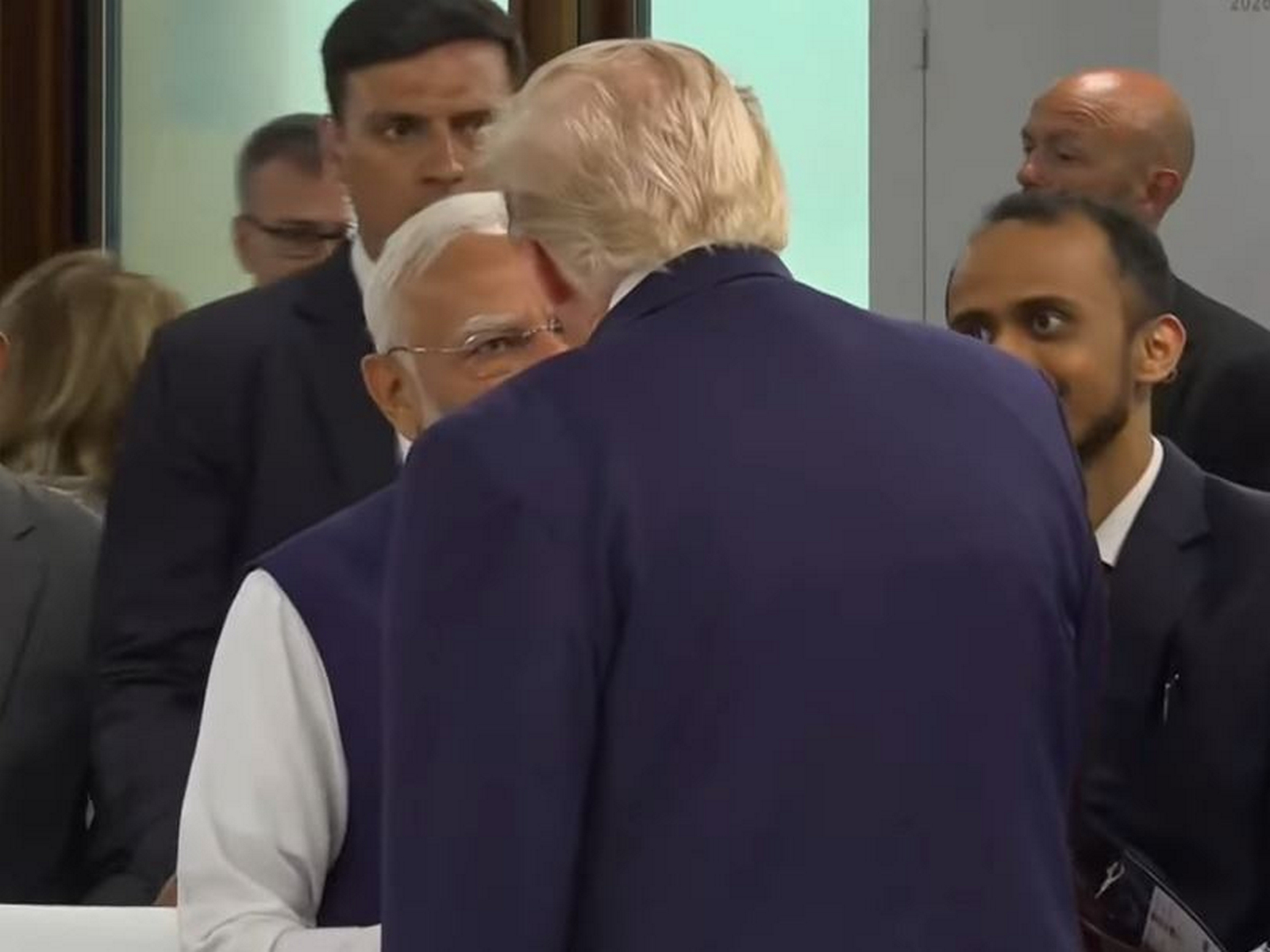
Visuals from the summit showed the two leaders exchanging a handshake, with Trump patting Modi on the arm as world leaders gathered after the official group photo. The interaction marked their first face-to-face meeting since Modi’s visit to Washington in February last year.
The two leaders were also seated next to each other during the G7 outreach session, which brought together G7 members, partner nations and heads of major global financial institutions, including the World Bank and the African Development Bank. The discussions are expected to focus on international cooperation, sustainable development and key global economic challenges.
Earlier, French President Emmanuel Macron welcomed Modi at the summit venue. The Prime Minister then joined leaders of G7 member nations and invited countries for the customary family photograph. The frame included European Council President Antonio Costa, Italian Prime Minister Giorgia Meloni, Egyptian President Abdel Fattah el-Sisi, Trump, Macron, German Chancellor Friedrich Merz, European Commission President Ursula von der Leyen and Brazilian President Luiz Inacio Lula da Silva.
Modi arrived in Evian earlier on Tuesday to attend the high-level summit at Macron’s invitation. This marks India’s 13th participation at the G7 as a partner nation and the seventh consecutive time Modi is attending the global forum.
Before reaching France, Modi made a brief transit stop in Geneva, where he began his European diplomatic outreach with a meeting with Swiss Confederation President Guy Parmelin.
On the sidelines of the summit, the Prime Minister is scheduled to hold a series of bilateral meetings with global leaders, including Canadian Prime Minister Mark Carney, UK Prime Minister Keir Starmer and UAE President Sheikh Mohamed bin Zayed Al Nahyan.
A much-anticipated bilateral meeting between Modi and Trump is also expected on 17 June. The White House has said the talks will focus heavily on advancing the proposed India-US trade agreement.
STANDALONE
India, France must build AI independence together: French MP
Exclusive
EVIAN: French MP Anne Genetet has said the G7 Evian 2026 Summit marked a shift from traditional macroeconomic discussions to a wider global dialogue, with French President Emmanuel Macron pushing for broader participation beyond the G7 nations.
Speaking to NewsX on the sidelines of the summit, Genetet said Macron wanted the G7 to “speak to citizens” across countries, including India, which represents nearly 1.5 billion people.
“The G7 is usually a meeting of seven countries discussing macroeconomic and international issues. But President Macron wanted other countries to join this event. That makes a big difference,” she said.
On the reported US-Iran understanding over the West Asia crisis, Genetet struck a cautious note, saying she would wait for the formal signing of the MoU before drawing conclusions. The agreement is expected to be signed in Switzerland on Friday.
“Before anything is signed, I am still expecting a signature. We know Donald Trump can change his mind very quickly. Let us first wait for the MoU to be signed,” she said.
Reacting to discussions on securing free transit through the Strait of Hormuz, Genetet said the waterway did not belong to any one country and must remain open under the international rules-based order.
“This strait is not yours. It is not Iran’s either. It belongs to all of us. All countries stand for free circulation and free transit through the Strait of Hormuz,” she said.
On India-France ties, Genetet said both countries shared a similar diplomatic approach of engaging with multiple partners and avoiding exclusive blocs. She said India and France both sought stability, peace and political balance through dialogue.
She also highlighted artificial intelligence as a key area of cooperation, saying both countries must work together to avoid over-dependence on either China or the United States.
“India and France cannot rely only on solutions coming from China or the US. We have to build innovation in India, in France, or together,” she said.
Genetet said technology cooperation, especially in AI, was essential for strategic independence in the changing global order.