
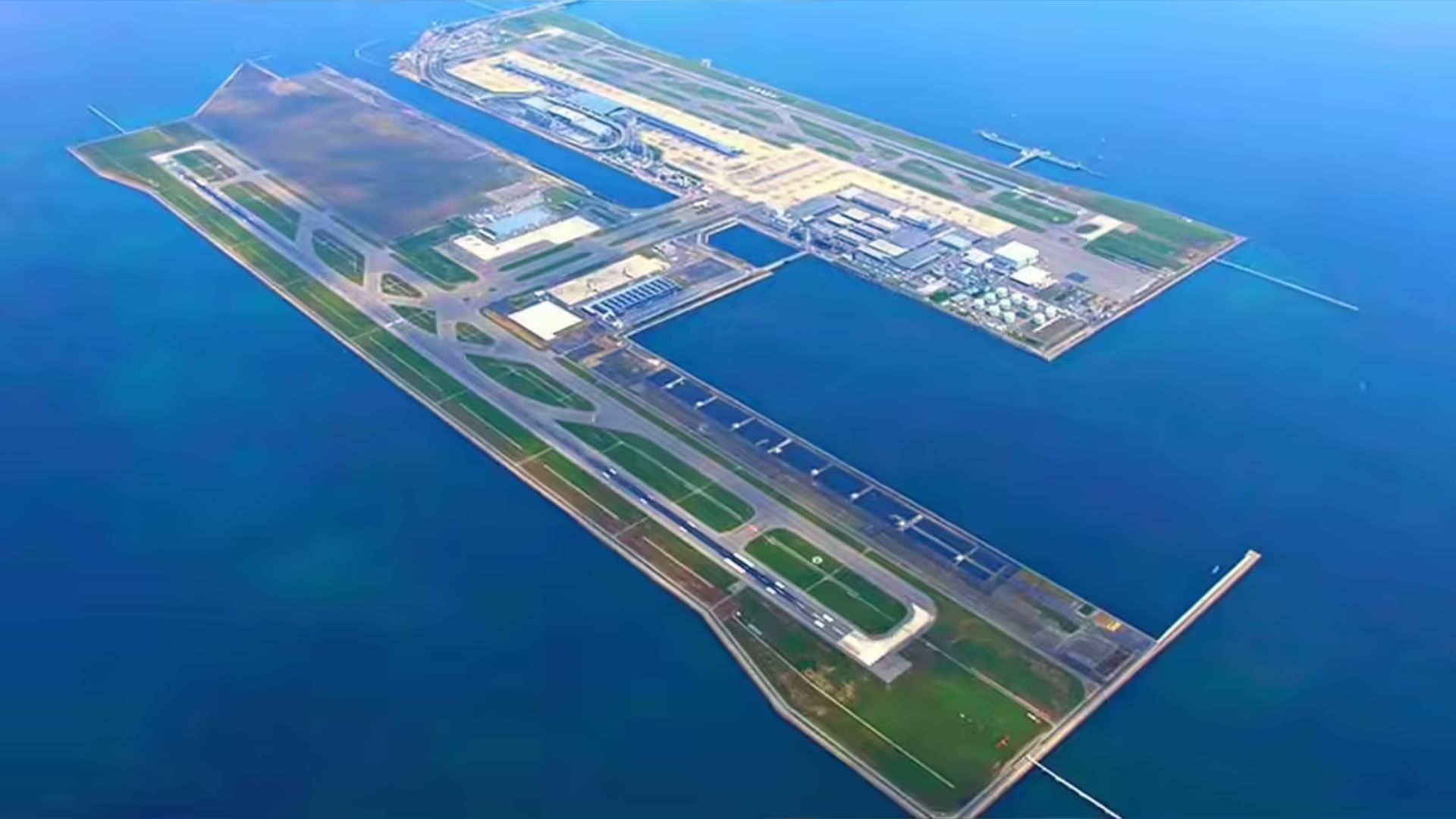
Japan’s Kansai International Airport (KIX), built on an artificial island in Osaka Bay, is slowly sinking. The South China Morning Post reports that the airport has become an important hub for domestic and international flights, but it sank farther into the clay foundation beneath the bay than engineers originally estimated and it keeps settling year by year.
The operator of the airport, Kansai Airports, reported that the surface of the first island is presently about 3.84 metres (12.6 feet) lower than when it opened in 1994. The land has settled by an average of 13.66 metres (45 inches) since landfill operations started, the report underscored.
The firm clarified that some ‘settling’ was always expected. Most recent figures in December indicated that in the previous year, on average, subsidence at 17 measurement points was only 6cm (2.4 inches).
But on the second island, the problem is worse, with the surface having fallen by 17.47 metres (57.3 feet) since the beginning of landfill activities. Average sinking at 54 measurement points there last year was 21cm (8.3 inches).
The airport islands were constructed over a 20-metre (65.6-foot) thick mass of alluvial clay, which behaved like a sponge to the huge weight. Despite placing 2.2 million vertical pipe drains intended to strengthen the clay and limit shrinkage, the weight of more than 200 million cubic metres (7.6 billion cubic feet) of filling material and 48,000 tetrapods pressed the clay more than specialists had anticipated.
Over US$150 million has already been spent on raising the sea walls surrounding the islands. Yet, some engineers forecast that within the next 30 years, sections of the elevated airfield might extend to sea level.
The weakness of the airport was dramatically revealed in September 2018 when Typhoon Jebi, the most powerful storm to affect Japan for 25 years and triggered catastrophic storm surges, inundating the airport and prompting a complete shutdown. The typhoon caused US$13 billion worth of damage and claimed 21 lives throughout the Pacific.
In spite of these setbacks, the rate of sinking is said to be slowing down. The operator’s website, which was quoted in the report, stated it is still closely watching the airport’s foundation, taking measurements of subsidence and seeking advice from specialists.
“This amount of sinking is within tolerable levels,” said Hiroo Ichikawa, professor emeritus of urban planning and policy at Meiji University. “This project is a crucial learning experience for future developments of man-made islands.”.
Spanning two islands, one 510 hectares (1,260 acres) and the other over 1,055 hectares. Kansai International Airport was built to relieve congestion at Osaka International Airport and welcomed its first passenger flight in September 1994. Over the years, it has won international acclaim for its design, efficiency, and service.
Last year, it was even recognised as the world’s best airport for baggage delivery, reportedly not misplacing a single bag in a decade.