
New Delhi:
Speaking to ANI, Cameron called the pact a historic and transformative deal that would strengthen long-term economic growth and unlock a more confident bilateral relationship.
“This is a key part of our Vision 2035 strategic partnership between the UK and India,” she said, adding that the agreement could deliver nearly £5 billion in long-term GDP benefits to both economies.
Cameron said the deal is being implemented less than a year after it was signed in the presence of Prime Minister Narendra Modi and UK Prime Minister Keir Starmer at Chequers last summer, making it the fastest trade deal the two countries have brought into force.
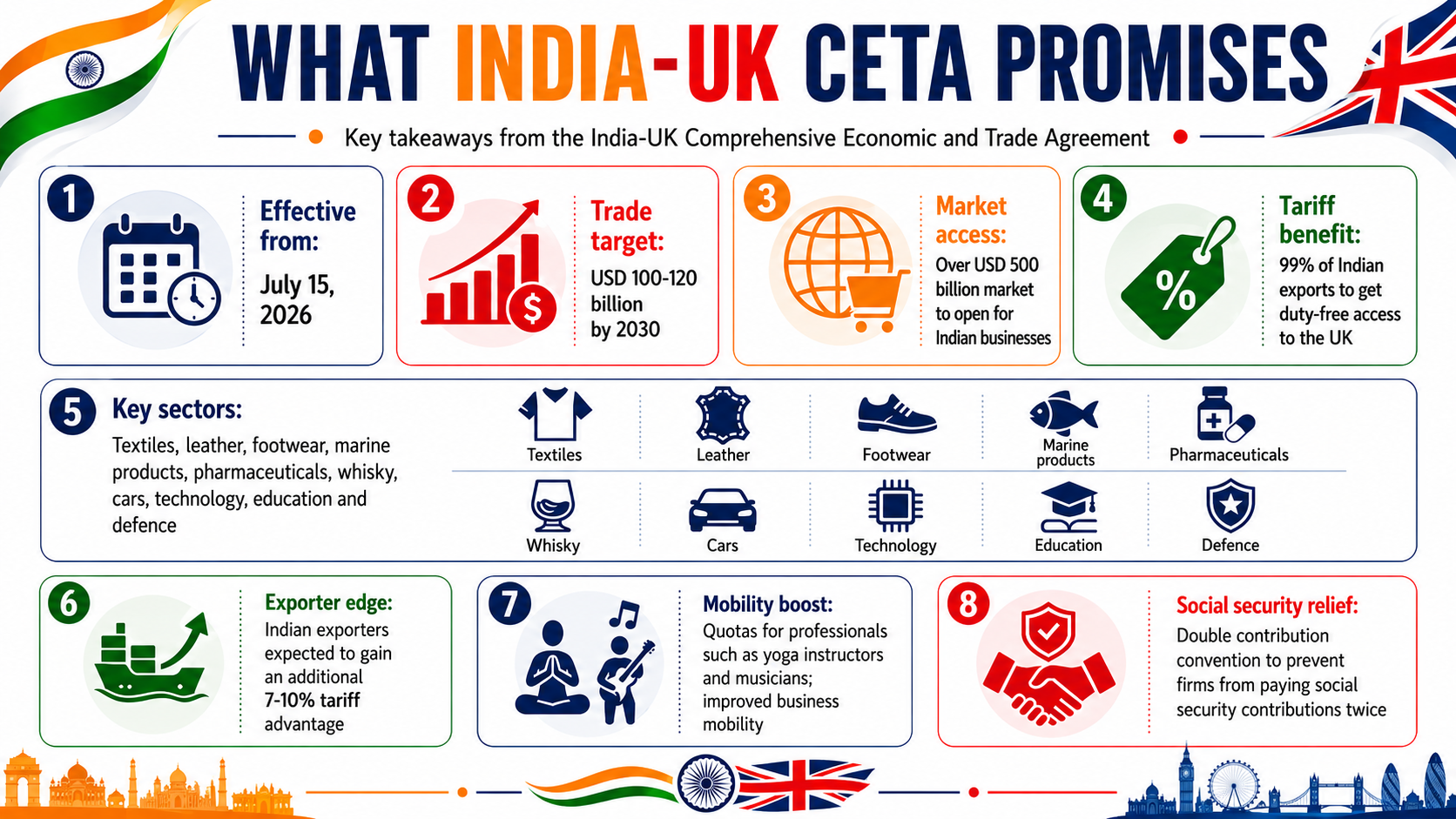
The agreement, announced after a breakthrough between Modi and Starmer at the G7 Summit, aims to double bilateral trade to USD 100-120 billion by 2030. It is expected to benefit sectors including textiles, footwear, leather, marine products, pharmaceuticals, whisky, cars, technology, science, education and defence.
Cameron said the pact would go beyond traditional trade. She cited Rolls-Royce’s engagement with the Indian government and said nine British universities were preparing to expand education opportunities for young Indians in India. She also pointed to growing cooperation in technology and artificial intelligence, including partnerships discussed at the AI conference in Delhi earlier this year.
She said the agreement had boosted political confidence in the relationship, reflected in the warmth between the two prime ministers at the recent G7 Summit.
On mobility, Cameron said the pact includes specific quotas for professionals such as yoga instructors and musicians, besides wider improvements in business mobility. She said the double contribution convention would ensure companies sending employees to work in the other country do not have to pay social security contributions twice.
Under the agreement, the UK will grant immediate duty-free access to 99 per cent of Indian exports, benefiting labour-intensive sectors such as textiles, leather, marine products and pharmaceuticals. Indian tariffs on British Scotch whisky will also be reduced from 150 per cent to 40 per cent.
On UK steel safeguard measures, Cameron said India’s concerns had been discussed during negotiations. Government sources said around 85 per cent of India’s steel exports would remain outside the scope of the UK’s steel measures, while concessions had been negotiated on 188 steel tariff lines.
Sources said New Delhi is working to ensure customs notifications and related processes are in place before July 15 so exporters can avail concessions from the first day.
Describing CETA as India’s “most aspirational agreement so far”, sources said it would open a market worth more than USD 500 billion for Indian businesses and provide Indian exporters an additional tariff advantage of 7-10 per cent. More than 99 per cent of India’s tariff lines and 99 per cent of its trade with the UK are expected to move to zero duty under the pact.
India currently enjoys a trade surplus with the UK in both merchandise and services. India’s services exports to the UK stood at USD 21.6 billion in 2024, while UK services exports to India were valued at USD 13.7 billion. Merchandise exports from India to the UK stood at USD 13.7 billion in 2025, compared with imports worth USD 9.47 billion.
Sources said more than 900 Indian companies are currently operating in the UK, reflecting the depth of economic engagement between the two countries.