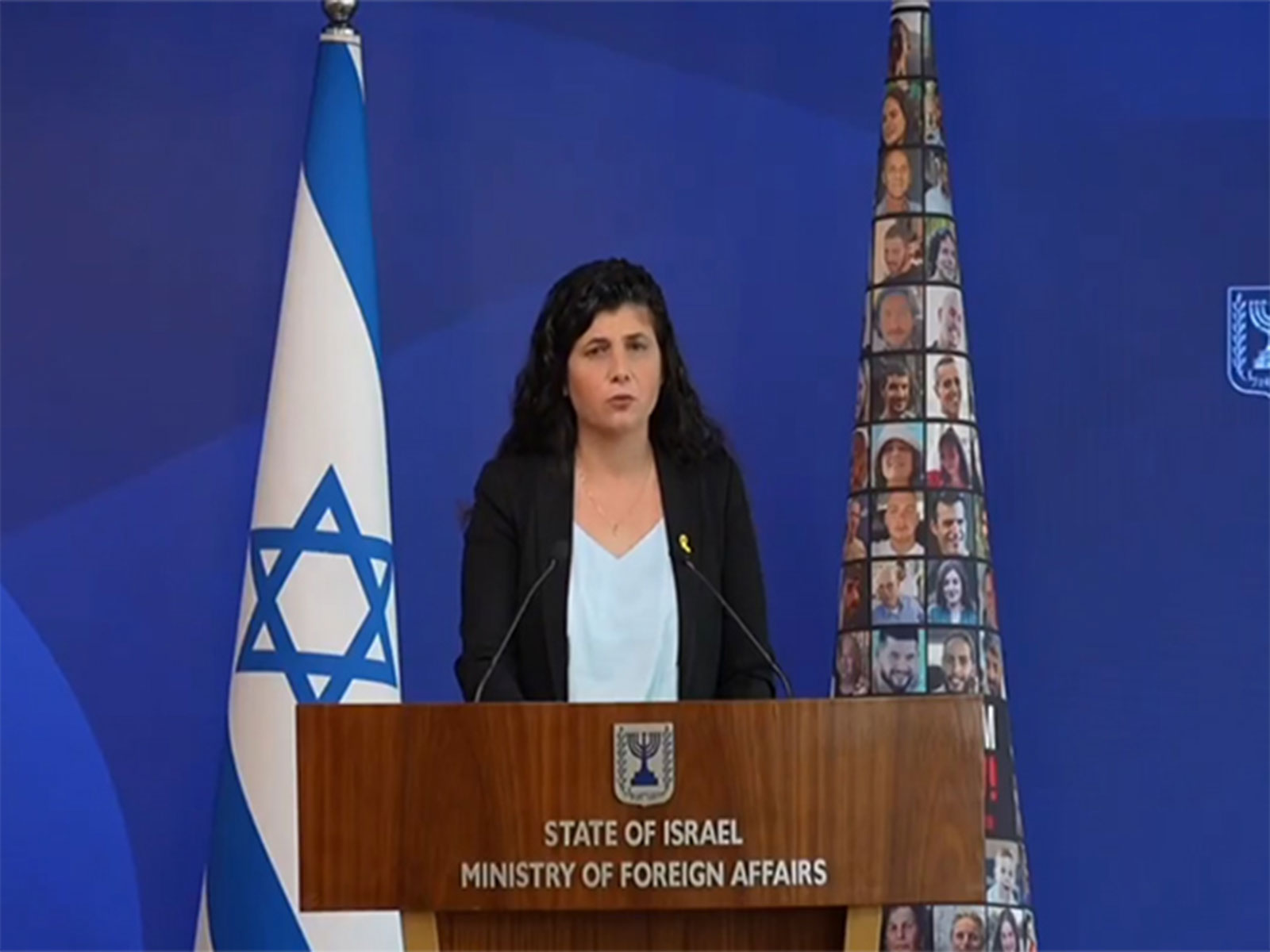
Tel Aviv:
In a virtual interview with ANI on Wednesday, Haskel said Israel would act as long as Hezbollah continued to target Israeli territory.
“If Hezbollah continues to attack Israel, we will continue to defend our people, our communities and our forces,” she said.
Describing Hezbollah as an extension of Iran’s influence, Haskel said the group’s presence amounted to “an Iranian occupation of Lebanon”. She added that both Israel and the Lebanese government had an interest in seeing Hezbollah disarmed.
“There is nothing more that we want to see than this Iranian terrorist army out of Lebanon,” she said, adding that the solution was to “get Iran out of Lebanon”.
Her remarks come as Israel and Lebanon attempt to implement a new security framework aimed at reducing cross-border hostilities. A key provision of the framework envisages the eventual disarmament of Hezbollah, a commitment included in previous international agreements after the 2006 Israel-Hezbollah war but never fully implemented.
Asked whether Israel would continue operations despite the framework, Haskel said the mechanism was meant to enable cooperation with the Lebanese government, but would not stop Israel from acting if Hezbollah launched attacks.
“The framework is a framework on how we can cooperate,” she said. “But wherever the Lebanese army is too weak to defend their country against this terrorist army, we will have to stand.”
Haskel rejected criticism that Israeli operations in Lebanon had caused unacceptable humanitarian damage, disputing casualty figures cited by Lebanon’s health ministry. She said Hezbollah had triggered the current conflict by attacking Israel after Hamas’ October 7 assault.
She said Israel was targeting Hezbollah’s military infrastructure, including headquarters, tunnels, missile launchers and weapons warehouses, and claimed that Israeli forces issued warnings and took precautions to avoid civilian casualties.
On reported differences between Israel and the United States over Lebanon policy, Haskel said allies could disagree, but both countries were ultimately focused on countering militant groups in the region. She also expressed scepticism over ongoing US-Iran negotiations, warning against any relief that could strengthen Tehran.
Responding to allegations of war crimes and genocide in Gaza, Haskel dismissed casualty figures released by Hamas-run authorities and defended Israel’s campaign as a response to the October 7 attack. She said Hamas must be disarmed before further ceasefire arrangements could be implemented.
Asked whether Israel’s upcoming elections could alter its military posture in Gaza, Lebanon or towards Iran, Haskel said the country’s security policy was not driven by Prime Minister Benjamin Netanyahu’s political future.
“The policies of defending our country and our communities are not going to change because of the election,” she said. “It doesn’t matter who is going to be elected. Israel is a democracy, but on defending the country, there is broad consensus.”