
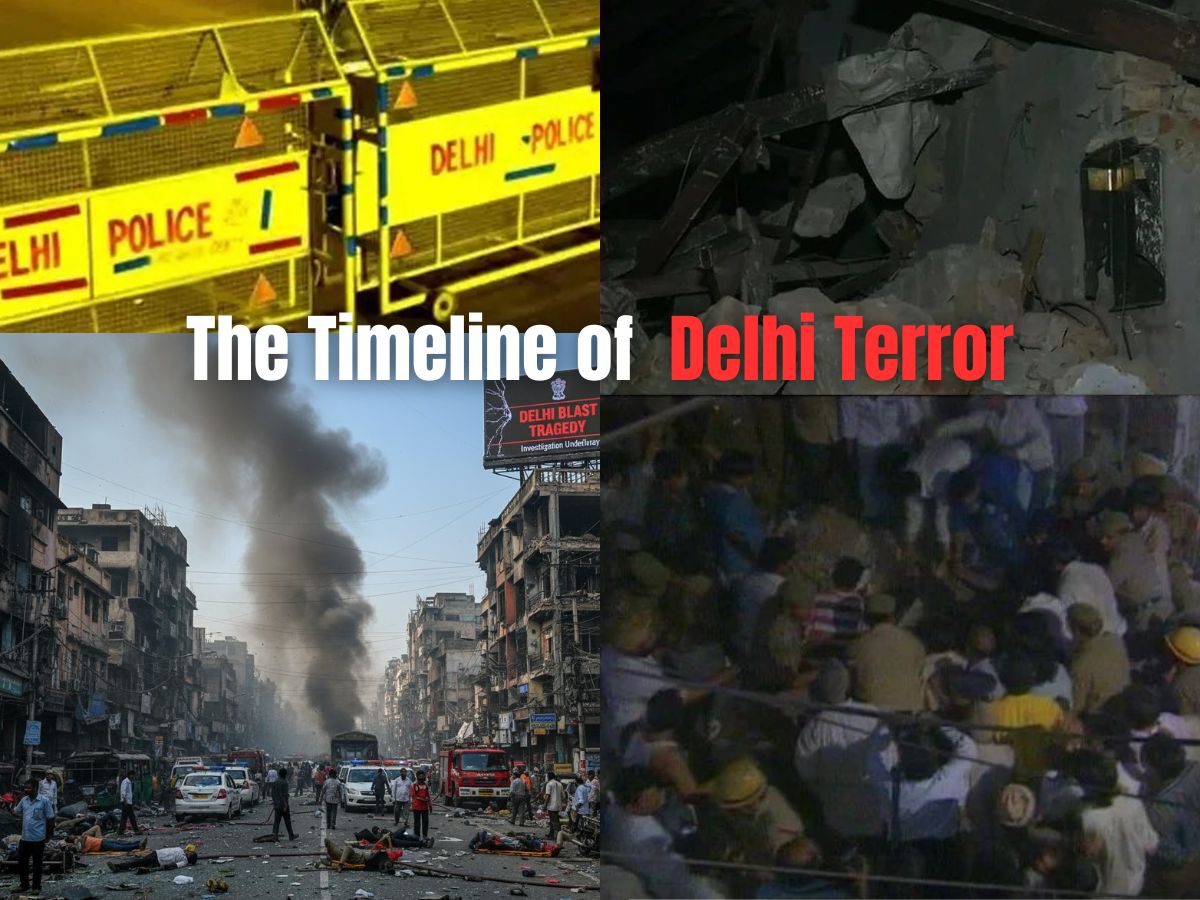
The explosion near the Red Fort on November 10, 2025, was more than just a tragic incident. Many in the capital saw it as a terrifying reminder of a past they wished was behind them. Eight people were killed in this explosion, which ended a time of relative calm and forced the city to face a dark past it will never fully be able to forget.
Why Delhi is a Target?
Delhi, as the nation’s political heart, has long been a prime target for terrorist organizations. Intelligence agencies have long named Pakistan-based outfits like Lashkar-e-Taiba (LeT) and Jaish-e-Mohammed (JeM) as key planners of major attacks. Their aim is to weaken India, spread fear, and hit symbols of power and normal life. Over time, local groups such as the Indian Mujahideen also appeared, making the threat more complex.
The Timeline of Terror: A Capital Under Siege
The story of terror in Delhi is written in the blood of its citizens across decades. The following listicle details the major attacks that have scarred the city.
1. The 1996 Lajpat Nagar Market Blast
On May 21, 1996, a deadly explosion hit the busy Lajpat Nagar market in South Delhi. The blast killed 13 and wounded 38, among the first large-scale terror incidents in the capital. The case later revealed Pakistan-based ties.
2. The 2001 Parliament Attack
In a direct assault on India’s democracy, five armed terrorists attacked the Parliament complex on December 13, 2001. The brazen gun and grenade attack resulted in the deaths of nine individuals, including security personnel. All five attackers were killed, and the probe linked the attack to JeM and LeT, bringing India and Pakistan to the brink of war.
3. The 2005 Diwali-Eve Serial Blasts
One of the deadliest attacks took place on October 29, 2005, just before Diwali. Three blasts in Sarojini Nagar, Paharganj, and a Govindpuri bus killed 62 and injured over 200. The festive mood was destroyed, and the probe led to Lashkar-e-Taiba.
4. The 2008 Serial Blasts
On September 13, 2008, five near-simultaneous explosions rocked crowded areas including Connaught Place and Karol Bagh. The attacks killed around 30 people and injured over 100. For the first time, the Indian Mujahideen, a domestic terror module, claimed responsibility, signaling a shift in tactics.
5. The 2011 Delhi High Court Bombing
Eleven people were killed and over sixty injured when a briefcase bomb went off outside the Delhi High Court on September 7, 2011.The blast, tied to the Indian Mujahideen and HuJI, marked one of the final major strikes before peace returned.
What Does the Red Fort Blast Mean Today?
The November 10, 2025, blast is a clear reminder that terrorism’s threat is still strong. It took place only hours after officials revealed they had busted a terror module in the nearby city of Faridabad. This timing raises critical questions. Is this blast a retaliatory strike? Does it indicate a resurgence of groups that were thought to be contained? The ongoing probe will seek these answers, but the event undeniably marks a violent end to the capital’s 14-year respite from large-scale terror.
Also Read: Red Fort Blast Suspect Revealed: CCTV Footage Shows Masked Man in Car
Disclaimer: This article is based on historical records and current reports; ongoing investigations may provide new details.