From the robotics revolution to the modern cars you drive, semiconductor chips have become the keystones of the digital age.Their demand is growing at an unprecedented rate, creating a complex global landscape of immense economic opportunity and strategic vulnerability. There are two interconnected factors in the story of chips: the extreme Semiconductor chips have emerged as the essential components of the digital age, allowing everything from the robotics revolution to the cars you drive today. The narrative of chips is a story of two connected forces: the extremely concentrated few countries that create them and the explosive, global demand for them.
What is Driving the Exponential Growth in Need?
The surge in demand for semiconductors is not from a single source but a simultaneous explosion across multiple, massive industries. The capacity for manufacturing around the world is being strained by this convergence.
The Artificial Intelligence (AI) Revolution: The rapid advancement and adoption of AI is a primary driver. Technologies like generative AI and large language models require immense computational power, which relies on high-performance Graphics Processing Units (GPUs) and other specialized AI chips. The race for AI supremacy is, in essence, a race for the most advanced semiconductors.
The Transformation of the Automotive Industry: Modern cars have evolved into sophisticated computing platforms. The shift towards electric vehicles (EVs) and advanced driver-assistance systems (ADAS) has dramatically increased the number of chips needed per vehicle.
Through 2030, it is anticipated that this industry will have one of the fastest rates of increase in semiconductor consumption.
Pervasive Consumer Electronics:
Advanced chipset demand is steady and increasing due to the frequent upgrades for smartphones, laptops, tablets, and wearables as well as the incorporation of smart features into commonplace items.The global rollout of 5G and future 6G networks is also entirely dependent on these components.
Cloud Computing and Data Centers: The world’s insatiable appetite for data creation, storage, and processing requires increasingly powerful data centers. The computers that make up the backbone of the internet and cloud services are crammed with advanced chips.
The Internet of Things (IoT): The proliferation of interconnected smart devices in homes, cities, and industrial settings requires a vast and diverse array of chips, from tiny, low-power sensors to more complex processing units.
Which Countries are the Primary Producers?
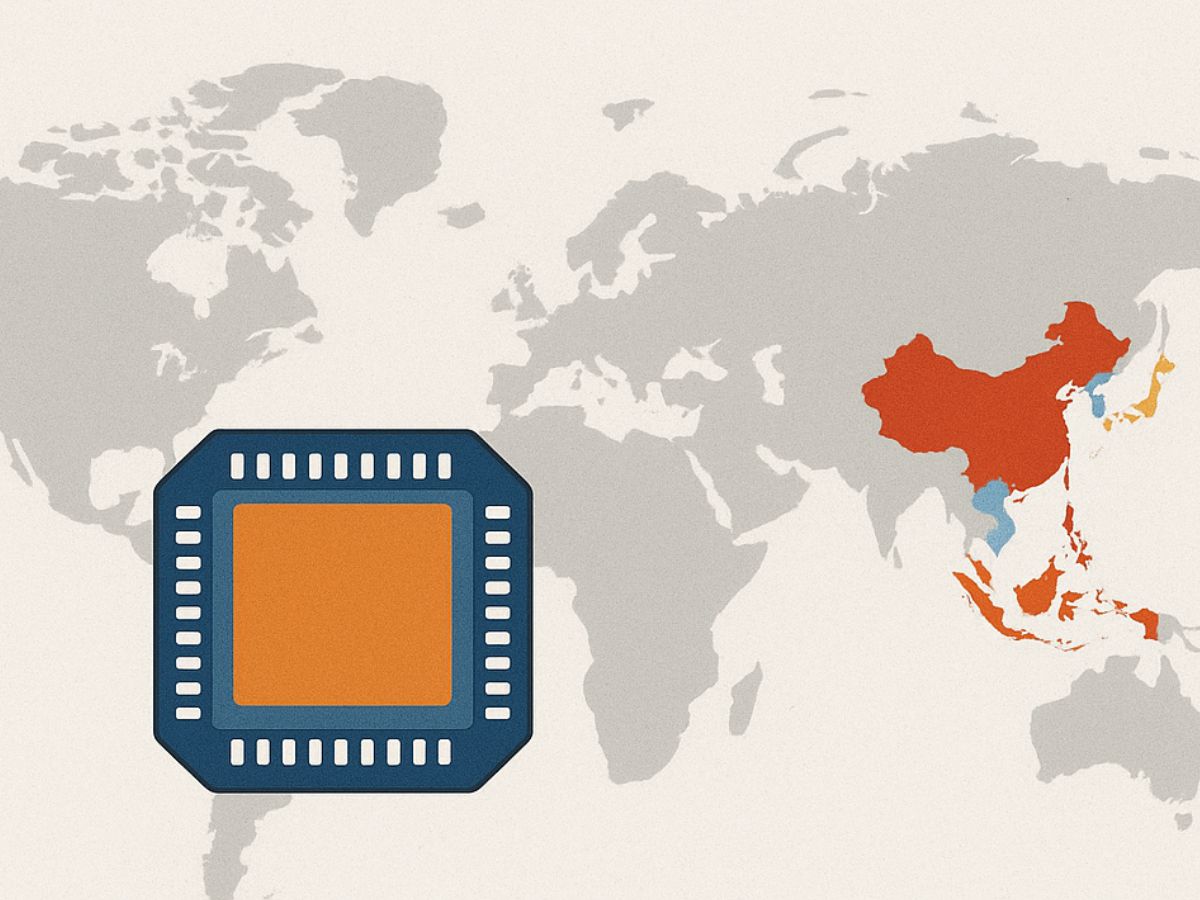
The manufacturing of these critical components is geographically concentrated, with a few key nations dominating specific stages of the complex supply chain.
Taiwan: The undisputed global leader in semiconductor manufacturing, particularly in advanced logic chips. According to estimates, the Taiwan Semiconductor Manufacturing Company (TSMC) manufactures more than 90% of the most sophisticated chips in the world and has more than half of the global foundry market.Taiwan is therefore the most important link in the whole supply chain.
South Korea: Through the behemoths Samsung and SK Hynix, it is a global superpower, mainly in memory chips (DRAM and NAND flash). Samsung is a major player in the foundry sector, manufacturing chips made by other companies.
China: China is making significant investments to increase its industrial capacity and achieve self-sufficiency faster than any other country. At the moment, it is the industry leader in producing simpler discrete semiconductors.
United States: Global leader in intellectual property (IP), semiconductor design, and research and development, home to big companies like Qualcomm, NVIDIA, and Intel.The United States is now actively seeking to increase domestic output through substantial government incentives, despite the fact that its share of global manufacturing capacity has decreased.
Japan: A critical player in the semiconductor ecosystem, not necessarily in volume of chips produced, but as a dominant supplier of specialized materials and manufacturing equipment. Over half of the semiconductor materials produced worldwide are made in Japan.
Other Important Participants
Netherlands: Home to ASML, the only company in the world capable of manufacturing Extreme Ultraviolet (EUV) lithography machines, which are essential for producing the most advanced chips.This gives the Netherlands a unique and vital strategic position.
Malaysia: A major global hub for the critical “back-end” processes of Assembly, Testing, and Packaging (ATP), a crucial final step in the production process.
India: A new player with substantial government support through programs like the India Semiconductor Mission, which seeks to build a domestic manufacturing base and draw in investment.
Also Read: Chandra Grahan 2025: The Do’s and Don’ts of Sutak Kaal During the Blood Moon Eclipse Tomorrow
What is the Impact of This Concentrated Production?
The high concentration of advanced chip manufacturing in East Asia exposes the global economy to significant risks. Geopolitical tensions, trade disputes, or regional natural disasters have the potential to disrupt global supply chains and halt production in a variety of industries, including consumer electronics and the automobile sector.
This vulnerability has prompted a global response. The U.S. CHIPS and Science Act and the European Chips Act are examples of governments providing massive subsidies to incentivize and build domestic semiconductor manufacturing capacity, aiming to diversify the supply chain and ensure economic and national security.