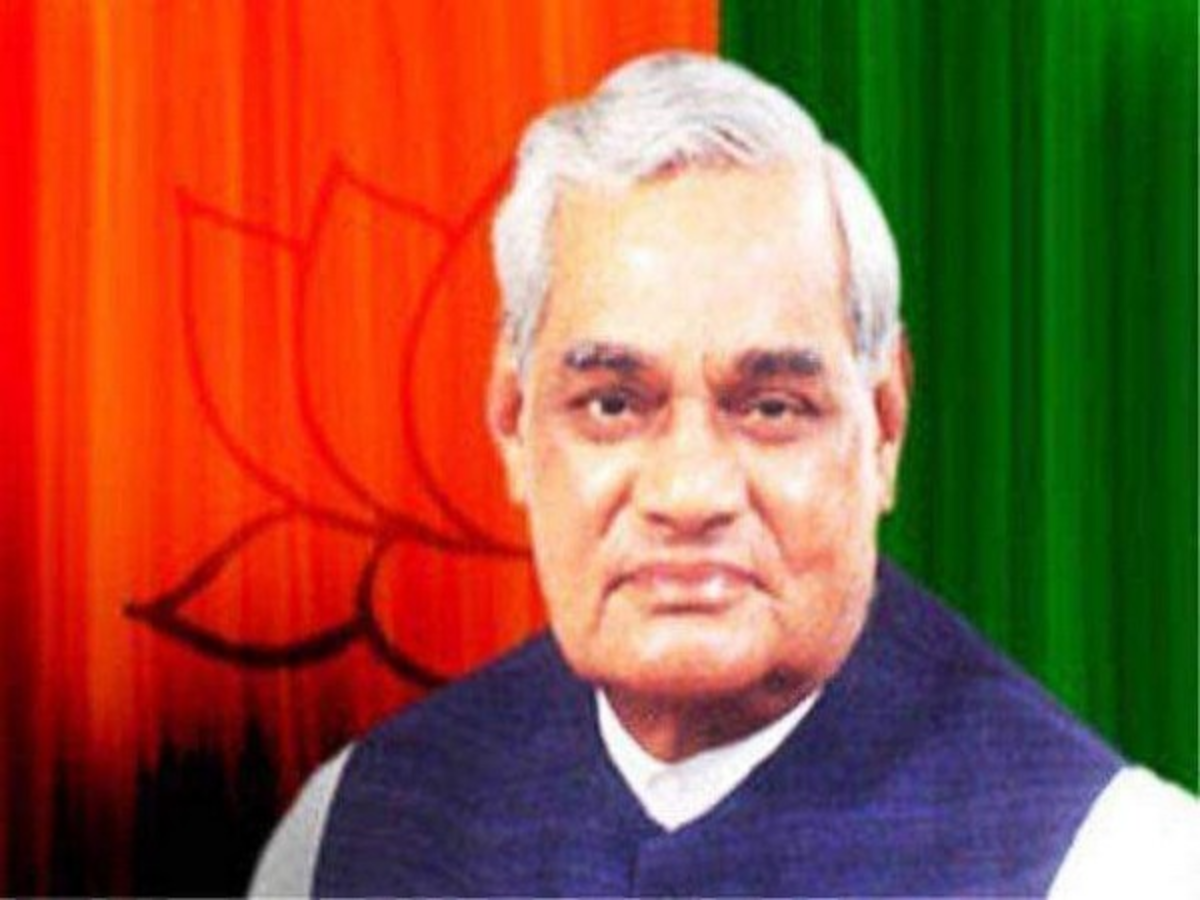
On April 6, 1980, the Bharatiya Janata Party (BJP) was founded in Mumbai. Standing on Bharat’s western coast, the country’s popular leader, Shri Atal Bihari Vajpayee, expressed his faith before the nation with the words: “Darkness will recede, the sun will rise, and the lotus will bloom.”
It was a time when the Janata Party government—formed as an alternative to authoritarianism—had collapsed, and a deep sense of despair prevailed across the country. In such a moment, the formation of the BJP marked a historic development on Bharat’s political horizon.
For those who once viewed the BJP with ridicule and disregard, its remarkable expansion over the past 46 years into the world’s largest political party is indeed a striking and unexpected transformation. With over 140 million primary members, the highest number of Members of Parliament and legislators, and a vast network of elected representatives in panchayats and local bodies, the party today serves the nation across a large part of the country through governance.
Driven by the spirit of “Nation First,” the tireless efforts of countless dedicated workers, capable and popular leadership, welfare-oriented policies for the poor, and a clear ideological direction, the BJP has emerged as a vehicle for fulfilling the aspirations of 1.4 billion Bhartiyas.
Beginning with its first founding president, Shri Atal Bihari Vajpayee, the Bharatiya Janata Party has been led by eleven presidents over the years. At present, Shri Nitin Naveen serves as the twelfth president, leading the party forward. The BJP’s distinctive organisational approach has enabled it to nurture and present leadership—both at the state and national levels—that shines like constellations in the political firmament. Today, Prime Minister Shri Narendra Modi has established himself as one of the most popular leaders in the world.
In the years following independence, many political parties emerged in the political sphere, rooted in distinct ideologies. However, in the present context, for several parties that once spoke at length about ideology, the pursuit of power by any means has become their sole guiding principle. Many parties, including the Congress, have become entangled in what is often described as left-leaning, urban Naxal-influenced thought. While some political parties and leaders appear to be grappling with ideological bankruptcy, the BJP continues to remain committed to the ideas first championed by Dr. Syama Prasad Mukherjee and later articulated by Pandit Deendayal Upadhyaya, and embraced since the days of the Bharatiya Jana Sangh.
This ideology is increasingly finding resonance not only across Bharat but also in wider global discourse. Reflecting on this unique characteristic of the BJP, Prime Minister Shri Narendra Modi once remarked: “We are an organisation-based political party; our organisation is worker-based, and our workers are driven by ideology.”
The Bharatiya Janata Party is the only political party that consistently upholds democratic values in its conduct. Through the renewal of membership every three years and the reorganisation of its structure from the booth level to the national level, the BJP remains an ever-active party, infused with renewed energy. It has ensured meaningful representation for women, youth, and all sections of society within its organisation. The party is also running extensive training initiatives to instill ideological clarity, a spirit of service in conduct, and sensitivity towards society among its workers.
During the period of opposition to the Emergency, it was under the leadership of this very stream of political thought that these democratic ideals were truly upheld. In contrast, many other political parties are increasingly turning into family-centric entities.
The BJP’s commitment to politics is not merely for the pursuit of power, but for the service of society. This is not just a slogan; it is reflected in the conduct of its workers. During the COVID-19 pandemic, party workers risked their lives to serve those in distress. By distributing food rations, masks, and medicines to nearly 100 million people, they set a remarkable example of humanitarian service. Under the initiative “Seva Hi Sangathan” (Service is Organization), countless lives were aided and saved during the pandemic. In times of both natural and man-made disasters, the BJP consistently remains active and committed to relief efforts.
Guided by its motto “Sabka Saath, Sabka Vikas” (Together with all, Development for all), the Bharatiya Janata Party remains consistently committed to serving every section of society and ensuring justice for all. Its proactive stance on issues such as women’s dignity during the Shah Bano case, the enactment of legislation against triple talaq, ensuring appropriate representation for women in democracy, and the implementation of welfare schemes for all stand as living examples of this commitment. In line with the spirit of the Constitution and the directives of the Supreme Court, several BJP-led states are actively working towards the implementation of a Uniform Civil Code.
Whenever the nation has required it, the BJP’s leadership has demonstrated the conduct of a constructive opposition. In contrast, sections of today’s opposition, in their persistent criticism of the ruling party, often appear to act in ways that undermine national interest. On critical issues of national importance—such as the 1971 war, the Geneva Human Rights forum engagement in 1994, and economic reforms—the BJP has exemplified the role of an ideal opposition by placing the nation above politics.
The BJP has consistently remained vigilant on matters of national borders and internal security. It has firmly articulated its position on key issues such as nuclear capability, indigenous defence production, and the modernisation of the armed forces. In pursuit of these objectives, the Modi government has undertaken credible and significant initiatives in the defence sector. A policy of zero tolerance towards terrorism and sustained efforts to eliminate Naxalism have instilled confidence among the people that Bharat is in safe hands.
Since the days of the Bharatiya Jana Sangh, the BJP has consistently worked to strengthen national integration and safeguard the country’s borders within a broad and comprehensive framework. From its movements against Article 370, its opposition to Chinese expansionism, its role in the liberation of Goa and Daman & Diu, and its resistance to the Berubari transfer, to its participation in the anti-Emergency movement of 1975—across all these, the ideological stream associated with the BJP has made an unparalleled contribution to Bharat’s democratic history. By opposing what it terms “pseudo-secularism” and by participating in—and seeing through to completion—the movement for the construction of a grand temple dedicated to Lord Shri Ram, a symbol of cultural pride, the BJP has transformed itself into a party of the masses.
Principles such as corruption-free development and welfare for the poorest (Antyodaya) reflect the party’s commitment to value-based politics. By commemorating Constitution Day, the BJP has promoted respect for the Constitution and helped disseminate the values articulated by Dr. B. R. Ambedkar across society. The vision of “Ek Bharat, Shrestha Bharat” represents a campaign to nurture cultural nationalism and strengthen national unity. While some other parties, in the name of secularism, are seen as undermining India’s cultural heritage and civilisational ethos, the BJP leadership has emphasised the promotion of cultural pride.
Prime Minister Shri Narendra Modi’s assertion—“We do not make announcements merely to win elections; we formulate policies necessary for the nation’s development”—captures the alignment between word and action in BJP leadership. In contrast, the practice of seeking votes on the basis of pre-election announcements and ceremonial foundation-laying had become a hallmark of opposition politics. By prioritising focused development, the BJP has enabled the momentum of progress to reach even the most remote rural areas—often without the need for protests or agitations to demand it.
With humility and without arrogance, BJP workers remain committed to addressing the challenges facing the nation. Through constructive initiatives such as “Ek Vriksh Maa Ke Naam” for environmental protection, efforts toward water conservation, organising programs on the birth and death anniversaries of great national figures, active participation in cleanliness drives, and the promotion and use of indigenous products for building a developed Bharat, the BJP has succeeded in earning the trust of society at large. It is this trust that is reflected in its electoral successes.
The resounding slogans of “Bharat Mata Ki Jai,” the complete rendition of “Vande Mataram,” and the singing of the national anthem have become integral to the BJP’s identity. It is a matter of pride for the party that it has been given the opportunity to fulfil the aspirations and emotions of the nation. On the occasion of its Foundation Day, a call is extended to millions of BJP workers to actively contribute—along with the support of crores of citizens—towards the shared goal of building a prosperous and fully developed Bharat.
(Shivprakash is the National Jt.General Secretary (Organisation) of the Bhartiya Janata Party)