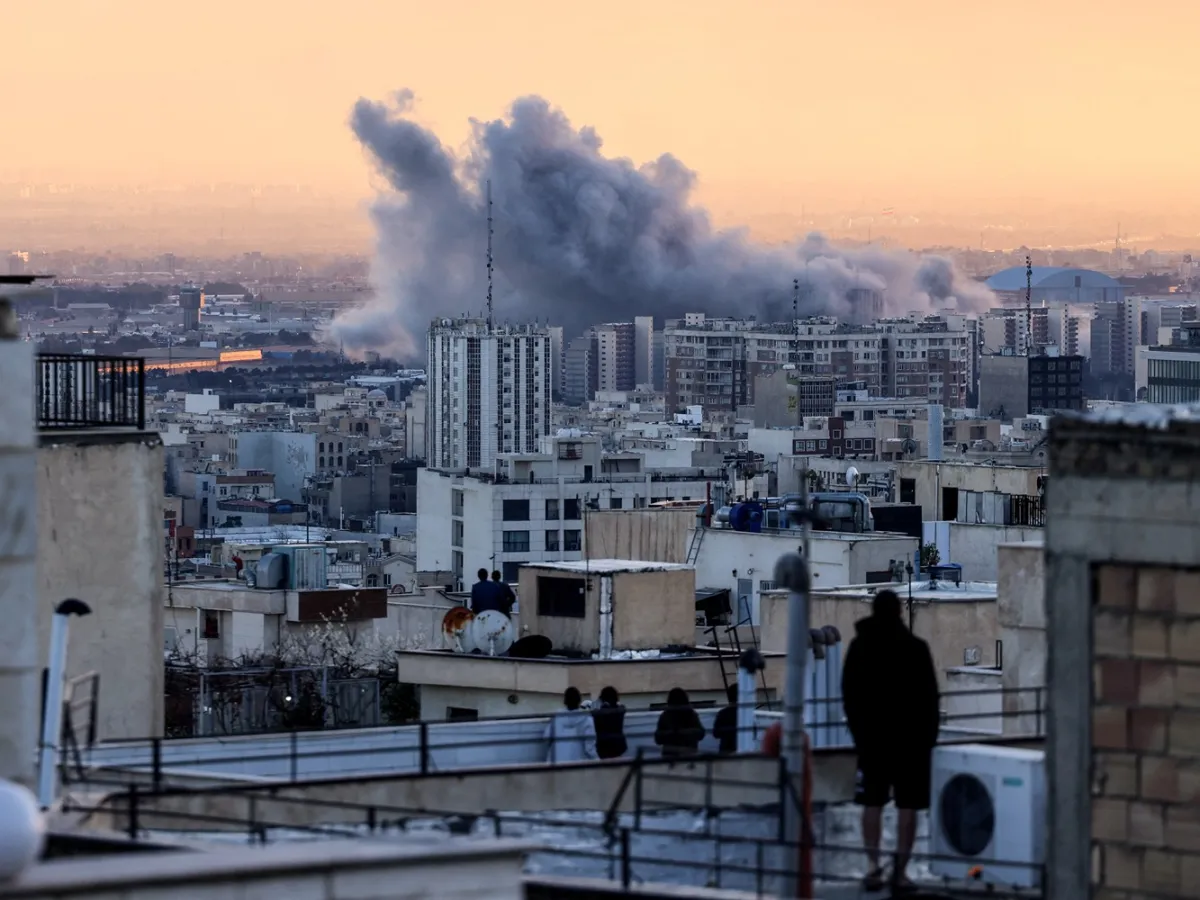
NEW DELHI: The escalating conflict involving Iran has triggered alarm not only in geopolitical circles but also across global financial markets. Economists, policymakers and investors are increasingly worried that the war could trigger a fresh global economic shock—driven largely by surging oil prices and disruptions to energy supply routes.
As tensions intensified in the Middle East, oil prices climbed sharply, at one point crossing $115–$120 per barrel, sparking fears that the global economy could slide into stagflation, a dangerous combination of rising inflation and slowing economic growth.
The crisis comes at a time when the world economy is still recovering from multiple shocks over the past few years, including the COVID-19 pandemic, supply-chain disruptions and the energy crisis triggered by the Russia-Ukraine war. If the Iran conflict continues to escalate, economists warn it could derail global economic recovery and place additional strain on governments, businesses and households.
This explainer looks at why the Iran conflict is sending shockwaves through the global economy, what stagflation means, and how rising oil prices could reshape the economic outlook worldwide.
WHY THE IRAN CONFLICT IS CAUSING ECONOMIC PANIC
The most immediate economic impact of the Iran conflict has been a surge in energy prices. Oil markets are highly sensitive to geopolitical tensions in the Middle East because the region accounts for a large share of global oil production and exports.
The latest escalation in the conflict has disrupted shipping routes and energy infrastructure across the region, pushing oil prices sharply higher. Brent crude rose to nearly $119.50 per barrel, marking a major spike in global energy prices.
Energy markets are reacting strongly because the Middle East is critical to global energy supply chains. The conflict has raised fears that oil production and exports could be disrupted for weeks or even months.
A key flashpoint is the Strait of Hormuz, one of the most important maritime routes for global energy trade. Nearly 20 percent of the world’s oil supply passes through this narrow waterway, making it one of the most strategically vital shipping routes on the planet.
Any disruption to this chokepoint—whether through military action, blockades or attacks on oil tankers—can immediately push oil prices higher and create panic in global energy markets.
WHAT IS STAGFLATION?
The sudden surge in oil prices has revived fears of stagflation, one of the most challenging economic situations for policymakers.
Stagflation occurs when three conditions happen simultaneously:
-
Rising Inflation
-
Slow or stagnant economic growth
-
High unemployment
Under normal circumstances, inflation tends to rise when economies are growing rapidly and demand is strong. However, stagflation breaks this pattern because prices increase even while economic growth weakens.
Oil price shocks are historically one of the biggest triggers of stagflation because energy costs affect nearly every sector of the economy—from transportation and manufacturing to agriculture and electricity production.
Economists warn that the Iran conflict could push the global economy toward such a scenario. Higher oil prices increase production costs for businesses while also raising household expenses, reducing consumer spending and slowing economic growth.
WHY OIL PRICES MATTER SO MUCH
Oil remains the backbone of the modern global economy. It powers transport networks, supports manufacturing and provides fuel for electricity generation in many parts of the world.
When oil prices rise sharply, the effects ripple across the global economy.
RISING TRANSPORTATION COSTS Transportation is heavily dependent on fuel. When oil prices increase, shipping costs, airline fares and logistics expenses rise significantly.
These higher costs eventually get passed on to consumers through increased prices for goods and services.
HIGHER FOOD PRICES Agriculture is also energy-intensive. Fuel is needed for farm machinery, irrigation systems, food processing and transportation.
As a result, higher oil prices often lead to higher food prices, which can worsen inflation and strain household budgets.
EXPENSIVE MANUFACTURING Factories rely on energy for production processes. When fuel costs rise, companies face higher operational expenses, forcing them to either raise prices or cut production.
This combination of higher prices and reduced output can slow economic growth.
GLOBAL MARKETS ALREADY REACTING Financial markets around the world have already experienced sharp declines amid fears that rising oil prices could hurt economic growth and corporate profits.
Investors tend to move their money into safer assets—such as government bonds, gold or the US dollar—during geopolitical crises. This flight to safety can cause further volatility in financial markets and put pressure on currencies in emerging economies.
Meanwhile, global energy markets remain extremely volatile as traders attempt to assess how long the conflict could last and how severely it might disrupt oil supplies.
CENTRAL BANKS FACE A DIFFICULT CHOICE One of the biggest challenges during a stagflationary environment is the dilemma faced by central banks.
Central banks normally use interest rates to manage inflation and economic growth:
-
If inflation rises, central banks raise interest rates to cool the economy.
-
If growth slows, they cut interest rates to stimulate economic activity.
-
But stagflation creates a policy trap.
If central banks raise interest rates to control inflation, economic growth could slow further. On the other hand, if they cut interest rates to support growth, inflation could worsen.
As energy prices rise due to the Iran conflict, central banks may delay planned interest-rate cuts or even consider tightening monetary policy again.
This could increase borrowing costs for businesses and households around the world, further slowing economic growth.
Asia and developing economies are most vulnerable. Not all countries will be affected equally by the Iran conflict.
Countries that rely heavily on imported oil—especially in Asia—are likely to suffer the most.
Many Asian economies depend heavily on oil shipments from the Middle East. China, India, Japan and South Korea account for a large share of the region’s oil imports, making them particularly vulnerable to disruptions in the Strait of Hormuz.
FOR THESE COUNTRIES, RISING OIL PRICES COULD LEAD TO:
-
Higher inflation
-
Widening trade deficits
-
Currency depreciation
Developing economies may face even greater challenges because they often have limited financial resources to subsidize fuel prices or support struggling households.
THE RISK OF A BROADER ENERGY CRISIS The Iran conflict has also raised concerns about a broader energy crisis.
The war has already disrupted oil shipments and natural gas production in the region. Some facilities in the Gulf have faced attacks or operational disruptions, contributing to price volatility in global energy markets.
European natural gas prices have also surged in response to the conflict, reflecting fears that global energy supply chains could face prolonged disruptions.
If the war spreads further across the Middle East or targets major oil and gas infrastructure, global energy markets could face even more severe shortages.
LESSONS FROM PAST OIL SHOCKS History shows that oil price shocks can have profound economic consequences.
The 1973 oil embargo and the 1979 oil crisis triggered global stagflation, causing recessions in several major economies.
DURING THOSE CRISES:
-
Oil prices surged dramatically
-
Inflation skyrocketed
-
Economic growth slowed sharply
-
Unemployment rose
Governments were forced to introduce energy-saving policies, while central banks struggled to control inflation without deepening economic downturns.
Economists fear that the current crisis could produce similar economic pressures if oil prices continue to rise.
COULD THE WORLD FACE A GLOBAL RECESSION? Whether the Iran conflict triggers a global recession will depend largely on how long the war lasts and how severely it disrupts energy supplies.
Several possible scenarios exist.
SHORT CONFLICT If diplomatic efforts succeed and the conflict ends quickly, oil prices may stabilize and economic damage could remain limited.
PROLONGED WAR If the war continues for months, energy supply disruptions could push oil prices significantly higher, increasing inflation and slowing global growth.
REGIONAL ESCALATION If the conflict spreads across the Middle East or disrupts major oil infrastructure, the global economy could face a severe energy crisis and possible recession.
Some governments are already discussing emergency measures such as releasing oil from strategic reserves to stabilize energy markets and control price spikes.
CONCLUSION
The Iran conflict has quickly evolved from a regional geopolitical crisis into a potential global economic shock. With oil prices surging and energy supply routes under threat, fears of stagflation are rising across the world.
If the conflict continues or expands, the consequences could include higher inflation, slower economic growth and increased financial market volatility.
For policymakers and economists, the coming months will be crucial. Much will depend on whether diplomatic efforts can de-escalate the conflict and stabilize energy markets. Until then, the world economy faces a period of uncertainty—one where geopolitical tensions and economic risks are becoming increasingly intertwined.