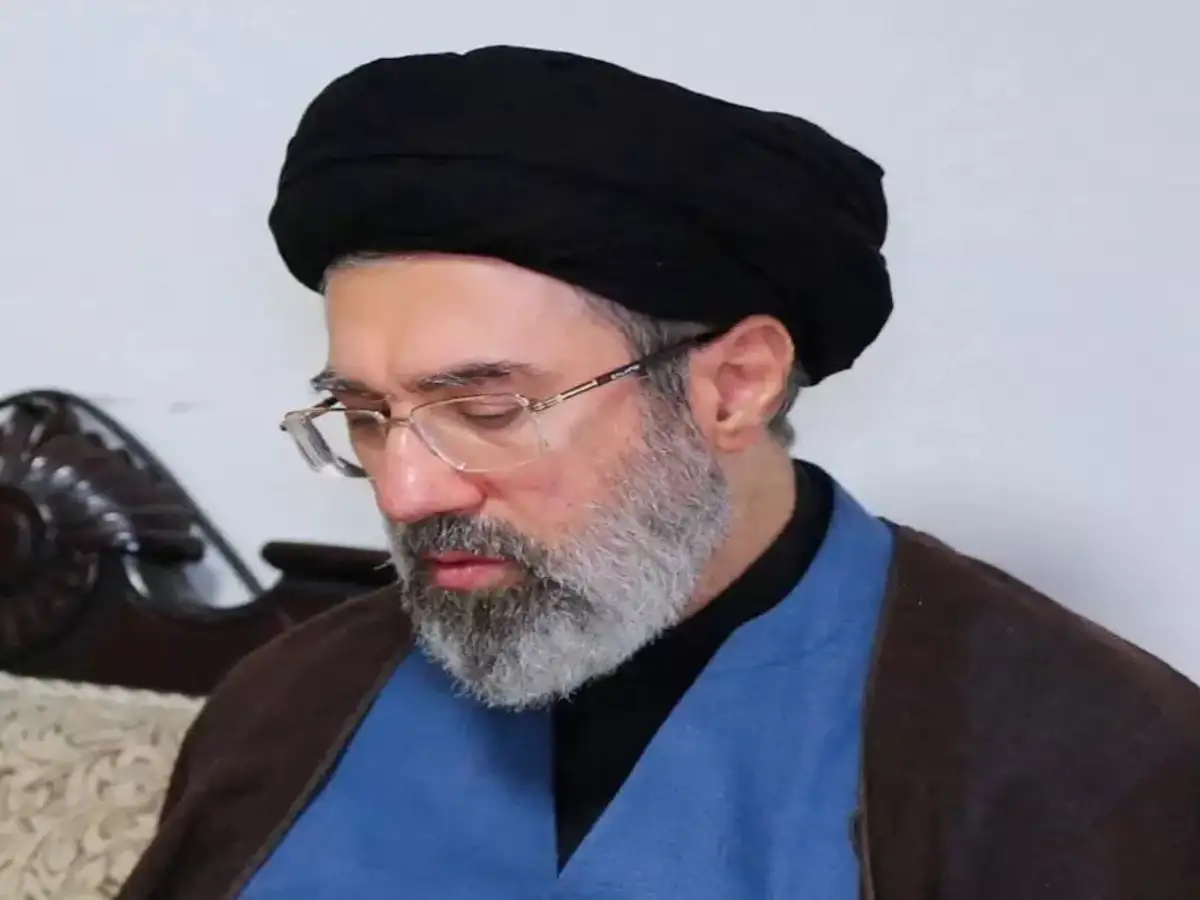
NEW DELHI: The death of Ayatollah Ali Khamenei marks one of the most consequential political turning points in the Islamic Republic’s history. For nearly four decades, Khamenei stood at the apex of Iran’s hybrid political-religious system, wielding ultimate authority over the military, judiciary, state broadcasting, intelligence services and broad contours of foreign policy. His passing triggers a constitutional mechanism that is both structured and opaque — a process designed to preserve continuity while concentrating power within clerical institutions.
This explainer breaks down how Iran chooses its supreme leader, who holds authority in the interim, the names circulating as potential successors, and why the stakes extend far beyond Tehran.
THE ROLE OF THE SUPREME LEADER: MORE POWERFUL THAN PRESIDENT OR PARLIAMENT
Iran’s system is built around the doctrine of velayat-e faqih — guardianship of the Islamic jurist — first articulated by Ruhollah Khomeini, the architect of the 1979 Islamic Revolution. Under this doctrine, ultimate political authority rests with a senior Islamic jurist who ensures governance aligns with Islamic law.
THE SUPREME LEADER APPOINTS:
-
The heads of the armed forces, including the powerful Islamic Revolutionary Guard Corps (IRGC)
-
The judiciary chief Half the members of the Guardian Council
-
Senior commanders of the military and police
THE HEAD OF STATE MEDIA
He also has the final say on war and peace, strategic foreign alliances, nuclear policy and intelligence operations. While Iran elects a president and parliament, those institutions function within parameters defined by the supreme leader.
Since 1979, Iran has had only two supreme leaders: Khomeini and Khamenei. That rarity underscores why this succession matters so profoundly.
WHAT HAPPENS IMMEDIATELY AFTER A LEADER DIES?
Iran’s constitution anticipates a vacuum of authority and provides a clear interim solution under Article 111. Upon Khamenei’s death, a three-member temporary leadership council assumed his duties. The council consists of:
-
Masoud Pezeshkian, the sitting president
-
Gholamhossein Mohseni Ejei, the judiciary chief
-
Alireza Arafi, a senior cleric selected to represent the Guardian Council
This council does not replace the supreme leader permanently. Its mandate is temporary: maintain stability, ensure institutional continuity and oversee day-to-day leadership functions until a successor is formally chosen.
In moments of external tension or military confrontation, this interim structure becomes particularly significant. It signals to domestic elites and international actors alike that the state remains functional and cohesive.
WHO CHOOSES THE NEXT SUPREME LEADER?
The authority to select a permanent successor lies with the Assembly of Experts.
This 88-member body is composed of senior Shiite clerics elected by the public for eight-year terms.
However, candidates seeking to run for the Assembly must first be vetted by the Guardian Council, which itself includes members appointed directly or indirectly by the supreme leader. This layered vetting process ensures ideological alignment within the Assembly.
CONSTITUTIONAL BASIS
Under Article 107 of Iran’s constitution, the Assembly of Experts must:
-
Identify qualified candidates.
-
Select one by majority vote.
Deliberations occur behind closed doors. There is no fixed public timeline, but officials have historically emphasized that the choice should be made as swiftly as possible to avoid uncertainty.
WHAT QUALIFICATIONS MUST A CANDIDATE MEET?
The constitution outlines broad criteria. A Supreme Leader must:
-
Be a male Islamic jurist (faqih)
-
Demonstrate piety, justice and political competence
-
Possess sufficient religious scholarship
Notably, the constitution no longer requires the leader to be a Grand Ayatollah. This amendment proved crucial in 1989 when Khamenei — not then among the highest-ranking clerics — was selected after Khomeini’s death. That precedent suggests flexibility remains built into the system. In theory, the Assembly could also appoint a leadership council instead of a single individual. However, Iran has always ultimately consolidated authority in one supreme leader.
HOW DID SUCCESSION WORK IN 1989?
When Ruhollah Khomeini died in 1989, the Assembly of Experts convened rapidly. After internal debate, it chose Ayatollah Ali Khamenei.
At the time, Khamenei did not possess the highest clerical rank. Yet political consensus among key power brokers — including military and clerical elites — overrode strict hierarchical considerations. Soon after, constitutional amendments formalized the relaxed qualification standards.
That episode demonstrated that succession in Iran is shaped as much by political alignment and elite bargaining as by theological ranking.
LEADING CONTENDERS AND INFLUENTIAL FIGURES
Although the Assembly operates privately, analysts and reporting consistently mention several figures whose influence or credentials make them relevant to discussions.
MOJTABA KHAMENEI
Mojtaba Khamenei, the son of the late leader, has long been described as influential behind the scenes. He reportedly cultivated close ties with the IRGC and segments of the security establishment.
Supporters argue that continuity in a period of instability might favour someone deeply embedded within existing power networks. Critics warn that elevating the supreme leader’s son risks accusations of dynastic succession — potentially clashing with the republic’s revolutionary ethos.
His formal clerical credentials and ability to secure broad consensus remain key questions.
ALIREZA ARAFI
Alireza Arafi currently serves on the interim council and holds positions within both the Guardian Council and Assembly of Experts. His institutional proximity to the succession process gives him visibility and credibility among establishment circles.
He represents a figure rooted in religious education networks and clerical administration — potentially appealing to those seeking a steady, system-preserving choice.
GHOLAMHOSSEIN MOHSENI EJEI
As judiciary chief, Gholamhossein Mohseni Ejei commands influence over Iran’s legal and prosecutorial structures. Known for hardline positions, he could attract support from conservative factions prioritising ideological firmness and internal security.
HASSAN KHOMEINI
Hassan Khomeini, grandson of Ruhollah Khomeini, carries symbolic weight due to lineage. Often associated with more moderate currents, he has at times faced institutional barriers within Iran’s political system. His appeal may lie more in symbolic legitimacy than factional dominance.
OTHER CONSERVATIVE CLERICS
Hardline figures such as Mohammad Mehdi Mirbagheri represent ideological continuity with the most conservative wings of the clerical establishment. While perhaps lacking broad national consensus, they illustrate the range of possibilities within the Assembly’s deliberations.
THE ROLE OF THE REVOLUTIONARY GUARD
The Islamic Revolutionary Guard Corps is not constitutionally tasked with selecting the supreme leader, yet its influence is undeniable. Over decades, the IRGC has expanded into economic sectors, intelligence operations and regional military strategy. Any candidate who commands the Guard’s confidence may hold an advantage. Conversely, open resistance from the IRGC could complicate an Assembly decision. The interplay between clerical authority and security institutions will likely shape the final outcome.
POLITICAL STAKES INSIDE IRAN
Iran faces persistent economic pressures, public dissatisfaction and generational change. The next supreme leader will inherit:
-
Sanctions-strained economic conditions
-
Demographic shifts with a younger population
-
Tensions between conservative and reformist factions
-
Ongoing regional engagements
A leader perceived as rigid may consolidate elite support but risk alienating segments of society. A more moderate figure might attempt recalibration but face pushback from entrenched institutions. The succession therefore becomes not just a clerical decision but a referendum on the Islamic Republic’s future trajectory.
REGIONAL AND GLOBAL IMPLICATIONS
Iran’s supreme leader shapes the country’s approach to:
-
Relations with the United States
-
Nuclear negotiations
-
Alliances with regional actors
-
Support for proxy groups across the Middle East
A continuity candidate may sustain existing policies, including strategic defiance toward Western pressure. A pragmatist might recalibrate tactics without altering ideological foundations.
Given Iran’s central role in Middle Eastern geopolitics, neighbouring states and global powers are watching the succession closely.
HOW QUICKLY WILL A DECISION COME?
Iranian officials have indicated that the Assembly of Experts aims to act swiftly. However, “swift” does not necessarily mean immediate public clarity. Negotiations among elite factions may intensify behind closed doors before a formal announcement.
In 1989, the decision came rapidly — but under different domestic and international conditions. Today’s environment, shaped by economic constraints and geopolitical tension, could either accelerate consensus or complicate it.
CONTINUITY VERSUS CHANGE
Iran’s constitutional framework prioritises stability. The interim council ensures governance does not stall. The Assembly of Experts institutionalises the selection process. Yet beneath the formal structure lies a complex web of alliances among clerics, military leaders and political elites.
The system has survived four decades through controlled adaptation. Whether this transition reinforces continuity or opens space for recalibration depends on the balance struck between ideological guardianship and pragmatic governance.
CONCLUSION: A DEFINING MOMENT FOR THE ISLAMIC REPUBLIC
The death of Ayatollah Ali Khamenei closes a chapter that began in 1989. Iran’s constitution now guides the country through a carefully scripted transition: an interim council stabilises authority, and the Assembly of Experts deliberates to select a permanent successor.
Yet succession in Iran is never purely procedural. It reflects negotiations among clerical legitimacy, military influence and political calculation. Whoever emerges as the next supreme leader will inherit not just a title but the responsibility of steering a nation navigating sanctions, societal change and regional rivalry. The choice will shape Iran’s internal balance of power — and reverberate across the Middle East — for decades to come.