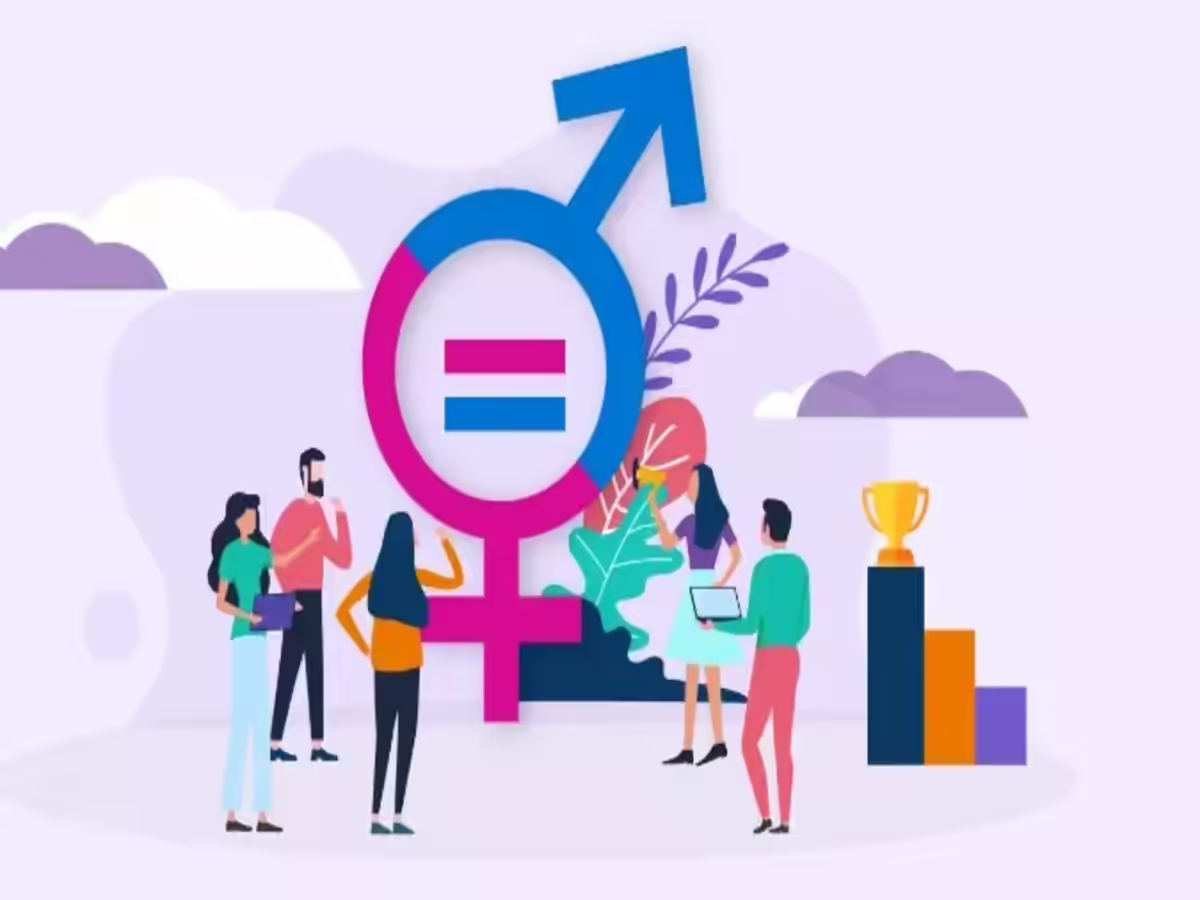
NEW DELHI: Every year on March 8, the world observes International Women’s Day, recognising the achievements of women and renewing commitments toward gender equality. In 2026, the global theme—”Rights, Justice, Action: For ALL Women and Girls”—highlights the need to strengthen women’s rights, expand access to justice, and accelerate action for equality worldwide.
In India, the conversation around women’s empowerment has evolved significantly. For decades, policies focused on welfare and protection for women. Today, the approach has shifted toward women-led development, recognising women not just as beneficiaries of programmes but as active drivers of economic growth and social transformation.
Across sectors—from governance and education to entrepreneurship and technology—women are shaping India’s development trajectory and contributing to the country’s vision of Viksit Bharat by 2047.
THE LONG JOURNEY OF WOMEN’S RIGHTS
The roots of International Women’s Day trace back to early 20th-century labour movements in North America and Europe, where women demanded better working conditions, fair wages and voting rights. A major turning point came in 1917, when women workers in Russia protested for “bread and peace,” an event that eventually led to the global recognition of the day.
The United Nations formally recognised International Women’s Day in 1977, turning it into a global platform for advancing gender equality and celebrating women’s contributions across society. Over time, the day has become both a celebration of achievements and a reminder of the challenges that remain in achieving equality.
CONSTITUTIONAL FOUNDATIONS OF GENDER EQUALITY IN INDIA
India’s commitment to gender equality is deeply embedded in its constitutional framework. Several provisions ensure equal rights and opportunities for women:
-
Article 15 prohibits discrimination based on religion, race, caste, sex or place of birth and allows the state to make special provisions for women.
-
Article 16 guarantees equality of opportunity in public employment.
-
Article 39 directs the state to ensure equal livelihood opportunities for men and women.
-
Article 42 mandates maternity relief and humane working conditions.
-
Article 243 reserves one-third of seats in Panchayats and municipal bodies for women.
These provisions laid the foundation for women’s participation in India’s democratic and social structures. Notably, India adopted universal adult franchise at independence, ensuring that women and men had equal voting rights from the very beginning of the republic—something many countries achieved much later.
EDUCATION AS THE GATEWAY TO EMPOWERMENT
Education remains one of the most powerful tools for women’s empowerment. Over the past decade, several initiatives have focused on improving access to schooling and higher education for girls. Under Samagra Shiksha, schools are supported through improved infrastructure, free textbooks and uniforms, and recruitment of women teachers. Residential schools like Kasturba Gandhi Balika Vidyalayas provide education for girls from disadvantaged communities.
India has also expanded opportunities in higher education. Female enrolment increased from 1.57 crore in 2014-15 to 2.18 crore in 2022-23, reflecting growing participation of women in universities and colleges. The female gross enrolment ratio in higher education rose from 22.9 to 30.2 during the same period.
Women are also making strides in research and innovation, accounting for more than 83% of UGC NET-JRF scholars in STEM fields in FY 2024-25.
HEALTH, DIGNITY AND SOCIAL WELLBEING
Women’s wellbeing is central to the health of families and communities. Government initiatives have focused on maternal health, sanitation and access to essential services.
Under the Pradhan Mantri Matru Vandana Yojana, more than 20,660 crore has been transferred to 4.26 crore beneficiaries, providing financial support during pregnancy and childbirth. Efforts to improve maternal care have contributed to a decline in India’s Maternal Mortality Ratio, which dropped from 130 (2014-16) to 88 (2021-23).
Access to clean cooking fuel has also improved significantly through the Pradhan Mantri Ujjwala Yojana, which has provided over 10.56 crore LPG connections to women from economically weaker households. Similarly, infrastructure programmes such as Jal Jeevan Mission and Swachh Bharat Mission have improved access to drinking water and sanitation facilities, reducing the physical burden on women and enhancing dignity and safety.
WOMEN IN LEADERSHIP AND GOVERNANCE
Women’s political participation has grown steadily over the decades. Their presence in Parliament and state legislatures has increased, reflecting a broader shift toward gender-balanced governance. At the grassroots level, the transformation is even more striking. Nearly half of elected representatives in Panchayati Raj Institutions are women.
TWO LANDMARK CONSTITUTIONAL AMENDMENTS STRENGTHENED THIS PARTICIPATION:
-
73rd Constitutional Amendment Act (1992) – Introduced reservations for women in rural local governance.
-
74th Constitutional Amendment Act (1992) – extended similar provisions to urban local bodies.
More recently, the 106th Constitutional Amendment Act (Nari Shakti Vandan Adhiniyam), 2023 provided one-third reservation for women in the Lok Sabha and state legislative assemblies, marking a major milestone for gender representation in Indian politics.
WOMEN POWERING INDIA’S ECONOMIC TRANSFORMATION
Women’s empowerment is also visible in India’s growing entrepreneurship ecosystem. Under the Deendayal Antyodaya Yojana – National Rural Livelihood Mission (DAY-NRLM), over 10.05 crore rural households have been mobilised into 90.90 lakh self-help groups (SHGs). These groups have accessed ₹2.15 lakh crore in institutional credit since 2013-14, enabling millions of women to launch micro enterprises and livelihoods.
The Lakhpati Didi initiative aims to help rural women achieve annual incomes of ₹1 lakh or more. More than 3 crore women are already progressing toward this goal. Financial inclusion programmes have also played a crucial role. Under the Pradhan Mantri MUDRA Yojana, around 68% of beneficiaries are women, reflecting their increasing participation in small business and entrepreneurship.
Women also account for 56% of Jan Dhan account holders, strengthening their access to banking and financial services.
TECHNOLOGY AND NEW OPPORTUNITIES
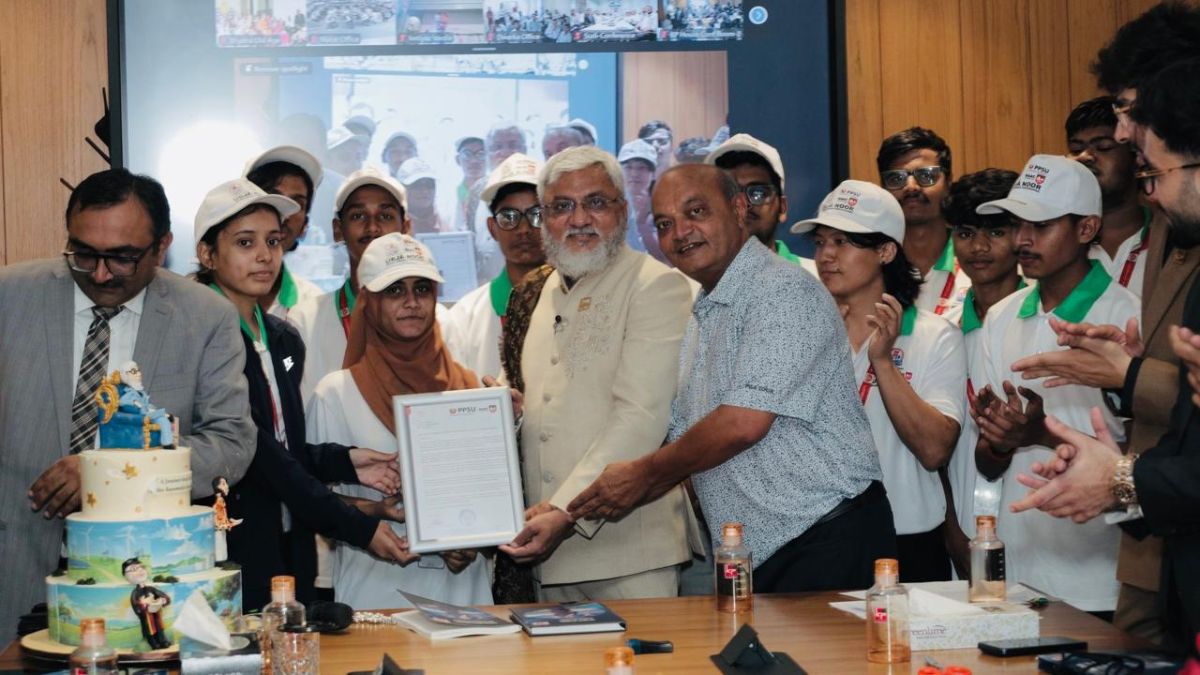
India’s push toward innovation is opening new avenues for women in emerging sectors. Under the NaMo Drone Didi initiative, self-help groups are being supported to operate agricultural drones. The programme includes 80% subsidy for drone procurement and a total allocation of ₹1,261 crore, targeting 15,000 SHGs.
Meanwhile, nearly 45% of beneficiaries of the Pradhan Mantri Kaushal Vikas Yojana are women, reflecting growing participation in skill development programmes. Women entrepreneurs are also benefiting from the Start-Up India initiative, which has supported over 75,000 women-led startups across sectors ranging from fintech to climate technology.
Stories of change: women transforming communities. The impact of these initiatives is reflected in countless individual success stories across the country. In Meghalaya, Badashisha Dkhar joined a self-help group in 2019 and later established a juice-processing micro-enterprise after receiving training and financial support. Her business now generates income and employment in her village. Similarly, women-led cooperatives and enterprises are emerging across sectors—from healthcare services to technology startups—demonstrating the transformative potential of collective action and financial inclusion.
TOWARDS AN INCLUSIVE FUTURE
India’s development journey increasingly reflects the growing role of women across social, economic and political spheres. Women are serving as elected leaders in local governments, launching startups, participating in advanced research, and contributing to industries once considered male-dominated. With over 47 crore registered women voters, their influence is also shaping India’s democratic landscape.
The shift toward women-led development highlights a broader transformation: empowerment is no longer limited to welfare policies but is increasingly about participation, leadership and opportunity.
CONCLUSION
The story of women’s empowerment in India is unfolding not only through policy reforms but through the everyday achievements of millions of women across villages, towns and cities. From self-help groups and startups to classrooms and local governance institutions, women are playing an increasingly vital role in shaping the country’s future. As India moves toward the vision of Viksit Bharat 2047, the rise of Nari Shakti is emerging as one of the most powerful forces driving inclusive growth, innovation and social transformation.