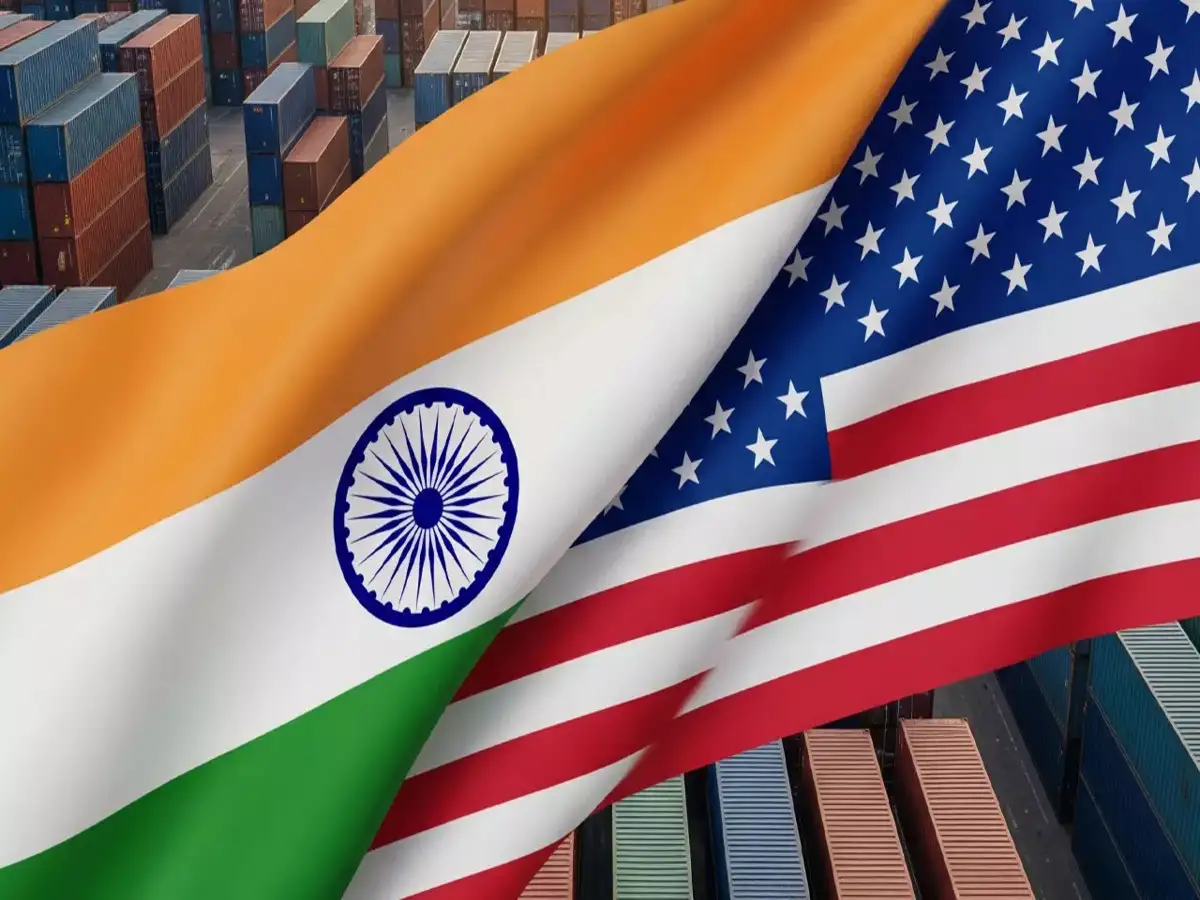
NEW DELHI: A trade agreement announced by US President Donald Trump has brought temporary relief for Indian exporters at a time of mounting uncertainty in global commerce. Under the deal, Washington has agreed to reduce reciprocal tariffs on Indian goods to 18 per cent, down from 25 per cent, even as a far steeper 50 per cent tariff on Indian exports was slated to kick in from August 27, 2025.
The announcement, made after a conversation between Trump and Prime Minister Narendra Modi, has sparked both optimism and caution in policy and trade circles. While the reduction in tariffs could restore competitiveness for several labour-intensive Indian sectors, the lack of a formal agreement text, coupled with sweeping claims made by the US President, has raised questions about the durability, scope and balance of the deal.
What follows is a detailed explainer of the tariff decision, the political and economic context behind it, the sectors likely to gain, and the unresolved issues that could shape India-US trade relations in the months ahead.
WHAT ARE TARIFFS AND WHY DO THEY MATTER?
Tariffs are customs or import duties imposed by a country on goods entering its territory. These duties are paid by importers to the government and are usually passed on to consumers in the form of higher prices.
Higher tariffs make imported goods less competitive in the destination market, potentially protecting domestic producers but raising costs for buyers. For exporting nations like India, tariff levels directly affect price competitiveness, order volumes and long-term contracts—especially in sectors where margins are already thin.
However, tariffs do not operate in isolation. Market access is also influenced by quality standards, non-tariff barriers, logistical costs, and the tariff treatment given to competitor countries. For Indian exporters, US tariffs are often compared with duties imposed on rivals such as Bangladesh (20 per cent), Vietnam (20 per cent) and Thailand (19 per cent).
THE US TARIFF SHOCK ON INDIA
In August 2025, the United States announced that it would impose a 25 per cent base tariff on Indian goods, along with an additional 25 per cent punitive duty. The punitive component was linked to India’s continued purchase of Russian crude oil and military equipment, a move Washington has consistently criticised since the start of the Ukraine conflict.
These duties were to be imposed over and above existing tariffs, effectively raising the cost of Indian goods entering the US market to prohibitive levels. Exporters warned that the move would have crippled shipments in several sectors, particularly garments, footwear and gems and jewellery.
Against this backdrop, Trump’s announcement that the tariff would now be reduced to 18 per cent was welcomed by Indian industry, even though it remains higher than the rates enjoyed by some competing economies.
Prime Minister Modi said he was “delighted” that ‘Made in India’ products would now face a reduced tariff of 18 per cent, framing the decision as a positive outcome of bilateral engagement.
WHY THE US SAYS IT IS IMPOSING TARIFFS
The Trump administration has repeatedly argued that the United States runs a large and unfair trade deficit with India. Washington claims that New Delhi maintains high tariffs and restrictive non-tariff barriers that limit US exports, particularly in agriculture, medical devices and manufactured goods.
US officials have long cited India’s duties on items such as dairy products, farm goods and medical equipment as evidence of protectionism. According to American trade data, India remains one of the more tariff-intensive major economies, especially in sensitive sectors linked to rural livelihoods.
From Washington’s perspective, reciprocal tariffs are intended to pressure India into opening its market further, even if that comes at the cost of short-term trade friction.
TRUMP’S ANNOUNCEMENT AND ITS CLAIMS
In a social media post announcing the agreement, Trump framed the deal as both an economic and geopolitical breakthrough.
“It was an Honor to speak with Prime Minister Modi… We spoke about many things, including Trade,” Trump said, claiming that India had agreed to stop buying Russian oil and instead purchase energy from the US and “potentially, Venezuela.”
Trump also asserted that the arrangement would help “END THE WAR in Ukraine,” linking trade concessions to broader strategic goals—claims that have not been officially confirmed by the Indian government.
According to Trump, the United States agreed to reduce its reciprocal tariff from 25 per cent to 18 per cent, while India committed to reducing its tariffs and non-tariff barriers against the US to zero. He further claimed that India would “BUY AMERICAN” goods at a much higher level, including over USD 500 billion worth of US energy, technology, agricultural and coal products.
Indian officials have so far refrained from endorsing the more expansive elements of Trump’s statement.
WHAT DO WE ACTUALLY KNOW ABOUT THE DEAL?
Despite the high-profile announcement, no formal trade agreement text has been released. There is no executive order yet clarifying tariff schedules, timelines or sectoral coverage.
US Trade Representative Ambassador Jamieson Greer on Tuesday described the agreement as a “very exciting opportunity,” while acknowledging that the documentation is still being finalised.
Speaking to CNBC, Greer said that the broad contours and specifics of the deal have been agreed, even though the legal text is pending. “We’ll finish papering it, but we know the specifics, we know the details,” he said.
Greer clarified that while the US would maintain some level of tariff against India, New Delhi had agreed to lower tariffs on a range of American goods, including agricultural products, manufactured items, chemicals and medical devices. At the same time, he acknowledged that India would continue to protect sensitive agricultural sectors.
The remarks confirm that the deal is not one-sided; while Washington has reduced tariffs on Indian exports from the threatened 50 per cent to 18 per cent, India has committed to easing market access for US exporters across multiple sectors.
INDIA’S POSITION: PROTECTION WHERE IT MATTERS
Welcoming the agreement, Commerce and Industry Minister Piyush Goyal said the deal would create new opportunities for Indian businesses without compromising domestic priorities.
Goyal acknowledged India’s willingness to lower duties on certain US agricultural products but stressed that the core interests of Indian farmers and the dairy sector had been safeguarded.
“PM Modi has always championed both the agriculture and dairy sectors, safeguarding their interests and working tirelessly to ensure a bright future and ample opportunities for the people in this sector,” Goyal said. “The sensitive factors of India’s economy, particularly agriculture and dairy, have been protected.”
This reassurance is significant, given that dairy imports remain a political red line in India, where millions of small farmers depend on cooperative-based livelihoods.
WHICH INDIAN SECTORS STAND TO GAIN?
The tariff reduction is expected to benefit labour-intensive export sectors that were particularly vulnerable to higher duties.
Industry bodies say garments, leather and non-leather footwear, gems and jewellery, carpets and handicrafts are likely to see an immediate improvement in order flows.
Apparel Export Promotion Council (AEPC) Chairman A Sakthivel said the move would boost apparel exports, attract fresh investment across the value chain and reinforce India’s position as a reliable sourcing hub.
Similarly, Federation of Indian Export Organisations (FIEO) President S C Ralhan said the deal could lead to the release of export orders that had been put on hold due to tariff uncertainty, especially in textiles, leather and footwear.
THE SCALE OF INDIA–US TRADE
The United States has been India’s largest trading partner in goods during 2021–25. The US accounts for about 18 per cent of India’s total exports, 6.22 per cent of imports, and 10.73 per cent of overall bilateral trade.
In 2024–25, bilateral trade reached USD 186 billion, with India’s exports valued at USD 116.5 billion and imports at USD 45.3 billion. India recorded a trade surplus of USD 41 billion, continuing a trend seen in previous years.
In services trade, India exported an estimated USD 28.7 billion to the US while importing USD 25.5 billion, adding a further surplus of USD 3.2 billion. Overall, India ran a total trade surplus of around USD 44.4 billion with the US.
MAJOR GOODS TRADED
India’s key exports to the US include drug formulations and biologicals, telecom instruments, precious and semi-precious stones, petroleum products, auto components, jewellery, ready-made garments, and iron and steel products.
Imports from the US include crude oil, petroleum products, coal and coke, cut and polished diamonds, electric machinery, aircraft and spacecraft parts, and gold.
In services, US imports from India stood at USD 40.6 billion in 2024, led by computer and information services and business consulting.
HIGH TARIFFS STILL REMAIN
Despite the deal, the US continues to impose very high tariffs on several product categories, including dairy, cereals, beverages, minerals and metals, and oilseeds. These remain sensitive areas in any future negotiation.
THE ROAD AHEAD
While the tariff reduction offers immediate relief, experts caution that the absence of a signed, detailed agreement leaves room for uncertainty. Much will depend on how the final text balances reciprocal access with domestic protections on both sides.
For now, the India–US trade agreement represents a tactical de-escalation rather than a comprehensive free trade pact—one that stabilises trade flows without fully resolving deeper structural disagreements.
Whether it evolves into a durable economic partnership or remains a politically driven arrangement will become clear only once the fine print is made public.