
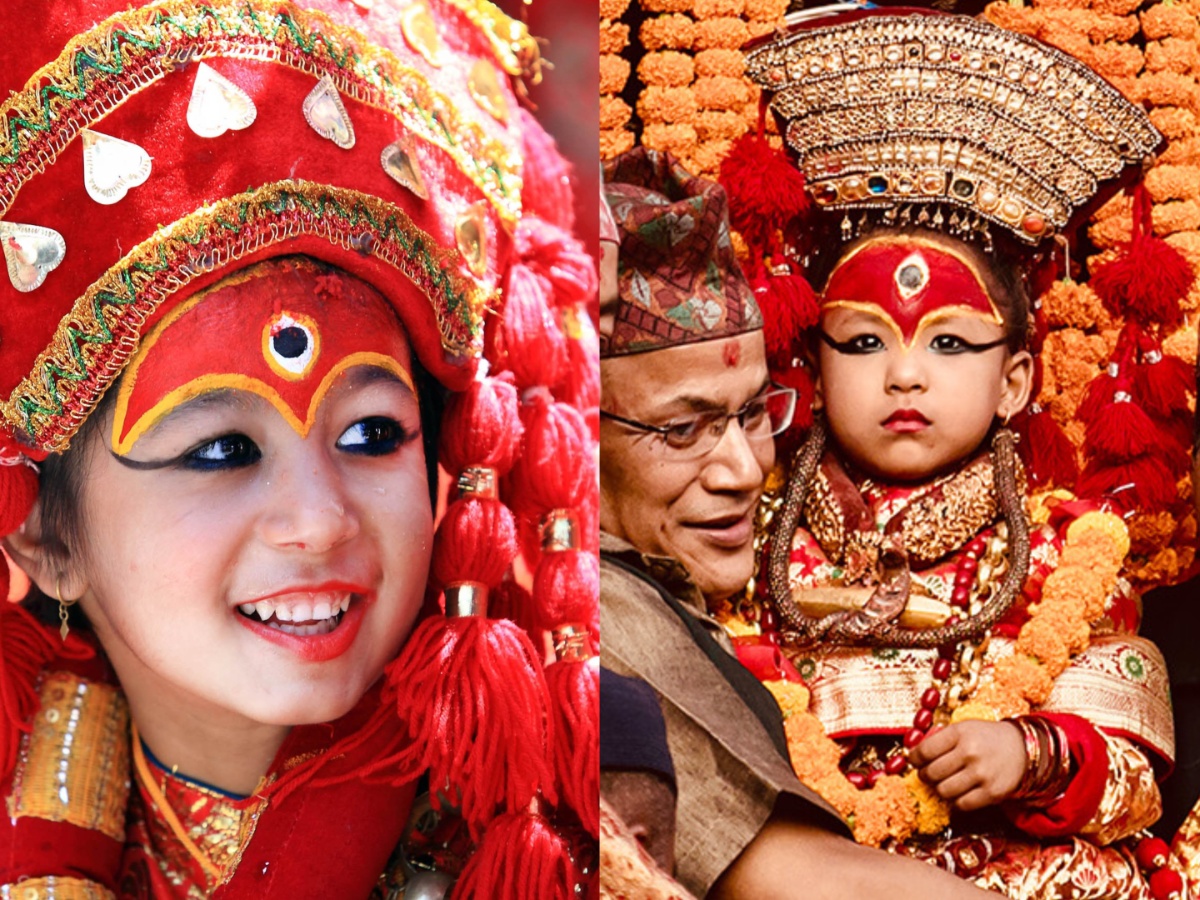
Nepal’s Kumari commonly known as Virgin Living Goddess, is a deity who represents the essence of Taleju, an incarnation of Durga. She is not only a religious symbol but also a living part of the spiritual and cultural existence of the Kathmandu Valley she is picked from the Newar community, the Kumari is a little girl who remains secluded, conducting sacred ceremonies and serving as a representative of divine benedictions to people and this age-old custom is a mixture of Hindu and Buddhist traditions, and so the Kumari is a living embodiment of Nepal’s cultural heritage.
What is Kumari?
The Kumari is not only a religious icon, but a living embodiment of the goddess Taleju, an incarnation of Durga. She is a child chosen from the Newar group who is worshiped as a deity and in contrast with other conventional deities, the Kumari partakes in rituals and festivals actively, representing divine benevolence and guardianship for the people. Her position is cultural and spiritual, with considerable impact on Nepali culture and rituals that define Nepali society.
Read More: How Bhat Bhateni Owner Min Bahadur Gurung Plans to Recover Loss After Nepal GenZ Protest?
What is the Kumari Tradition?
The Kumari tradition began during the Malla Dynasty, which ruled the Kathmandu Valley from the 12th to the 18th century and the first Kumari was believed to embody the goddess Taleju, who was sought by the kings for divine protection while the practice eventually evolved, and the Kumari’s role expanded beyond royal politics into a deeply revered religious figure but over time, the tradition became a core part of Nepalese culture, influencing both religious and cultural practices.
Cultural Significance of the Kumari Tradition
The Kumari is not only a worship object but also a focal point in the social and cultural affairs of the Kathmandu Valley. She is regarded as a city protector, and her blessings are requisite for the happiness of society and her involvement in festivities such as Indra Jatra and Dashain consolidates her position in bringing the people together, combining spiritual worship with cultural festivities and she is a bridge between the heavenly and earthly worlds, symbolizing the eternal feminine energy.
What is the Selection Process of Finding the Divine Child?
The Kumari selection process is extremely careful and sacred. The selected girl should pass stringent conditions: she should be prepubescent, virgin, and belong to the Shakya caste of Newar society. Her physical appearance, such as her eyes, teeth, and limbs, is scrutinized to ascertain she possesses divine traits. She is also put through a series of tests to establish her bravery and calmness, and it is only after having passed these standards that she is consecrated as the Living Goddess, her formal selection.
Life of the Kumari: A Balance of Divinity and Childhood
The Kumari lives a life that is a delicate balance between the mundane and the divine. Residing in the Kumari Ghar in Kathmandu Durbar Square, her days are filled with prayers, rituals, and public appearances while despite her sacred duties, she is also allowed moments of childhood—playing with peers and receiving education, though her life is highly structured while she is also supposed to remain calm and god-like presence in public gatherings like festivals, where she rides a chariot, blessing the people.
The Transition: What Happens When a New Kumari Takes Over?
One transition from a previous Kumari to a new one takes place when the existing Kumari attains puberty. This is when her term as the Living Goddess comes to an end. A new Kumari is selected by the same strict process, and her consecration is marked by a grand ceremony, and the leaving of the old Kumari is signified by a ceremony where she is restored to a regular life. This transition may be a difficult and emotional experience, both for the outgoing Kumari and the society.
What Happens After the Kumari Leaves the Position?
When the Kumari departs from her office, she is required to adapt to a normal life beyond her divine position and his can be challenging, as she has spent years being revered as a goddess. Following her time, ex-Kumaris tend to remain respected citizens, but they have to rejoin ordinary life. Their tales become a part of the cultural narrative, and they are often engaged in cultural and social activities and the integration into civilian life is a big and sometimes daunting experience for these young girls.
Health and Lifestyle of the Kumari
The Kumari is under close medical supervision, since her capacity to carry out divine rituals is contingent on her health. Her food intake is tightly controlled in order to keep her energetic, and periodic medical checkups are a regular feature of her life. Mental well-being is also ensured, since the strain of public life as well as her divine role can prove stressful for her. Professionals in the field of child psychology are usually engaged in maintaining her emotional equilibrium throughout her term.
Educational and Psychological Considerations
Though the Kumari is mainly considered for her spiritual work, she is also educated. She is privately tutored and follows a regular school routine according to her schedule. Thus, she gets educated while also carrying out her divine work. Psychological assistance is also given to ease the psychological pressure of her work. These measures are taken to cater to the well-being of the Kumari and equip her for both before and after her time in this position.
What is the Future of Kumari Tradition?
As Nepal develops, the Kumari practice is experiencing new challenges and officials are retooling the practice to better protect the welfare of the Kumari. Modern medicine, education, and psychotherapy services are now part of her life, ensuring she is a respected spiritual entity as well as a rounded individual. The Kumari practice of the future will most likely involve maintaining ancient tradition while adopting modern needs for the welfare of children.
Read More: Nepal’s Former First Lady Battles Burns After Attack That Fueled False Death Claims
Global Fascination and Ethical Considerations
The Kumari has become a symbol of Nepal’s rich cultural heritage, attracting global attention from tourists, scholars, and media outlets but while this interest has brought economic benefits, it has also raised ethical concerns about the commercialization of her role while the Kumari’s privacy and well-being have become focal points for discussion also balancing the global fascination with respect for the Kumari’s sacred role is an ongoing challenge for Nepal.