
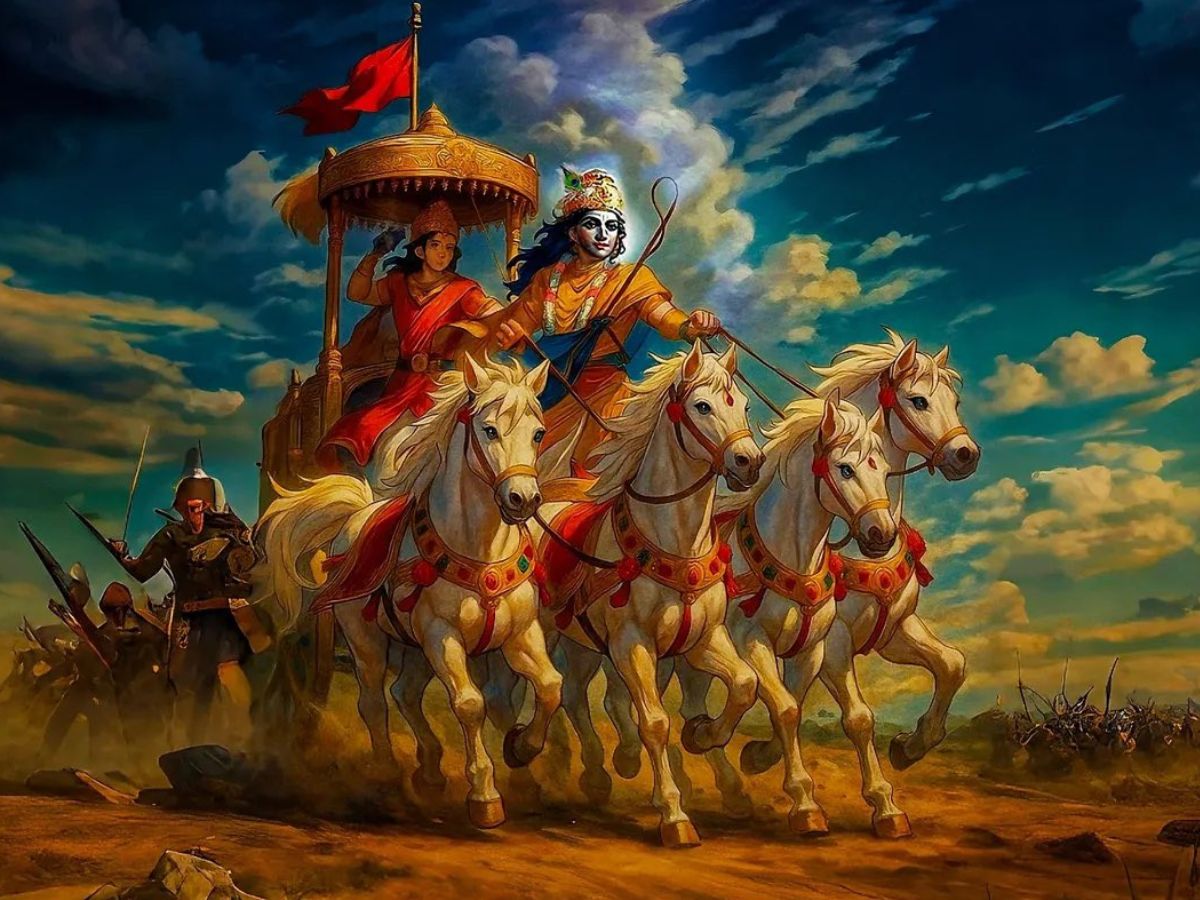
The Bhagavad Gita, one of the most revered texts in Hindu philosophy, offers guidance on life, duty, and self-mastery. The verses below from Chapters 2 and 3 provide deep insights into human behavior, the power of action, and the influence of role models.
Determined Action is Essential
Shloka:
हे कौन्तेय (अर्जुन), और निश्चय करके युद्ध करो…
हतो वा प्राप्यसि स्वर्गम्, जित्वा वा भोक्ष्यसे महिम्।
तस्मात् उत्तिष्ठ कौन्तेय युद्धाय कृतनिश्चय:॥
(Chapter 2, Shloka 37)
Explanation: Here, Lord Krishna advises Arjuna to perform his duty decisively without hesitation. Whether he wins or loses, performing the righteous action (dharma) brings results aligned with cosmic order. It teaches us that commitment and courage in action are more important than the fear of outcomes.
Attachment Leads to Desire and Anger
Shloka:
ध्यायतो विषयान्पुंसः सङ्गस्तेषूपजायते।
सङ्गात्संजायते कामः कामात्क्रोधोऽभिजायते॥
(Chapter 2, Shloka 62)
Explanation: When a person constantly dwells on worldly objects and pleasures, attachment (sang) develops. This attachment generates desires, and unfulfilled desires give rise to anger. Krishna warns that uncontrolled attachment and desire can disturb peace of mind and lead one away from wisdom.
Anger Destroys Intelligence and Self
Shloka:
क्रोधाद्भवति संमोह: संमोहात्स्मृतिविभ्रम:।
स्मृतिभ्रंशाद्बुद्धिनाशो बुद्धिनाशात्प्रणश्यति॥
(Chapter 2, Shloka 63)
Explanation: Anger clouds the mind, causing delusion (moha). This delusion confuses memory (smriti), which then leads to the destruction of intelligence (buddhi). When intelligence is lost, a person essentially destroys himself. This verse emphasizes the importance of controlling anger and maintaining clarity of mind to protect one’s own well-being.
Also Read: Bhagavad Gita Wisdom: How Ancient Shlokas Teach Us to Overcome Desire and Attain Lasting Peace
Influence of the Exemplary
Shloka:
यद्यदाचरति श्रेष्ठस्तत्तदेवेतरो जन:।
स यत्प्रमाणं कुरुते लोकस्तदनुवर्तते॥
(Chapter 3, Shloka 21)
Explanation: Humans naturally follow the example of those they admire or consider superior. Actions performed by virtuous or accomplished individuals become a standard for society, as others tend to emulate them. This verse highlights the responsibility of role models and the social impact of one’s conduct.
-
Duty with Determination: Perform your responsibilities without hesitation. Outcomes are secondary to righteous action.
-
Avoid Attachment and Anger: Constant craving for worldly objects leads to anger and mental imbalance.
-
Protect Your Intelligence: Anger and delusion cloud judgment, ultimately harming oneself.
-
Be a Positive Example: Your actions influence others; strive to set the right example in society.
The Bhagavad Gita teaches that a balanced mind, righteous action, and self-control are essential for a meaningful life. It also underscores the ripple effect of behavior both positive and negative on society.
Also Read: Bhagavad Gita Shlokas That Teach Duty, Devotion, and Detachment