
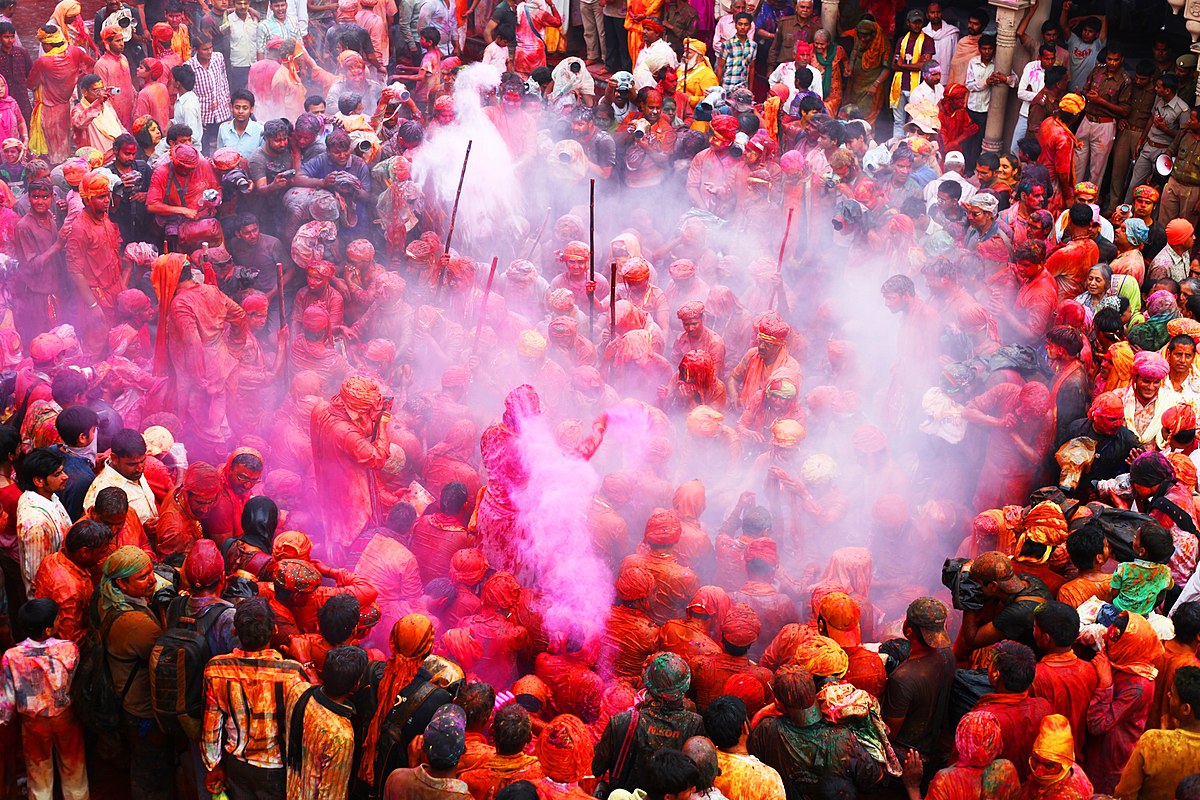
NEW DELHI: Braj Holi, celebrated primarily in the Bharatpur district of Rajasthan, especially in Deeg and Kaman, is a festival of devotion and divine love. Observed during Phalguna Shukla Paksha, a few days before the main Holi, this festival honors the eternal love of Radha and Krishna. Rooted in the pastimes of Lord Krishna during the Dwapar Yuga, the festival commemorates his playful Holi with Radha and the Gopis in Barsana. Devotees believe that participating in Braj Holi and taking a holy dip in the Banganga River washes away sins and purifies the soul. Early morning visits to the Radha-Krishna temple along the riverbank further deepen the spiritual essence of the festival.
CULTURAL AND RELIGIOUS TRADITIONS
Braj Holi is a two- to three-day celebration marked by vibrant cultural events, traditional music, and devotional performances. The Rasleela dance is the main attraction, where men and women, adorned in colorful costumes, enact episodes of Radha-Krishna’s divine love. Lathmar Holi, particularly famous in Kaman, sees women playfully striking men with sticks in a ritual rooted in Krishna’s playful antics. Phool Holi and the Holi of colors add further devotion and festivity, with gulal, flower petals, and colored water symbolizing joy, unity, and harmony. Folk performances like Chang dance, Raas-Rasiya, and local competitions reflect the rich cultural heritage of Bharatpur.
HISTORICAL LEGACY AND ROYAL PATRONAGE
The festival’s history is intertwined with the royal heritage of Bharatpur. Kings patronized Braj culture, encouraging celebrations that included abir-gulal, Nautanki, Rasleela, and Lathmar Holi. Over the decades, especially since 1971, Holika Dahan rituals became more organized, blending devotion with structured festivities. Today, Braj Holi begins with folk dances and competitions at Lohagarh Stadium in Bharatpur and concludes with the colorful fountains of Jal Mahal in Deeg and Rasleela performances in Kaman, attracting devotees and tourists alike.
A MONTH-LONG DIVINE CELEBRATION
Braj Holi is not merely a one-day festival but a 40-day celebration in Phalgun, combining devotion, joy, and community bonding. With traditional sweets, drinks like Thandai and Bhang, and the harmonious gathering of locals and visitors, the festival reinforces spiritual unity. The celebration embodies love, harmony, and the divine message of Radha and Krishna, making it one of Rajasthan’s most cherished religious traditions. Braj Holi remains a sacred festival where devotion, culture, and the joy of colors converge, allowing participants to experience the spiritual and cultural richness of the region while celebrating the eternal love of Radha and Krishna.