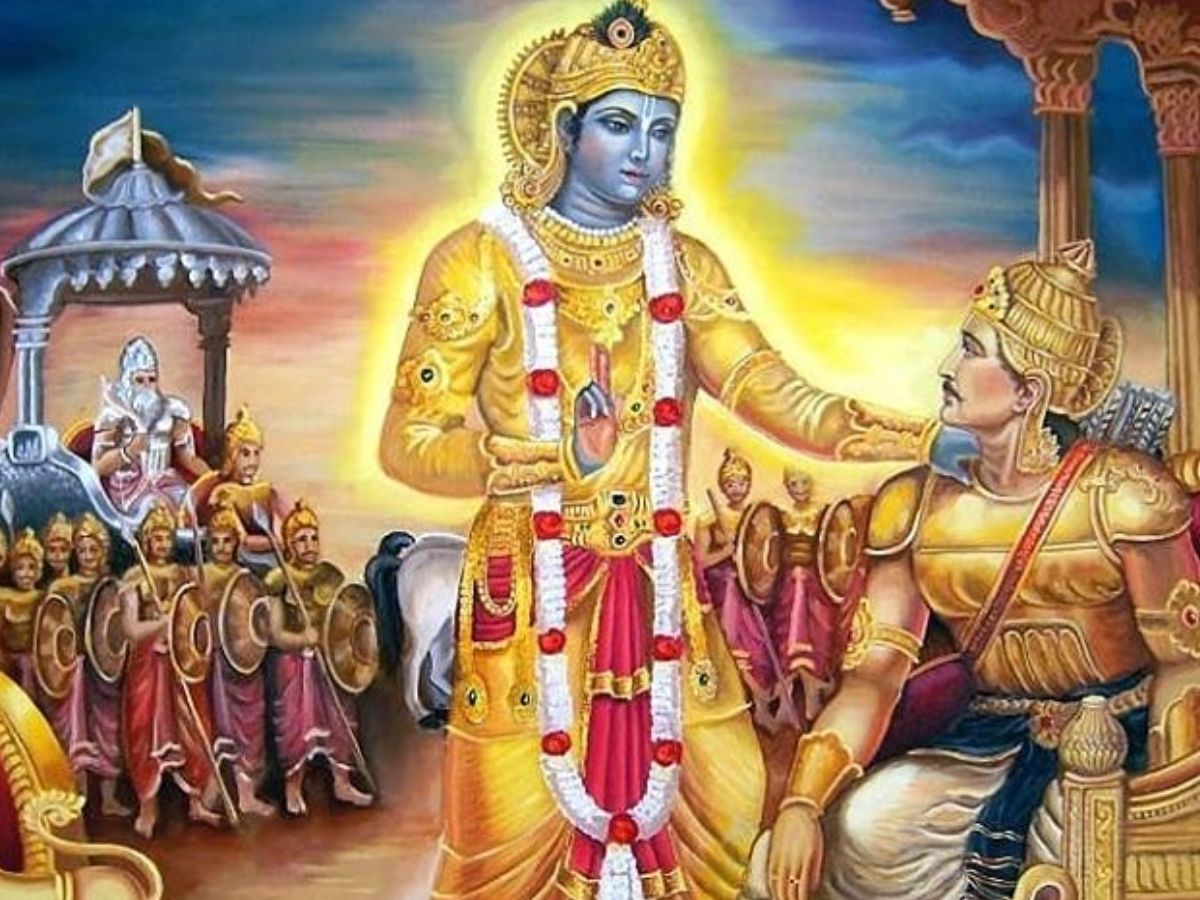
The Bhagavad Gita is one of the most important spiritual books in Hindu philosophy. It offers deep and meaningful teachings that help people understand how to live a good, balanced, and peaceful life. Below are some important shlokas from the Bhagavad Gita, explained in simple words to help everyone understand their true meaning.
-
The Power of Devotion
Shloka:
पत्रं पुष्पं फलं तोयं यो मे भक्त्या प्रयच्छति।
तदहं भक्त्युपहृतमश्नामि प्रयतात्मन:॥
(Chapter 9, Verse 26)
Meaning:
When a devotee offers a leaf, flower, fruit, or water to God with true devotion, God accepts it with love.
This shloka teaches that the feeling of devotion matters more than the size or value of the offering. What is important is the purity of heart and love behind the offering, not the material itself.
-
Beware of Anger
Shloka:
क्रोधाद्भवति संमोह: संमोहात्स्मृतिविभ्रम:।
स्मृतिभ्रंशाद्बुद्धिनाशो बुद्धिनाशात्प्रणश्यति॥
(Chapter 2, Verse 63)
Meaning:
Anger causes confusion, which makes us forget important things. When memory is lost, the intellect gets destroyed, and when intellect is gone, a person suffers complete downfall.
This shloka warns that anger should always be controlled because it can cloud our judgment, destroy our wisdom, and lead us towards failure and sorrow.
-
The Influence of Great People
Shloka:
यद्यदाचरति श्रेष्ठस्तत्तदेवेतरो जन:।
स यत्प्रमाणं कुरुते लोकस्तदनुवर्तते॥
(Chapter 3, Verse 21)
Meaning:
Whatever good action a great person does, others follow. The example set by them becomes a standard for society.
This shloka shows that good people have a special responsibility. Their actions influence others, and therefore, they should always act in a way that inspires and benefits everyone.
-
The Eternal Soul
Shloka:
नैनं छिद्रन्ति शस्त्राणि नैनं दहति पावक:।
न चैनं क्लेदयन्त्यापो न शोषयति मारुत॥
(Chapter 2, Verse 23)
Meaning:
The soul cannot be cut by any weapon, burned by fire, wetted by water, or dried by air.
This shloka explains that the soul is eternal and cannot be harmed by any physical element. It shows the indestructible and immortal nature of our true self.
-
Path to Knowledge and Peace
Shloka:
श्रद्धावान्ल्लभते ज्ञानं तत्पर: संयतेन्द्रिय:।
ज्ञानं लब्ध्वा परां शान्तिमचिरेणाधिगच्छति॥
(Chapter 4, Verse 39)
Meaning:
A person who has faith and controls their senses gains true knowledge. With that knowledge, they can attain ultimate peace.
This shloka emphasizes the need for faith, self-discipline, and dedication in learning. True knowledge helps a person understand life better and live in peace.
Conclusion
The Bhagavad Gita contains teachings that are still very important for us today. These shlokas guide us to be devoted, control our anger, follow good examples, understand the eternal nature of the soul, and seek true knowledge. By practicing these lessons in daily life, we can lead a meaningful, happy, and peaceful life.
Also Read: Eternal Wisdom from the Bhagavad Gita: Understanding Key Verses