
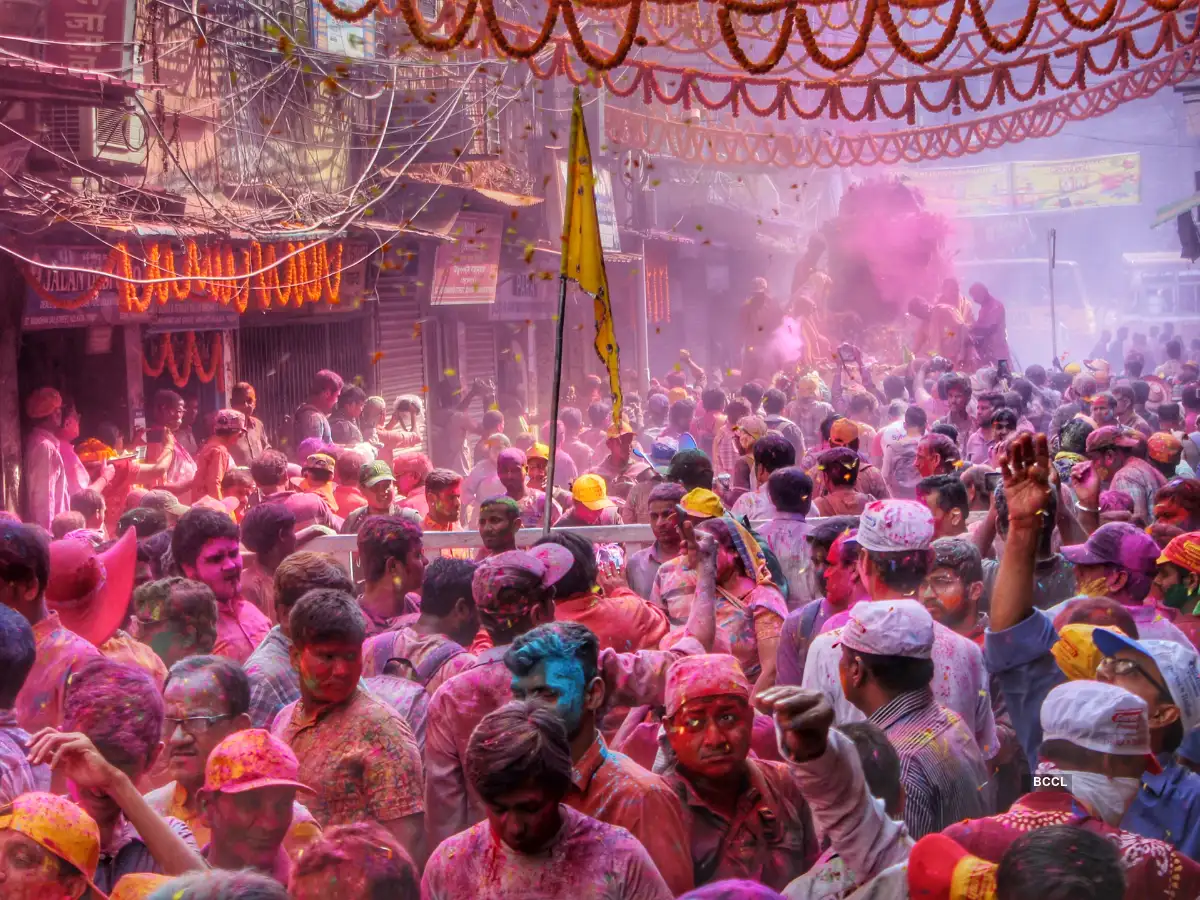
NEW DELHI: Holi, the vibrant festival of colors, is one of India’s most widely celebrated cultural and religious events. Originating from Hindu mythology, it is marked by Holika Dahan, the symbolic burning of evil, and Rangwali Holi, the playful day of colors. However, the festival transcends religious boundaries, embodying the spirit of secularism and communal harmony. Across India, people of different faiths—Hindus, Muslims, Sikhs, Christians, and others—join in the celebrations, highlighting inclusivity, unity, and the pluralistic fabric of Indian society.
The festival begins with Holika Dahan, recalling the story of Prahlad and Holika. Communities light bonfires on the eve of Holi, symbolizing the triumph of good over evil. Devotees offer prayers around the fire, seeking blessings for peace, prosperity, and spiritual renewal.
The next day, Rangwali Holi transforms towns and villages into a kaleidoscope of colors. People smear each other with gulal, splash colored water, sing, dance, and share festive foods like gujiya and thandai. Beyond the fun, Holi fosters social cohesion, encourages forgiveness, strengthens relationships, and builds a sense of communal unity. Schools, workplaces, and neighborhoods often organize inclusive events that welcome everyone, reinforcing India’s secular ethos.
The Flower Holi is a unique tradition that symbolizes the love and purity of Radha and Krishna. Celebrated for 40-50 days starting from Vasant Panchami, this Holi uses fresh flowers and special gulal laddus instead of chemical colors. According to mythology, Lord Krishna first played this Flower Holi with Radha and the Gopis, representing pure love and devotion. During the Nawabi era, rulers like Nawab Asaf-ud-Daula also celebrated with Tesu (Palash) flowers and abir-gulal, emphasizing simplicity and joy.
The abir-gulal tradition links Holi to nature and wellness. Historically made from palash flowers and medicinal plants, these colors were safe for the skin and environmentally friendly. Even today, temples in Mathura, Vrindavan, and Jaipur preserve this practice, celebrating a festival that combines spirituality, ecology, and cultural heritage. Holi in India is thus more than a festival of colors—it is a celebration of secularism, unity, and devotion, with traditions like Flower Holi keeping the essence of love, purity, and environmental harmony alive.