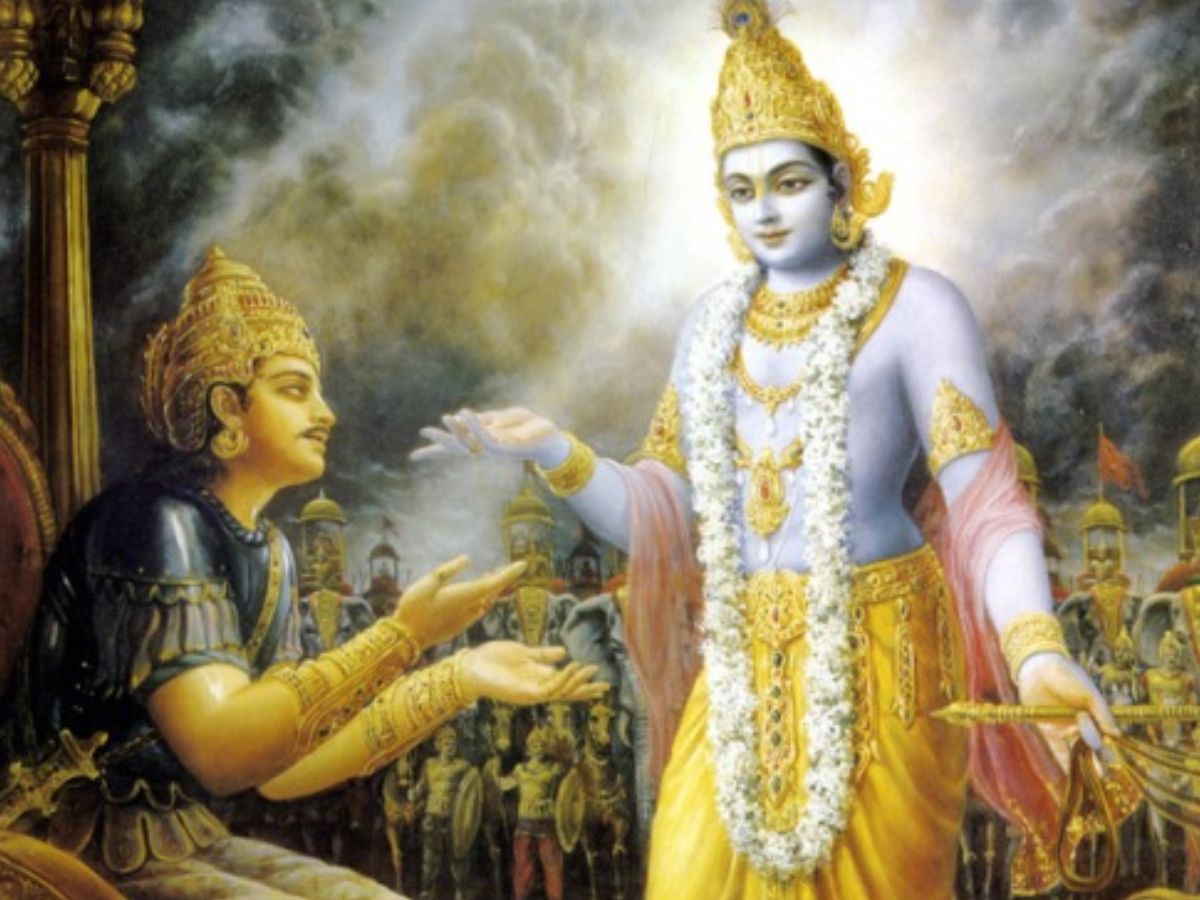
The Bhagavad Gita, part of the Mahabharata, is a treasure trove of spiritual wisdom. While shlokas like “Karmanye vadhikaraste” are widely quoted, there are many other verses that carry profound lessons for life, self-discipline, and spirituality.
Chapter 2, Shloka 47
श्रेयान्स्वधर्मो विगुणः परधर्मात्स्वनुष्ठितात्।
स्वधर्मे निधनं श्रेयः परधर्मो भयावहः।।
Translation:
“It is better to perform one’s own duties imperfectly than to perform another’s duties perfectly. Performing the duties assigned to you is safe; performing someone else’s duty is dangerous.”
Significance:
This verse emphasizes self-responsibility and authenticity. It reminds us to focus on our own duties and skills rather than imitating others, which can lead to stress or failure.
Chapter 3, Shloka 30
मयि सर्वाणि कर्माणि संन्यस्याध्यात्मचेतसा।
निराशीर्निर्ममो भूत्वा युध्यस्व विगतज्वरः।।
Translation:
“Dedicate all your actions to Me, with a mind focused on the self, free from desire and attachment, and fight without anxiety.”
Significance:
This shloka teaches detachment in action. By offering results to a higher purpose, one can act without stress, ego, or obsession with outcomes—an essential lesson for modern life.
Chapter 6, Shloka 5
उद्धरेदात्मनाऽत्मानं नात्मानं अवसादयेत्।
आत्मैव ह्यात्मनो बन्धुरात्मैव रिपुरात्मनः।।
Translation:
“One should elevate oneself by the self; one should not degrade oneself. The self alone is one’s friend or one’s enemy.”
Significance:
This verse reminds us that self-mastery is key. Your thoughts, actions, and mindset determine whether you are your own ally or adversary.
Chapter 4, Shloka 38
न हि ज्ञानेन सदृशं पवित्रमिह विद्यते।
तत्स्वयं योगसंसिद्धः कालेनात्मनि विन्दति।।
Translation:
“In this world, there is nothing as purifying as knowledge. One who is perfected in yoga finds it within oneself in due course of time.”
Significance:
Knowledge (jnana) is transformative and purifying. It is not merely intellectual understanding but a means to awaken inner wisdom.
Chapter 18, Shloka 66
सर्वधर्मान्परित्यज्य मामेकं शरणं व्रज।
अहं त्वां सर्वपापेभ्यो मोक्षयिष्यामि मा शुचः।।
Translation:
“Abandon all forms of dharma and surrender completely to Me. I will liberate you from all sins; do not grieve.”
Significance:
While this shloka is quoted sometimes, its true depth is often overlooked. It highlights complete surrender and faith, teaching that ultimate liberation comes from devotion and trust.
Why These Shlokas Matter
These verses may not be as popularly cited, but they offer practical guidance for life, mental peace, self-discipline, and spiritual growth. Applying them in daily life can help:
-
Reduce stress by focusing on one’s own duties.
-
Cultivate detachment and mindfulness in action.
-
Strengthen self-mastery and inner resilience.
-
Seek knowledge as a means of self-transformation.
-
Embrace surrender and faith for spiritual liberation.
Also Read: What Does the Bhagavad Gita Say About Duty, Self-Control, and Role Models?