
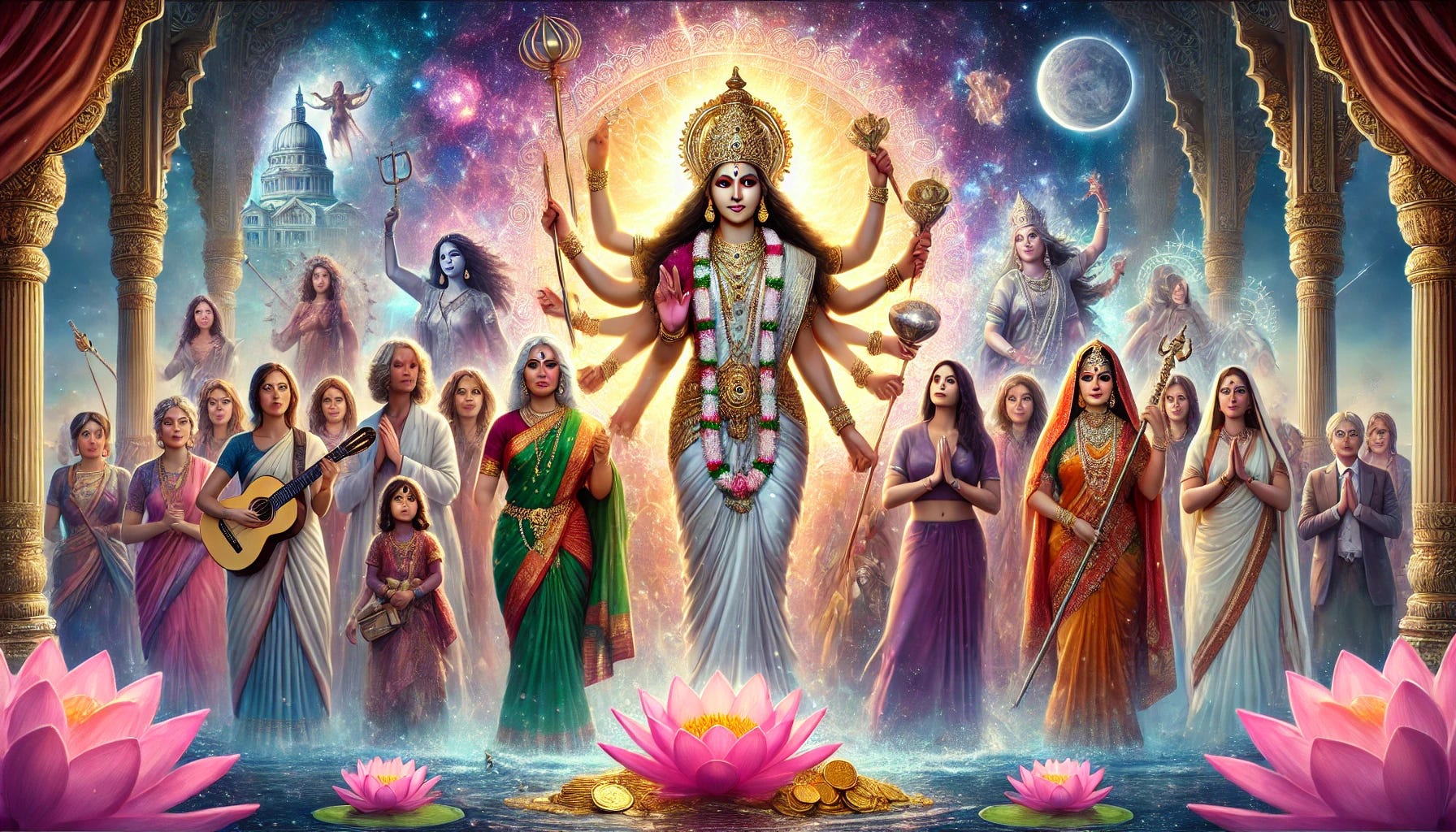
JAIPUR: In Indian culture, women have always been considered the backbone of society, revered not just as mothers, daughters, and wives, but as embodiments of divine energy, wisdom, and moral guidance. Ancient scriptures, epics, and philosophical texts repeatedly emphasize that respecting and honoring women is essential for personal, social, and spiritual well-being. Women are often seen as manifestations of Shakti—the cosmic energy responsible for creation, preservation, and transformation in the universe. This recognition has given rise to shlokas (verses) that extol the virtues of women and instruct society on their sacred role.
SHLOKA 1: THE FOUNDATION OF RESPECT
Sanskrit: Yatra naryastu pujyante, ramante tatra devata. English Meaning: Where women are honored, divinity resides there. Significance: This shloka from Manusmriti encapsulates the spiritual essence of respecting women. It suggests that a society or home where women are valued becomes a place of prosperity and blessings. Honoring women is thus not only a moral duty but also a path to spiritual fulfillment.
SHLOKA 2: THE POWER OF EDUCATION AND DHARMA
Sanskrit: Strinam pujyam dharma, strinam pujyam vidya, strinam pujyam samyak tatra sukham nihitam. English Meaning: Women should be honored through righteousness and knowledge; where women are respected, true happiness is established. Significance: Education and moral guidance are central to empowering women. Ancient texts emphasize that societal happiness and spiritual growth are directly linked to acknowledging the intelligence and capabilities of women. A society that nurtures women intellectually and morally flourishes.
SHLOKA 3: WOMEN AS DIVINE MOTHERS
Sanskrit: Matre devo bhava, pitre devo bhava, acharyadevo bhava, atithidevo bhava. English Meaning: Treat your mother as God, your father as God, your teacher as God, and your guest as God. Significance: Women, particularly as mothers, are regarded as living embodiments of the divine. This shloka highlights the sacred responsibility of children and society to honor maternal figures, who provide life, nurture, and moral guidance. In essence, women are the spiritual anchors of the family.
SHLOKA 4: STRENGTH AND KNOWLEDGE OF WOMEN
Sanskrit: Strinam balam na haryate, strinam jnanam nasyati. English Meaning: The strength of women never diminishes, and their knowledge is priceless. Significance: This verse celebrates the inherent strength and wisdom of women. In Indian spiritual philosophy, women are seen as reservoirs of resilience and insight. Their empowerment ensures the holistic growth of society, both materially and spiritually.
HISTORICAL CONTEXT: WORSHIP OF WOMEN IN INDIAN TRADITION
Indian epics and Puranas often portray women as goddesses and spiritual guides. From Sita and Draupadi in the Mahabharata to the many forms of Goddess Durga, Lakshmi, and Saraswati, women are venerated as symbols of courage, prosperity, and knowledge. Rituals, festivals, and community gatherings have historically emphasized honoring women’s contributions to society. During Navratri, for instance, young girls are worshipped as embodiments of Shakti, reflecting the belief that women are the source of divine energy.
Women also played a central role in Vedic education and spiritual practice. They were scholars, philosophers, and teachers who guided communities in moral, intellectual, and spiritual pursuits. The shlokas above reflect not just social respect but also a deeply spiritual understanding that uplifting women elevates society and brings harmony to the universe.
SPIRITUAL AND SOCIAL LESSONS
The reverence of women in Indian tradition is more than cultural symbolism; it is a spiritual principle. The shlokas teach that honoring women, ensuring their education, and valuing their wisdom is essential for societal and spiritual prosperity. Women are not only life-givers but also carriers of moral and spiritual consciousness. By remembering and practicing these teachings, modern society can preserve the balance, strength, and sanctity that women inherently embody.