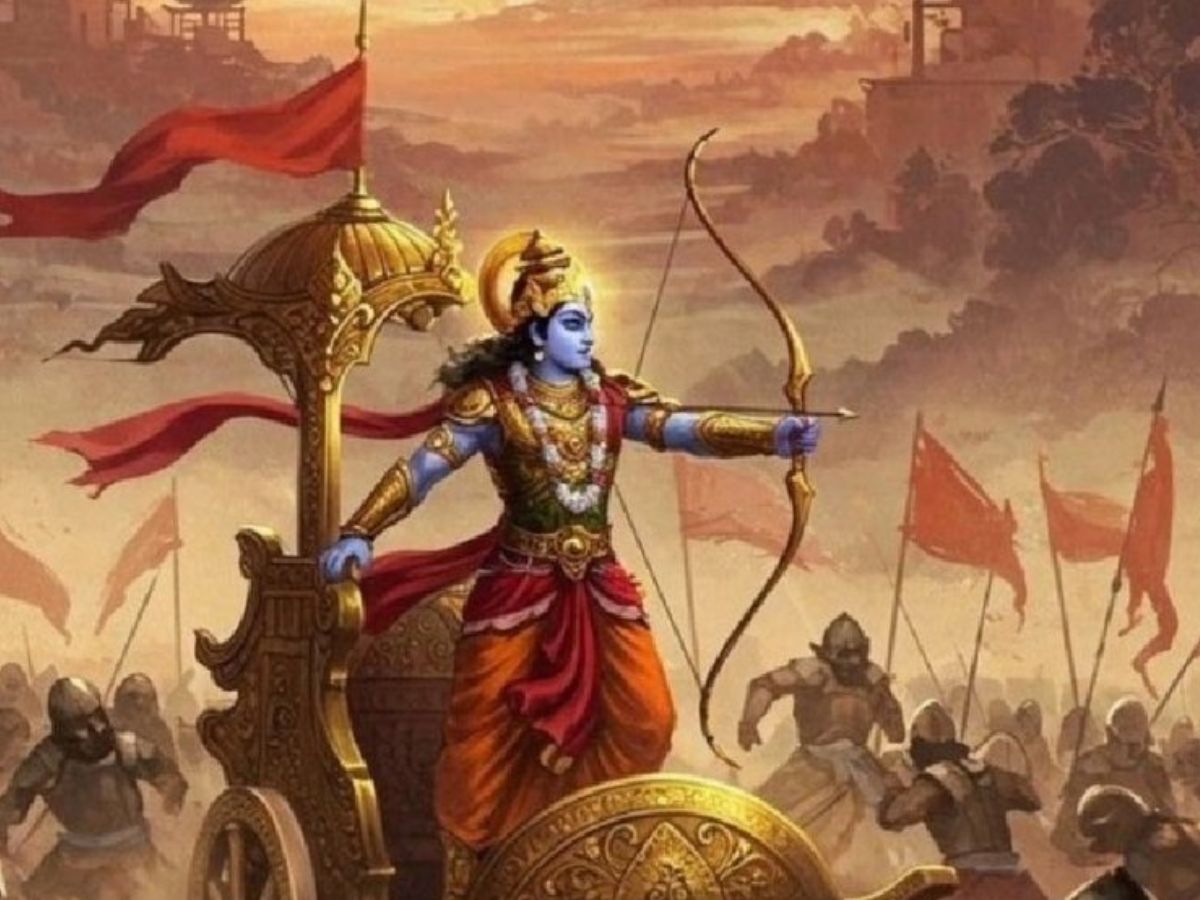
The verses of the Bhagavad Gita are more than ancient Sanskrit poetry. In this revered scripture Lord Krishna has shown the path of Dhrama to Arjuna on the battlefield of Kurukshetra, these shlokas go far beyond the immediate context of war.
For centuries, the Gita has been revered not just as a religious scripture but as a philosophical and psychological manual that applies to every human being, regardless of culture or time. Its teachings on courage, self-mastery, duty, and detachment continue to inspire leaders, thinkers, and ordinary people across the world.
The shlokas you shared come from different chapters, and each one carries profound wisdom about the soul, the importance of righteous duty (dharma), and the challenges of controlling human emotions.
The Soul Beyond Destruction
“नैनं छिद्रन्ति शस्त्राणि, नैनं दहति पावकः।
न चैनं क्लेदयन्त्यापो, न शोषयति मारुतः॥”
Translation: The soul cannot be killed by weapons, burned by fire, wetted by water, or dried by the wind.
Explanation:
This verse reassures Arjuna that the soul (atman) is eternal and indestructible. Unlike the body, which is temporary and perishable, the soul remains untouched by physical forces. The message is clear: one should not grieve over death, for the true essence of a person never dies. It instills courage and helps overcome the fear of mortality.
Duty and the Path of Action
“हतो वा प्राप्यसि स्वर्गम्, जित्वा वा भोक्ष्यसे महिम्।
तस्मात् उत्तिष्ठ कौन्तेय युद्धाय कृतनिश्चयः॥”
Translation: If you die in battle, you will attain heaven; if you win, you will enjoy the kingdom on Earth. Therefore, arise, O son of Kunti, determined to fight.
Explanation:
Here, Lord Krishna motivates Arjuna to perform his duty as a warrior. The teaching is not about glorifying war but about embracing responsibility without hesitation. Success or failure is secondary; what matters is fulfilling one’s duty with determination. This message applies to modern life as well whether in work, family, or society, we must focus on action without fear of the outcome.
The Root of Human Conflict
“ध्यानात् विसयं पुंसः सङ्गस्तेषूपजायते।
सङ्गात् संजायते कामः कामात् क्रोधोऽभिजायते॥”
Translation: When a person contemplates objects of the senses, attachment arises. From attachment comes desire, and from desire arises anger.
Explanation:
This verse explains the psychological cycle of human downfall. Constantly thinking about sense pleasures creates attachment. Attachment turns into strong desire (kama). When desires are unfulfilled, anger (krodha) emerges, leading to frustration and destruction of peace. The Gita here teaches the importance of controlling the mind and desires to avoid anger and conflict.
Timeless Relevance
These shlokas, though spoken on the battlefield of Kurukshetra, go far beyond war. They address universal truths about life and human behavior. The Gita urges us to:
-
Recognize the eternal nature of the soul.
-
Perform our duties with courage and detachment.
-
Guard against desire and anger, which disturb the mind.
In essence, the Gita is a guide to living with strength, discipline, and inner peace.
Also Read: Timeless Wisdom of the Bhagwat Geeta: Lessons for Inner Peace and Balance