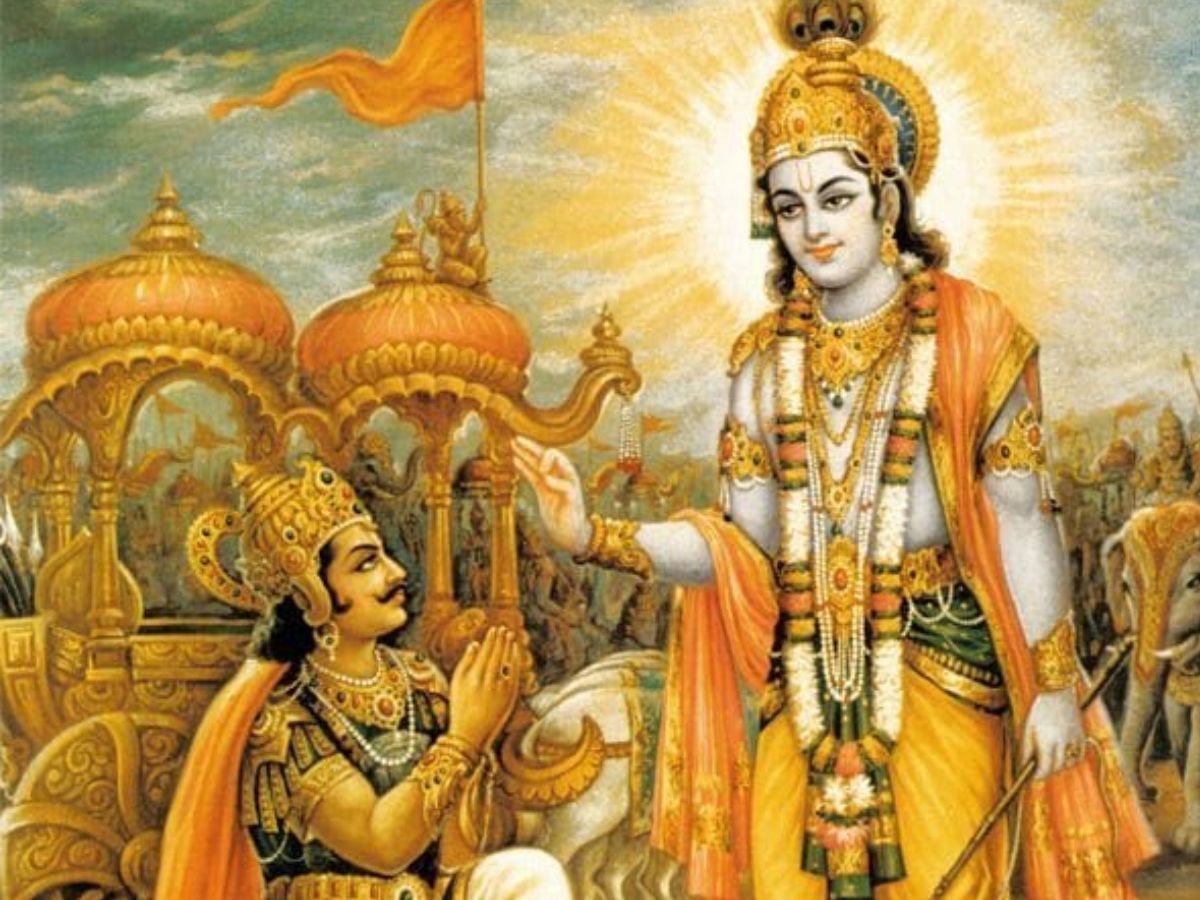
Life is a journey filled with moments of joy and sorrow, comfort and discomfort. At times, we find ourselves attached to success, wealth, or relationships, while at other moments, we struggle with failures and pain. Ancient wisdom from the sacred texts offers timeless guidance on how to handle these experiences with balance and calm. The beautiful Sanskrit shlokas from the Bhagavad Gita teach us the art of living with detachment, self-discipline, and inner peace. By understanding and applying these teachings, we can overcome the ups and downs of life and achieve lasting contentment.
“मात्रास्पर्शास्तु कौन्तेय शीतोष्णसुखदुःखदाः। आगमापायिनोऽनित्यस्तस्तितिक्षस्व भारत ॥”
O Arjuna, all experiences of touch whether cold or hot, pleasant or unpleasant are temporary and fleeting. They come and go and do not last forever. Therefore, O Bharata (Arjuna), practice tolerance and remain patient in facing them.
This verse teaches us that life is full of ups and downs. Comforts and discomforts arise and disappear over time. Wise people don’t get attached to temporary pleasures or sufferings but maintain equanimity.
Verse 2:
“विहाय कामाण्यः सर्वान्पुमंशचरति निष्स्पृहः। निर्ममो निरहंकार स शांतिमधिगच्छति ॥”
A person who gives up all desires and ambitions, and who acts without attachment or ego, walks the path of true peace. Such a person is free from selfishness and attains lasting peace.
This teaches that renouncing desires and ego leads to inner calm and lasting peace. A selfless person does not act for personal gain but works without expecting results.
Verse 3:
“श्रद्धावाँल्लभते ज्ञानं तत्परः संयतेन्द्रियः। ज्ञानं लब्ध्वा परां शांतिमचिरेणाधिगच्छति ॥”
A person who has firm faith, controls their senses, and is dedicated in their efforts gains true knowledge. Once this wisdom is attained, they quickly reach the highest peace.
The verse highlights the importance of faith, self-discipline, and perseverance. By focusing the mind and controlling desires, one achieves wisdom, which ultimately leads to supreme peace and contentment.
Verse 4:
“युक्त: कर्मफलं त्यक्त्वा शांतिमापनोति नैष्ठिकम्। अकृत्यकामकारेण फले सक्तो निबध्यते॥”
A person who performs their duties without expecting the results, and remains unattached to the fruits of their actions, achieves firm and lasting peace. But one who acts driven by desires remains bound by the outcomes of their actions.
This verse emphasizes the teaching of selfless action (Nishkama Karma). True peace comes when actions are performed as a duty, without attachment to success or failure. Desire-driven actions lead to further bondage and suffering.
These shlokas guide us towards a balanced and peaceful life by teaching as we should accept that happiness and sorrow are temporary. If we want to live happy then we should renounce personal desires and ego. We have to be determined and should have faith and self-control to gain true knowledge. To perform duties without expecting rewards is a real practice which leads one to God. Following these principles leads to lasting inner peace and liberation from the cycle of desires and suffering
Also Read: Important Shlokas from the Bhagavad Gita and Their Meaning