The Wood Behind LignoSat
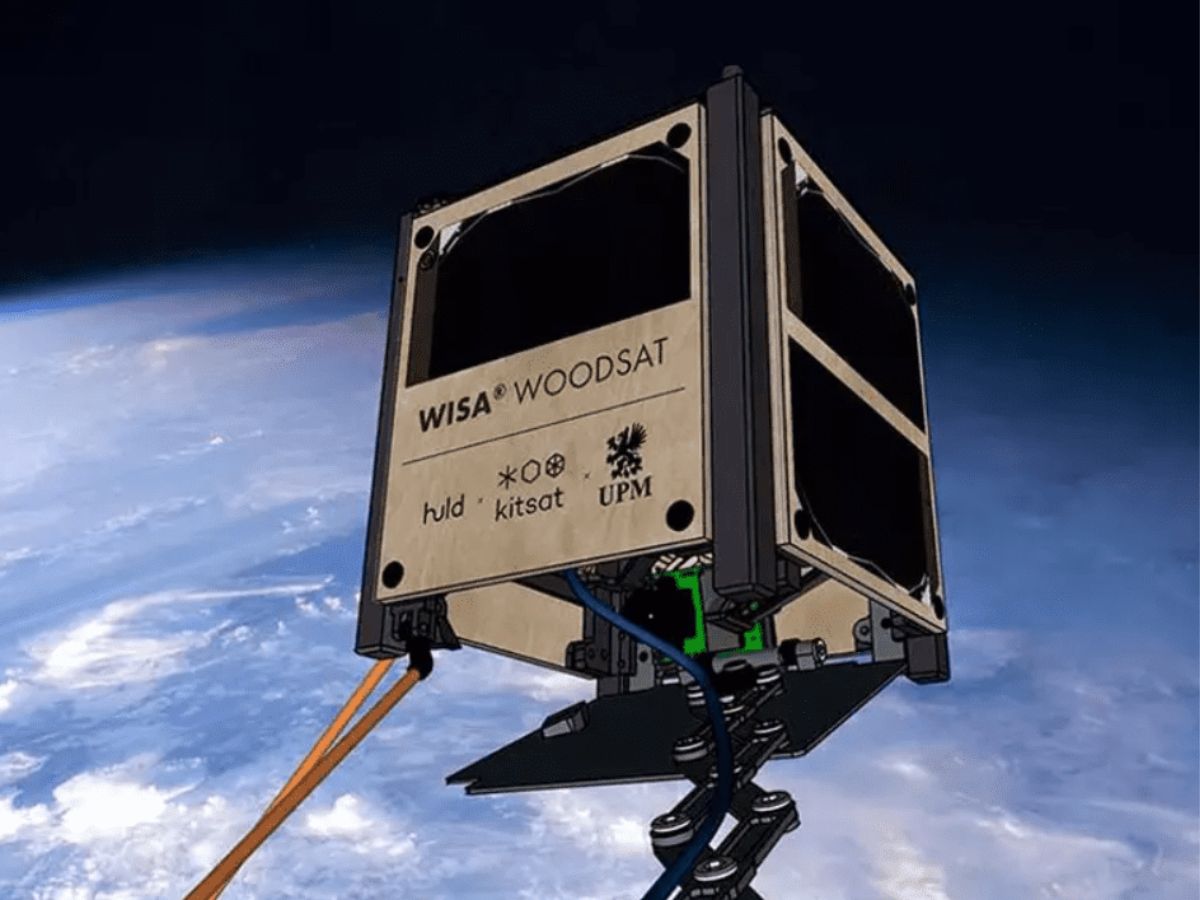
LignoSat is built from magnolia wood (honoki), chosen for its strength, stability, and workability. The wood panels were crafted using sashimono, a traditional Japanese woodworking method that requires no screws or glue. The entire satellite costs about US$191,000 to design, build, launch, and operate.
Unlike metals, wood does not rot in space because there is no water or oxygen. When it re-enters Earth’s atmosphere, it burns up completely, leaving no metallic debris. LignoSat is designed to track how magnolia wood responds to extreme conditions, providing valuable data for the next generation of spacecraft.
Testing Wood in Space
The wooden satellite was deployed from the International Space Station (ISS) as a 1U cubesat, a small cube measuring about 4 inches (10 centimeters) on each side. It will orbit Earth for roughly six months before atmospheric drag gradually pulls it back.
During this time, LignoSat faces extreme conditions:
-
Temperature swings from -157°C (-250°F) in the Earth’s shadow to 121°C (250°F) in sunlight.
-
Exposure to cosmic radiation and highly charged solar particles.
The mission will help researchers understand how wood behaves in space, from temperature fluctuations to radiation resistance, guiding future sustainable satellite designs.
Why Wood Might Shape the Future of Satellites
-
Eco-Friendly: Wooden satellites burn completely on re-entry, producing no harmful debris or metallic dust.
-
Radiation Protection: Wood offers natural shielding against high-energy cosmic radiation.
-
Sustainability: Using renewable materials like wood reduces dependence on metals, making satellite technology greener.
Researchers hope LignoSat will inspire the development of environmentally conscious spacecraft that minimize space debris and ecological impact.
The Harsh Challenges of Space
Satellites in low Earth orbit, like the ISS, circle the planet roughly every 90 minutes, exposing them to:
-
Rapid temperature changes
-
Constant bombardment by solar wind particles
Traditionally, satellites are made from aluminum alloys for durability. However, these metals release potentially polluting debris when they burn during re-entry. If LignoSat proves that wood can endure space conditions, it could revolutionize satellite construction, offering both durability and environmental safety.
Moving Toward Greener Space Technology
LignoSat is more than a scientific experiment it represents a new vision for space exploration. Wooden satellites could reduce space debris, lower environmental impact, and make future missions more sustainable. Wood in space may seem novel now, but it could become a key material for eco-friendly, next-generation satellites.
Also Read: James Webb Space Telescope Reveals Mysterious Beads & Star-Shaped Pattern in Saturn’s Atmosphere