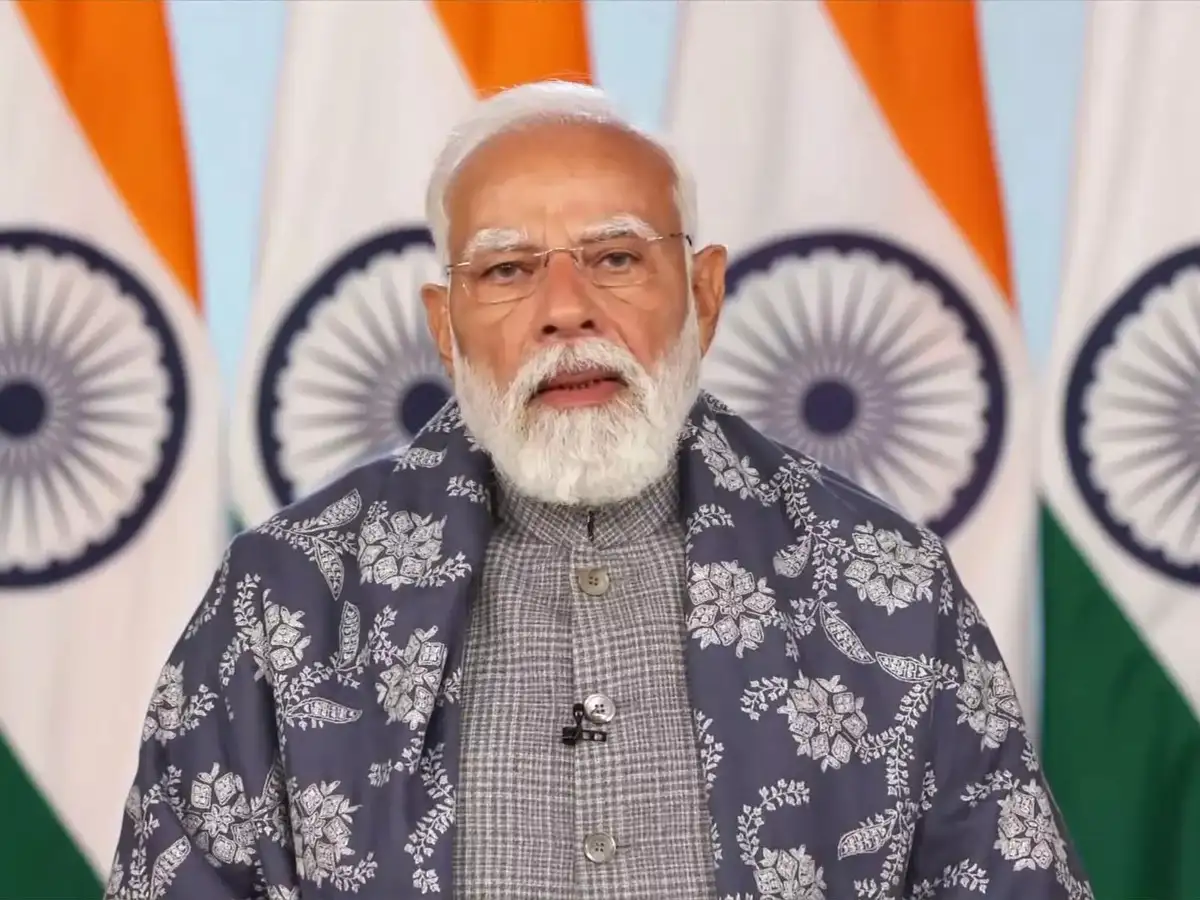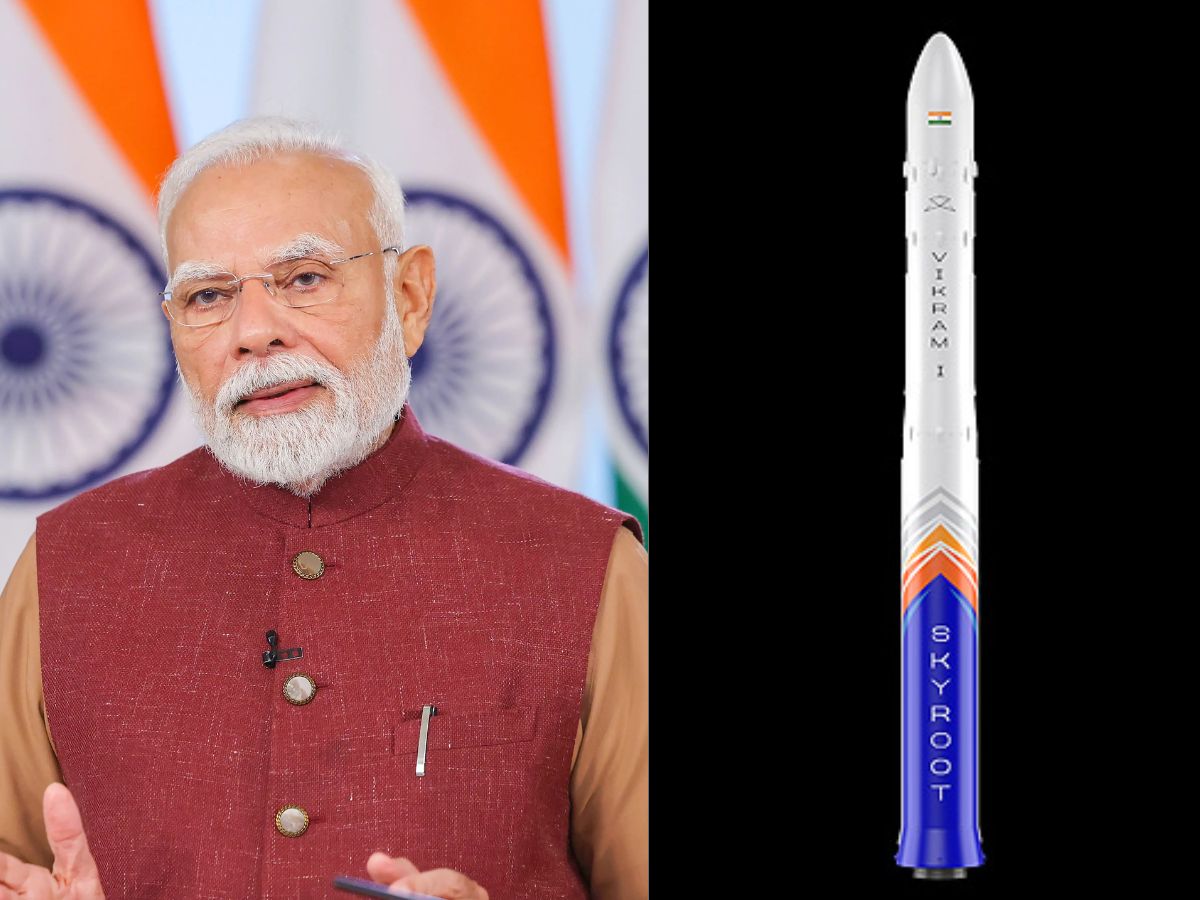
Prime Minister Narendra Modi inaugurated the Infinity Campus of Skyroot Aerospace in Hyderabad and unveiled Vikram-Ion Thursday, India’s first privately developed orbital launch vehicle. Vikram-I can launch several satellites in orbit on a single flight, which would mark a major step for India’s private space sector.
PM Modi said, “India has capabilities in the space sector which only a few countries in the world have. In the last six to seven years, India has converted its space sector into an open, collaborative and innovation-driven ecosystem.”
Speaking at the inauguration of Skyroot’s Infinity Campus. It is a significant leap forward for India’s space sector and its future. @SkyrootA https://t.co/EcLEWEcdIx
— Narendra Modi (@narendramodi) November 27, 2025
Skyroot tweeted on X thanking PM Modi who has inaugurated India’s largest private rocket factory and unveiled the nation’s first privately built commercial rocket.
A historic moment unfolds, the portal to Infinity is opening 🌌
We are honoured to have the Hon’ble Prime Minister @narendramodi inaugurate India’s Largest Private Rocket Factory and unveil India’s First Private Commercial Rocket 🚀 https://t.co/EJ1tyYqDYL
— Skyroot Aerospace (@SkyrootA) November 27, 2025
What Is Vikram-I?
Vikram-I is India’s first private orbital-class rocket, built by Hyderabad-based Skyroot Aerospace, and named in honour of the space pioneer Vikram Sarabhai. The four-stage vehicle is destined for the small satellite launch market, providing inexpensive launches with a very short turnaround time.
Standing 20 meters tall and 1.7 meters wide, Vikram-I is designed to generate 1,200 kN of thrust, while an all-carbon composite structure makes it lightweight, strong, and efficient. It has simplicity, reliability, and fast turnaround as its design cornerstones, facilitating the entire assembly and launch processes in under 24 hours from any site.
Key Features of Vikram-I Rocket Design
The Vikram-I, the first rocket in the series, features three solid-fueled stages, each with a burn duration of 80 to 100 seconds. Its final stage is powered by the Raman engine This stage consists of a cluster of four engines using MMH and NTO liquid fuels, generating 3.4 kN of thrust. The Raman engines handle precise orbital adjustments for the stage.
Vikram-I is capable of carrying 290 kg to a 500 km Sun-synchronous polar orbit (SSPO) and 480 kg to a 500 km low Earth orbit (LEO) at 45° inclination.
Skyroot Aerospace plans to conduct the rocket’s maiden flight by January 2026.
Key Innovations in Vikram-I
Vikram-I incorporates various advanced technologies:
- 3D-printed engines with 50% weight reduction and 80% less production time
- Ultra-low-shock pneumatic separation systems
- Advanced avionics for real-time guidance and control
These innovations contribute to better efficiency and reliability in private space missions.
Payload Capabilities in Vikram-I Rocket Design
Vikram-I can carry:
- Up to 350 kg to Low Earth Orbit (LEO)
- Up to 260 kg to Sun-Synchronous Orbit (SSO)
Vikram-I Rocket Stages
Vikram-I has a four-stage propulsion system, each individually optimized for different phases of flight:
Stage 1 – Kalam-1200
Solid rocket motor, 10 meters long, made of carbon fiber.
Produces 120 tons of thrust for 80–100 seconds
Filled 94% full with propellant, it uses a submerged nozzle for efficiency.
Stage 2 – Kalam-250
Solid-fueled motor for mid-ascent boost
Similar to the operation of Stage 1, it takes over after separating from the booster.
Stage 3 – Kalam-100
Delivers 100 kN thrust in vacuum for 108 seconds
Features a carbon ablative nozzle and EPDM thermal protection
Stage 4 – Raman Engine Cluster
Four hypergolic engines producing 3.4 kN each
Ignites instantaneously with MMH fuel and NTO oxidizer
Provides fine orbital adjustments and roll control
Key tests completed by Vikram-I
Skyroot Aerospace has successfully completed important tests for Vikram-I, including the Kalam-1200 pressure test and the payload fairing separation test. The company plans to launch the rocket for the first time in early 2026, aiming at the rapidly growing small-satellite market. India’s space industry is expected to reach $77 billion by 2030, and Vikram-I is likely to strengthen the country’s private space sector, helping it compete more effectively alongside ISRO on the global stage.
🚀 India’s first private orbital launch is closer than ever: Vikram-1’s first stage, Kalam-1200, has been fully validated, with 236 data channels confirming flawless performance.
💥 This powerhouse motor lifts the rocket from the launchpad to 50+ km altitude. Watch it roar for… pic.twitter.com/iJw9PLTw6E
— Skyroot Aerospace (@SkyrootA) August 10, 2025
Also Read: India’s First Private Orbital Rocket Launched: PM Modi Unveiled Vikram-I in Hyderabad