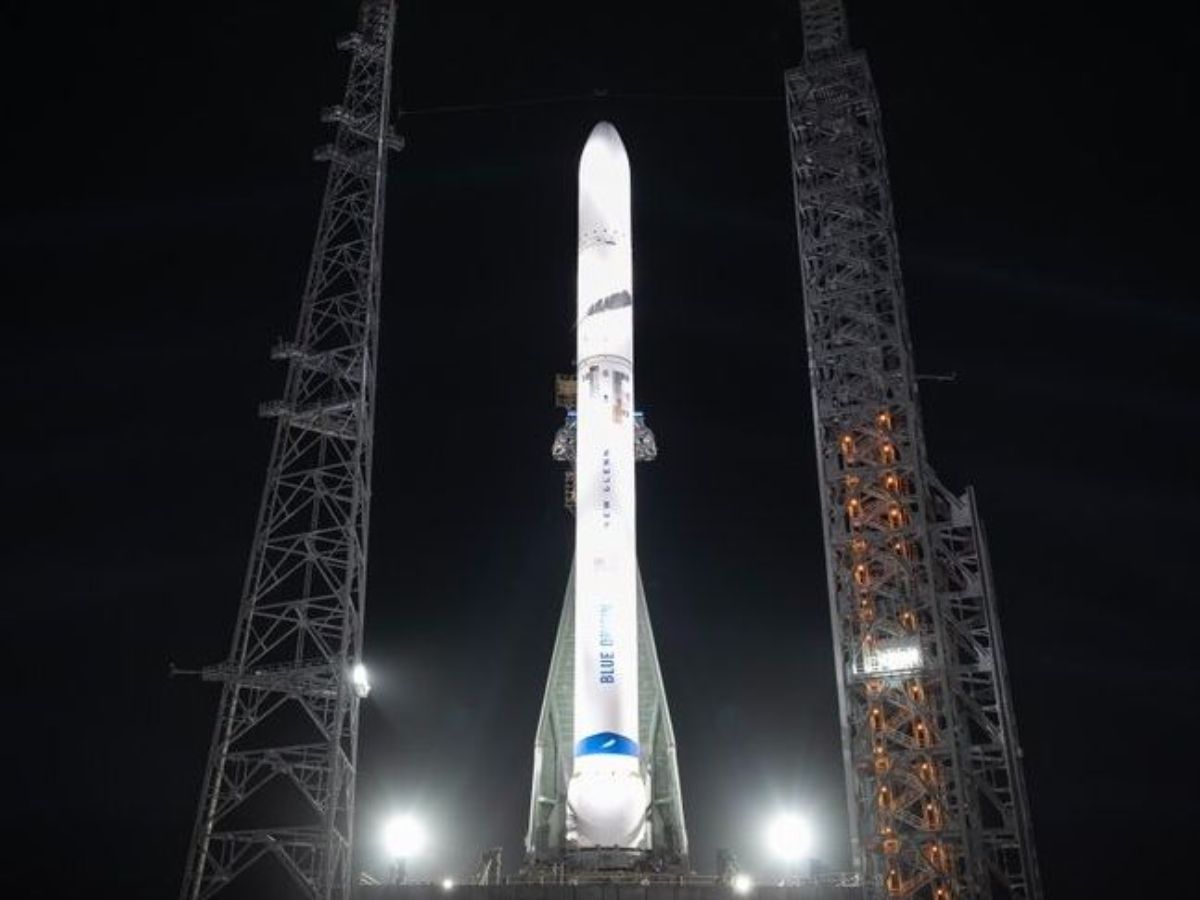
A combination of poor weather and a ground system problem caused the much-awaited launch of Blue Origin’s huge New Glenn rocket to be abruptly postponed on Sunday. The delay deals a significant blow to Jeff Bezos’s space company, which is now racing against a tightening launch schedule and intensified competition with Elon Musk’s SpaceX.
What Forced the Launch to be Scrapped?
Mission managers faced a cascade of problems at the Florida launch site. Initial delays were caused by rain and an unspecified ground system issue. As the team worked through these, the 88-minute launch window began to close. The “cumulus cloud rule,” a crucial safety guideline that forbids launches through specific types of clouds due to the risk of igniting lightning, was the last, decisive factor. With the skies not clearing in time, the only remaining option was to stand down completely. Blue Origin stated it is now “reviewing opportunities for our next launch attempt,” a process complicated by the uncertain Florida weather.
Also Read: Ecuador’s Prison Crisis Deepens: Four Inmates Killed in Gang-Related Violence
Why is This Second Mission So Critical for Blue Origin?
This mission is far more than a simple test flight. Standing 322 feet tall, Blue Origin’s New Glenn rocket is preparing to launch NASA’s ESCAPADE mission, which involves two probes to study Mars’ magnetic and atmospheric systems. A successful mission would not only advance planetary science but also enhance Blue Origin’s reputation in the heavy-lift launch sector. The firm is equally focused on achieving a smooth booster recovery—something it failed to do on its debut mission in January. Mastering this reusable landing technology is essential for reducing costs and competing effectively.
How Does the US Government Shutdown Create a New Hurdle?
The postponement introduces a major logistical complication: the ongoing US government shutdown. To manage airspace congestion with reduced staffing, the Federal Aviation Administration (FAA) is set to limit commercial rocket launches starting Monday. Blue Origin had already asked the FAA for an exemption to move forward, but the effort is now immediately within this restricted access period due to the launch delay. The business now has to compete for a small number of available launch slots, which might lead to a regulatory traffic congestion and significant delays for the Mars trip.
Also Read: BBC in Turmoil: Top Executives Quit Over Trump’s Speech Editing Panorama Controversy
What is the Bigger Picture in the Commercial Space Race?
This delay intensifies the high-stakes rivalry between the space companies of two billionaires, Jeff Bezos and Elon Musk. Only Musk’s SpaceX has proven time and time again that it can land and repurpose its rocket boosters. A successful rocket recovery by New Glenn would demonstrate that Blue Origin can match a critical component of SpaceX’s operational paradigm and constitute a significant technological advancement. The competition is intensifying, especially as NASA seeks bids for its upcoming Moon missions, a contract for which Blue Origin is eager to demonstrate that it is a dependable and cutting-edge competitor rather than a business that is “behind.”