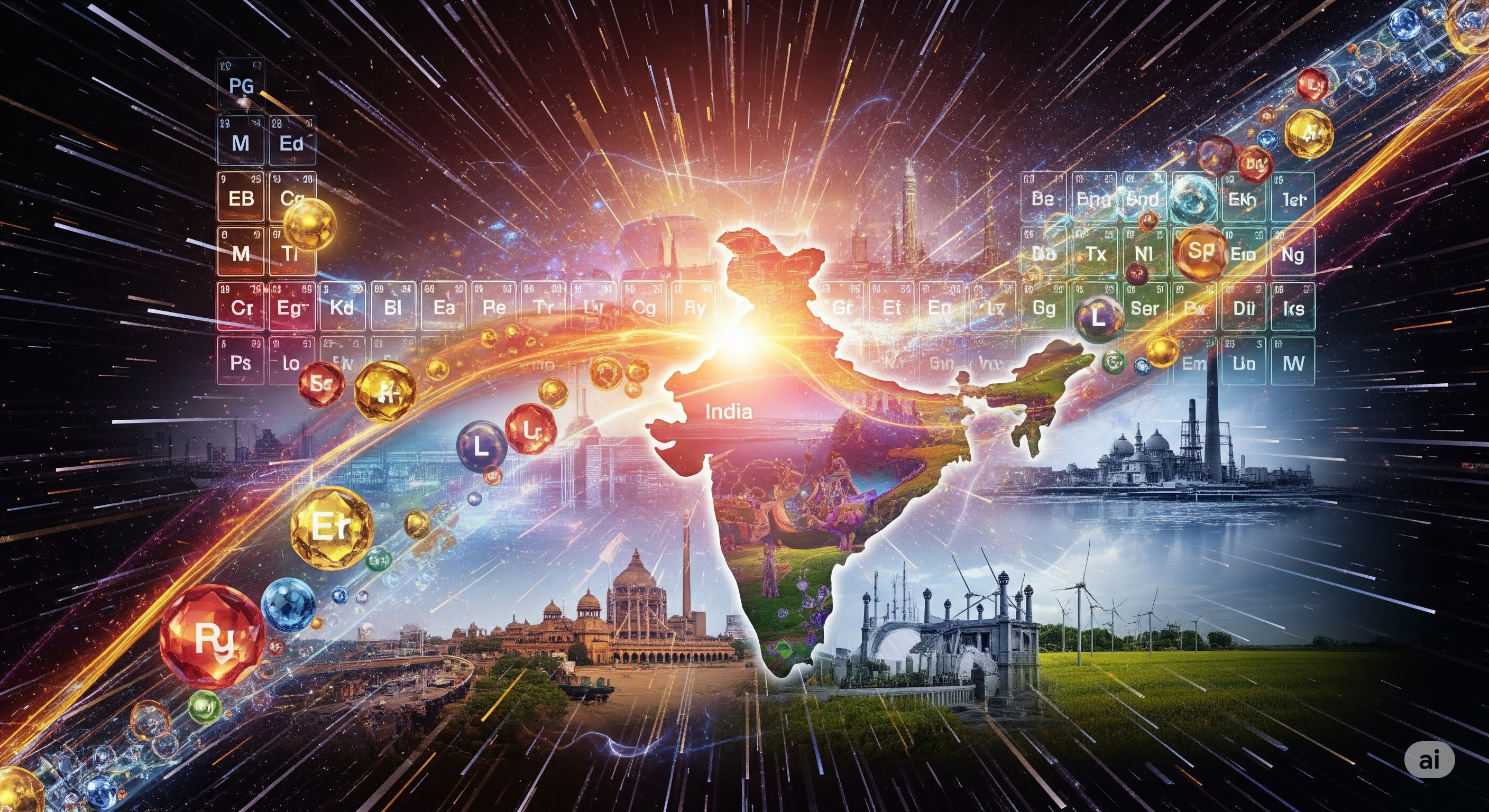
A recent major discovery that has the potential to alter India’s resource base is the discovery of a sizable rare earth element (REE) deposit in the Balotra district of Rajasthan. According to a Firstpost report, 17 critical minerals have been confirmed by the Geological Survey of India (GSI). Light rare earth elements (LREEs) such as lanthanum, cerium, neodymium, and praseodymium are among them. Electronics, defense systems, and renewable energy technologies all depend on these components.
These mineral blocks will be up for auction by the Rajasthani government for commercial mining and exploration. This is a significant step in lessening India’s dependency on China, which presently manages more than 90% of the world’s capacity for processing rare earth elements. In addition to expanding domestic resource availability, the Balotra discovery may push India’s aspirations to the independence in line with Atmanirbhar Bharat.
Recent Discoveries: New Hope
Simultaneously, ONGC’s recent success in offshore drilling near Mumbai High highlights India’s efforts to upthrust the energy self-reliance. The strategic implications are obvious. For decades now, China has held a commanding position in the rare earths industry, controlling over 85% of the world’s rare earths refining capacity. That means that India’s involvement in rare earths will threaten the monopoly, especially as western countries are trying to diversify sourcing after COVID-19, and during US-China tensions.
Nonetheless, there are challenges. The lack of refining capacity, limited processing technology, and well identified and potentially devastating ecological damage in critical mining areas, are legitimate issues to navigate. Furthermore, there are land acquisition issues and pushback for land-use in tribal or ecologically sensitive areas that could stymie the implementation of projects.
If we want to capture this opportunity, we must potentially rapid-fire policy support, and encourage private and foreign investments – while also building strategic processing alliances (specifically with Japan, Australia and the US – all of which are looking for alternatives for rare earths).
As the world moves towards a reliance on green energy and digital infrastructure to support that green energy, India’s potential resource wealth should lead to a historic opportunity. Will India be able to transform those discoveries into an enduring strategic benefit, or will they squander the opportunity, with indecision constrained by bureaucratic delays?