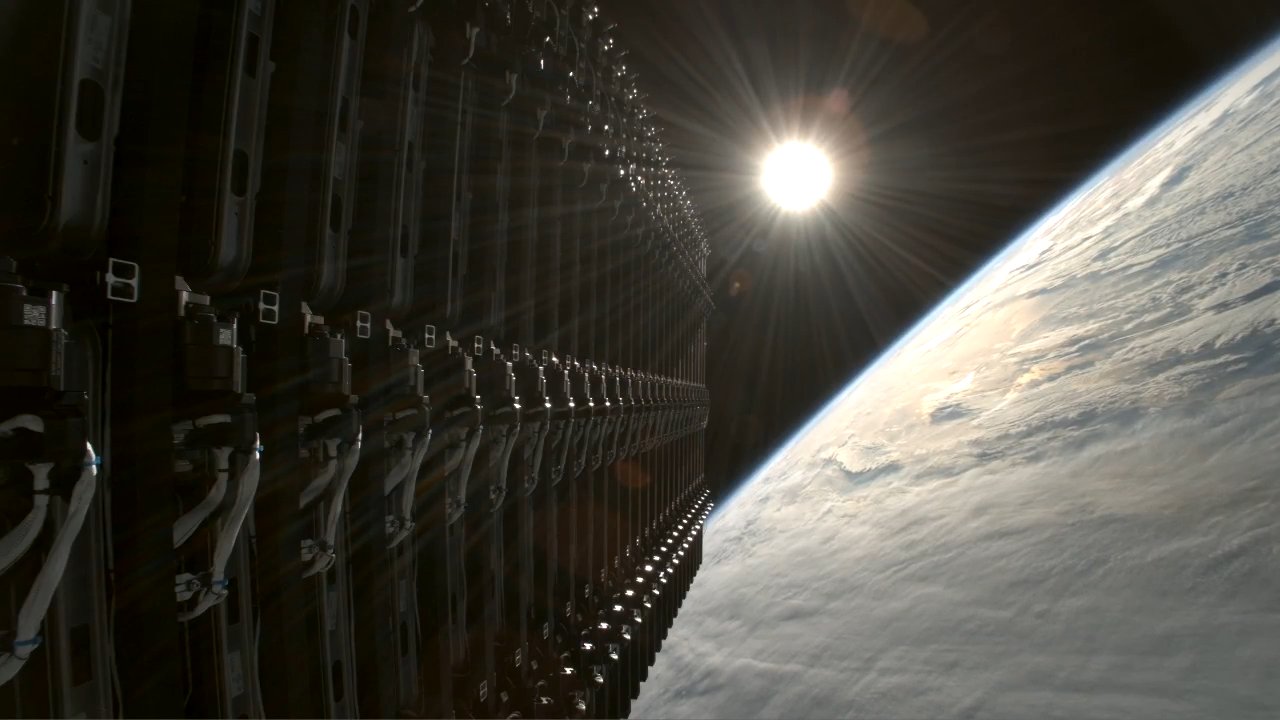
SpaceX continued its supremacy in commercial spaceflight with the successful launch of 28 Starlink satellites on the Falcon 9 rocket from Cape Canaveral Space Force Station, Florida, on July 26, 2025. The mission Starlink Group 10-26 was a great shot in the arm for the company’s grand global broadband expansion plan and is an important signal of SpaceX’s growing rapidly expanding constellation in low Earth orbit.
The Falcon 9 launched at 5:01 a.m. EDT (0901 UTC) from Space Launch Complex 40 with the latest group of Starlink V2 mini satellites. Nine minutes into the flight, the rocket’s upper stage achieved its initial orbit, and roughly an hour into launch, all 28 satellites were deployed successfully, as verified by SpaceX on social media. This single launch brought the total of operational Starlink satellites on orbit over the 8,000 threshold, with approval to operate up to 12,000 on hand and plans for expansion already underway.
Watch Falcon 9 launch 24 @Starlink satellites to orbit from California https://t.co/b3bNl8xW7g
— SpaceX (@SpaceX) July 27, 2025
Illustrating the company’s signature reusability, the first-stage booster (B1078), on its 22nd mission, made a perfect landing on the droneship “A Shortfall of Gravitas” in the Atlantic Ocean mere minutes after being jettisoned. This feat not only reflects SpaceX’s dependability but also the increasing efficiency and sustainability of satellite deployment missions.
These Starlink launches constitute part of Elon Musk’s ambition to blanket the world with high-speed internet, focusing on underserved and far-flung populations that fall short on good connectivity. Although the Starlink system suffered a significant, though transient, global outage earlier this week—due to an internal network failure—SpaceX moved aggressively to fix the situation and resume services, confirming the essential role of these frequent launches in upgrading and securing the network.
This newest launch is also the first of a double-mission weekend, with a subsequent Falcon 9 launch later from Vandenberg Space Force Base in California that will carry 24 more Starlink satellites. The high rate of launch underscores SpaceX’s operational efficiency and its capacity to quickly iterate and scale satellite infrastructure.
Witnesses and enthusiasts around Florida and the globe were treated to an early morning spectacle, with the Falcon 9 plume lighting up the early sky. With more than 90 launches in 2025 alone, SpaceX seems likely to break new records and solidify its place at the top of commercial space launch and satellite internet provisioning.
The Starlink expansion has far-reaching implications for global communications, closing digital divides and establishing new standards for reusable launch technology.