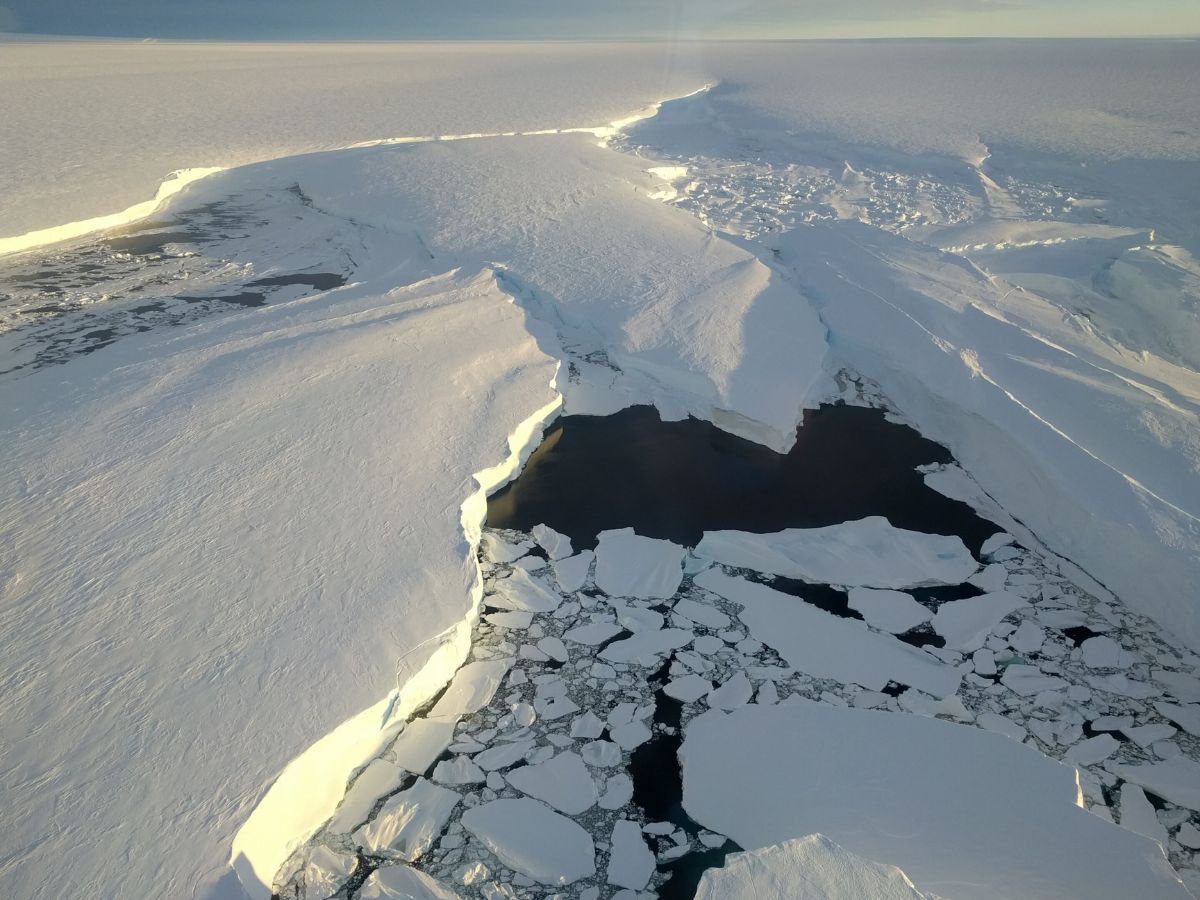
Far below Antarctica’s massive ice sheet lies a secret world of moving water, steering glacier flow and shaping sea levels worldwide. Scientists, using a decade of data from the European Space Agency’s CryoSat satellite, have now pulled back the curtain on this secret network, discovering 85 previously unknown active subglacial lakes and revealing a system far more dynamic than anyone imagined.
According to the study, which was published in Nature Communications, there are now 231 known active subglacial lakes, more than half of the original number. These findings are critical because the periodic filling and draining of these lakes lubricates the base of the ice, accelerating its journey into the ocean and directly contributing to sea level rise.
How Did a Satellite in Space Find Lakes Under Ice?
The discovery was made not by drilling through kilometers of ice, but by observing tiny changes in the ice sheet’s surface from space. With its advanced radar altimeter, ESA’s CryoSat satellite measures the ice’s height with remarkable accuracy.
As hidden lakes deep below fill with water, the ice surface above bulges upward. When they drain, the surface collapses. By analyzing a decade of these subtle height changes (from 2010 to 2020), researchers detected the tell-tale signs of 85 new lakes and monitored their activity.
Also Read: Baffling New Patterns on Saturn Defy Explanation, Hint at Deep Atmospheric Secrets?
Why is the Discovery of These Lakes So Important?
These lakes are not static pools; they are active components of a vast hydrological system. Lead author Sally Wilson, a doctoral researcher at the University of Leeds, emphasized the breakthrough: before this study, only 36 complete fill-drain cycles had ever been observed worldwide. “We observed 12 more complete fill-drain events, bringing the total to 48,” she stated.
This activity is a vital missing piece in climate models. “Subglacial hydrology is a missing piece in many ice sheet models,” said Wilson. “By mapping where and when these lakes are active, we can start to quantify their impact on ice dynamics and improve projections of future sea level rise.”
The study also identified five new systems of interconnected lakes, showing how water can travel vast distances under the ice, affecting stability across wide regions.
How Do These Hidden Lakes Affect Us?
The water beneath the ice reduces friction between the glacier and the bedrock. Think of it like hydroplaning—a layer of water allows the ice above to slide much more easily toward the ocean. When more ice enters the ocean, global sea levels rise.
Understanding this process is crucial for accurate predictions. As co-author Professor Anna Hogg noted, “This shows that Antarctic subglacial hydrology is much more dynamic than previously thought,” meaning current models may be underestimating the potential for rapid ice loss.
What is the Biggest Known Subglacial Lake?
The largest is Lake Vostok, located under 4 km of ice in East Antarctica. It holds an estimated volume of water large enough to fill the Grand Canyon and overflow it by at least 25%. Even though Vostok is thought stable, 85 new lakes reveal a shifting system. Their drainage would significantly disrupt sea levels, ocean circulation, and ice stability.