
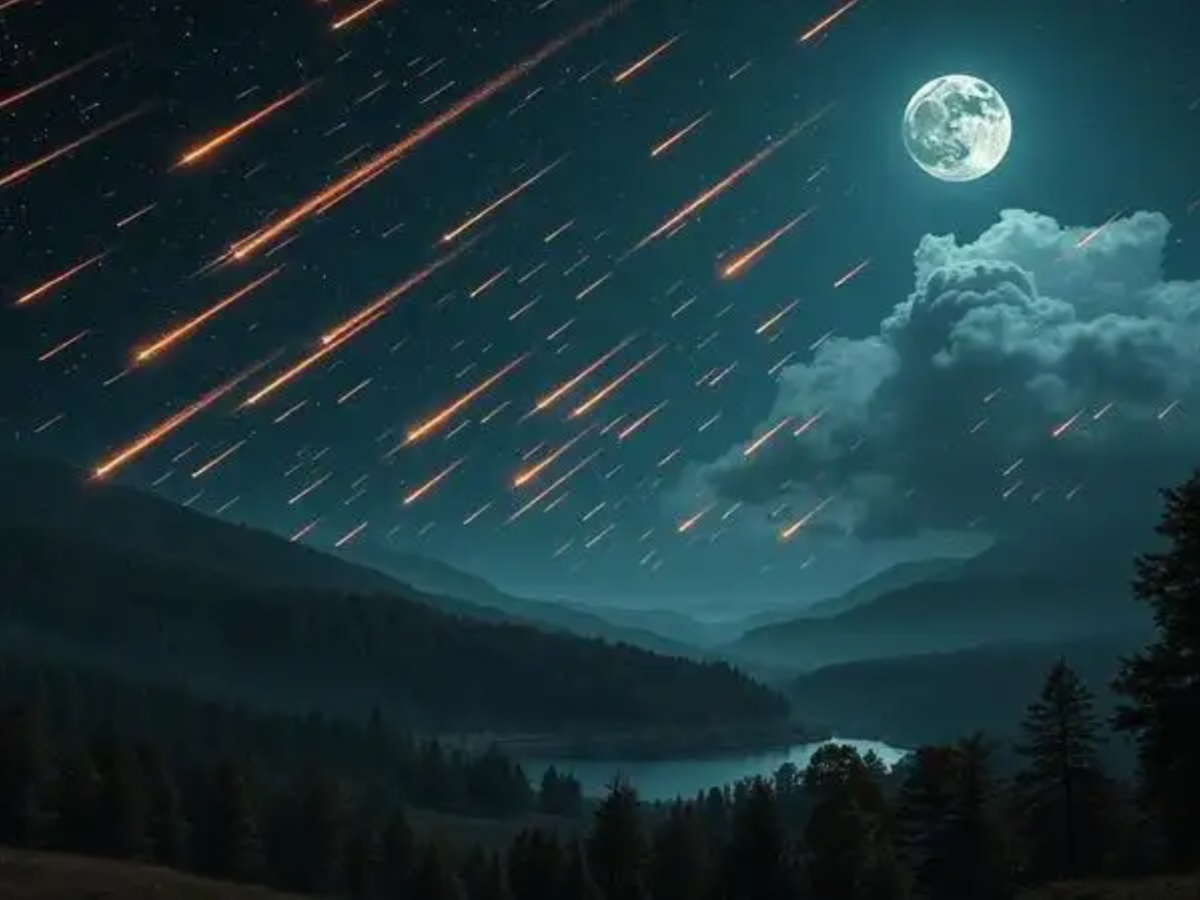
The annual Perseids meteor shower will peak next week, but skywatchers may face challenges this year. The 2025 Perseids promise fewer visible meteors because a bright moon will wash out many of the fainter streaks.
Despite this, the shower remains one of the best each year due to its bright fireballs and summer timing in the Northern Hemisphere. Here in this article, we will explain what to expect from the Perseids meteor shower 2025, why visibility will be limited, and how to get the best view.
The Perseids Peak and Moonlight Challenge
The Perseids will reach their maximum on the night of August 12 into August 13, 2025. Unfortunately, a waning gibbous Moon will light up the night sky. NASA warns this bright moonlight will reduce the number of visible meteors by more than half. Normally, people under dark skies could see 40 to 50 meteors per hour. This year, viewers might see only 10 to 20 meteors per hour or even fewer. The moonlight will drown out the fainter meteors, leaving mostly the brightest fireballs visible.
Read More: Space-Only ‘Super Alcohol’ Created on Earth for First Time
Best Times to Watch the Perseids
The Perseids meteor shower actually lasts from July 17 until August 23. During peak hours, one might expect around 25 meteors per hour on average. The best viewing window will be between midnight and dawn, especially from 2 to 3 a.m. local time. Meteors are rarely visible early in the evening, so it is best to avoid looking for them at suppertime. NASA recommends trying to catch the meteors just before dawn for the best chance of seeing some bright ones.
Tips for Optimal Viewing
To enjoy the Perseids, choose a safe and dark rural location with a clear, wide view of the sky. The more stars you can see, the better your chances to spot meteors. Experts advise skywatchers to avoid looking directly at the moon. Instead, look anywhere else in the sky. A comfortable lounge chair helps, as standing too long can get tiring and boring. Be patient — meteors often appear in bursts, sometimes with several showing up in just a minute after waiting quietly.
Read More: Volcano Erupts in Russia After 600 Years, Earthquake Likely Triggered It
Why Do We Have Perseids Every Year?
The Perseids meteor shower happens because Earth passes through a trail of space dust left behind by a comet called Swift-Tuttle. This comet last swung by our part of the solar system back in 1992 and takes about 130 years to orbit the Sun.
As our planet moves through the comet’s dusty trail, bits of debris hit the atmosphere and burn up, creating the bright streaks of light we call it meteors. They all seem to shoot out from the area of the sky near the Perseus constellation—that’s why we call them the Perseids.
The Perseids’ Unique Features
The Swift-Tuttle comet’s nucleus is about 16 miles wide and the meteor shower is famous for its bright fireballs and long “wakes” colorful trails that linger briefly in the sky after meteors pass. Despite the moonlight challenge this year, the Perseids remain a spectacular event for astronomy lovers and casual observers alike.