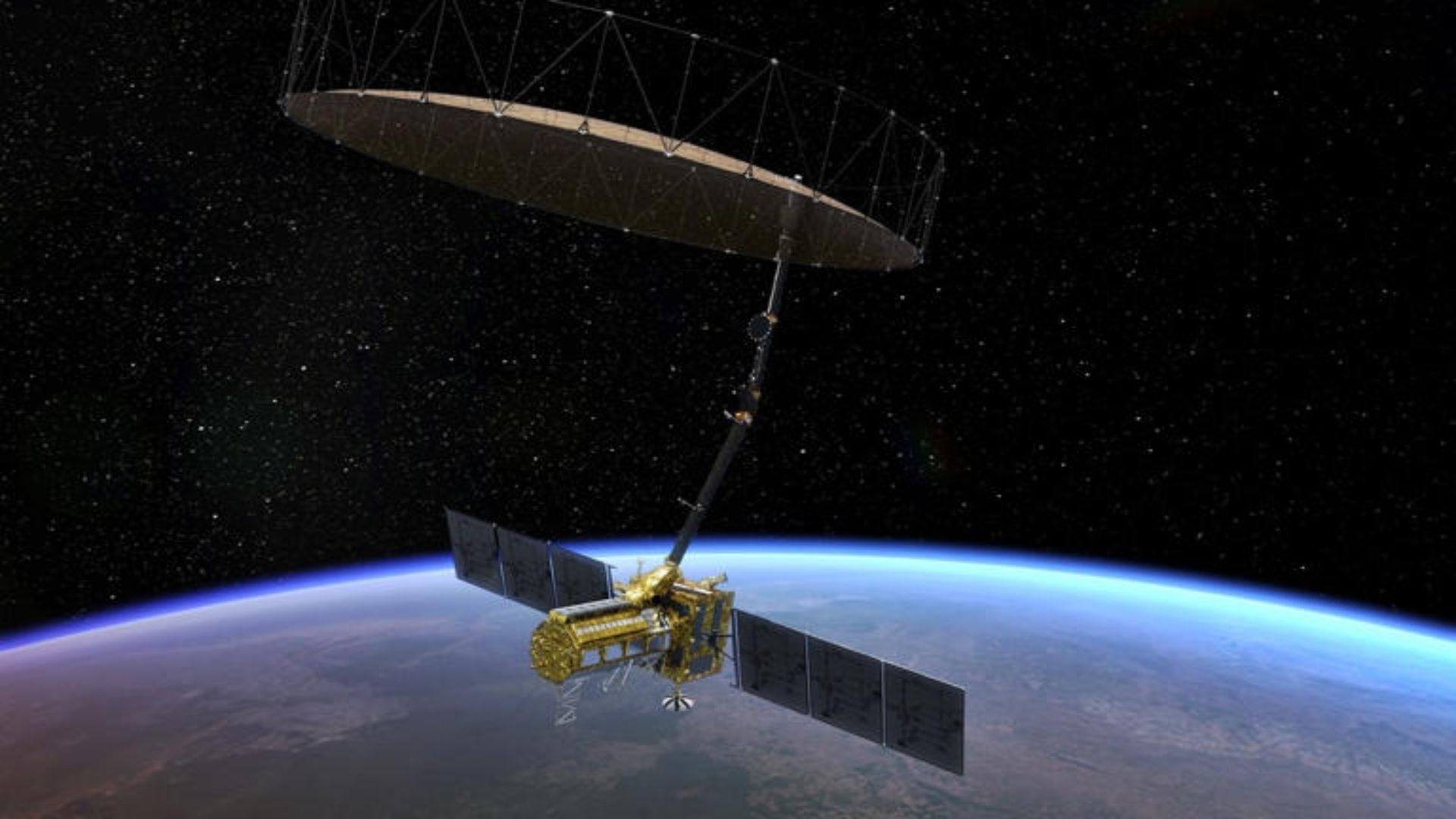
At the Indian spaceport in Sriharikota, Andhra Pradesh, on July 30, 2025, the world will see a landmark achievement in global cooperation in space exploration. India and the United States are going to launch NISAR, the NASA-ISRO Synthetic Aperture Radar satellite in what is being described as one of the most ambitious Earth observation missions yet.
Jointly developed by ISRO and NASA in an outlay of Rs. 13,000 crore (around $1.5 billion), NISAR is expected to provide the most precise and high-resolution imagery of the Earth’s surface ever captured.
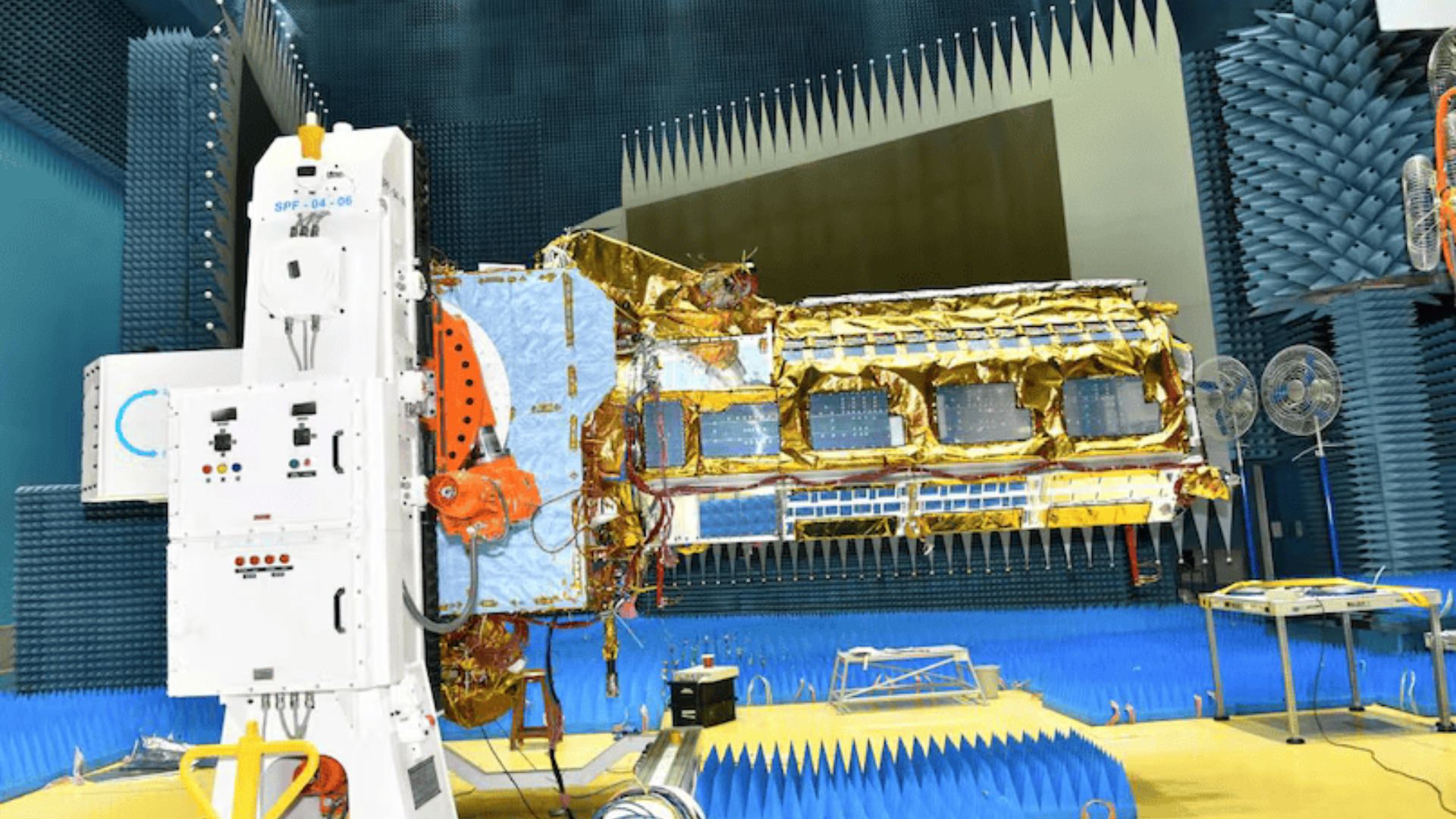
What Does NISAR Bring to the Table?
NISAR will be the world’s first satellite to employ dual-frequency radar technology, integrating NASA’s L-band and ISRO’s S-band radars. With this technology, it will be able to image Earth with unprecedented accuracy, picking up even centimetre-level changes.
Weighing 2,392 kg, NISAR will be launched into a 743 km sun-synchronous orbit on board ISRO’s GSLV-F16 rocket. Its orbit provides repeat imaging irrespective of time and weather, collecting high-resolution data every 12 days.
The Technology Behind the Mission
Perhaps the most impressive aspect of NISAR is its 12-metre-wide mesh antenna, one of the largest to be used. Along with its dual radar system, the satellite will be able to track large areas of land (242 km) with resolutions of 5 to 10 metres.
The L-band radar will be trained on deeper observations like forest biomass, snow cover, and soil depth. In contrast, the S-band radar will give closer attention to surface-level details like crop status and shallow soil variations.
What Will NISAR Track?
NISAR is designed to monitor changes on Earth’s surface in near real-time. It will be able to track:
- Earthquake faults and tectonic movements
- Landslides and volcanoes
- Glacial retreat and polar ice flow
- Forest cover, health of the vegetation, and patterns of the crops
- Soil humidity, water bodies, and health of the wetlands
- Effect of natural disasters such as floods, cyclones, and fires
This information will be vital in facilitating disaster preparedness and resource planning globally.
Role of India and Global Impacts
ISRO is providing about ₹788 crore towards the mission, a contribution that, apart from financial, also reflects technological leadership. The partnership makes India a key contributor to world climate and disaster research.
- NISAR will assist India in:
- Improving agricultural planning with soil and crop information
- Forecasting natural disasters such as floods and landslides
- Tracking deforestation and glacial melt
- Aiding climate and environment policy decisions
Notably, ‘All NISAR data will be freely available worldwide’, and thus it is going to be a globally valuable resource for both scientific and humanitarian pursuits.
A Mission Of Planetary Purpose
In addition to bilateral relations, NISAR is a mission of planetary intent. Ranging from urban planning to defence, and from food security to environmental protection, the satellite data will guide decisions of epoch significance.
Its importance is its ability to provide early warnings, enhance infrastructure planning, and promote sustainable development across the globe.
‘This is not just a symbol of India-US space cooperation; it is a mission for humanity’, encapsulates the full extent of the project.