
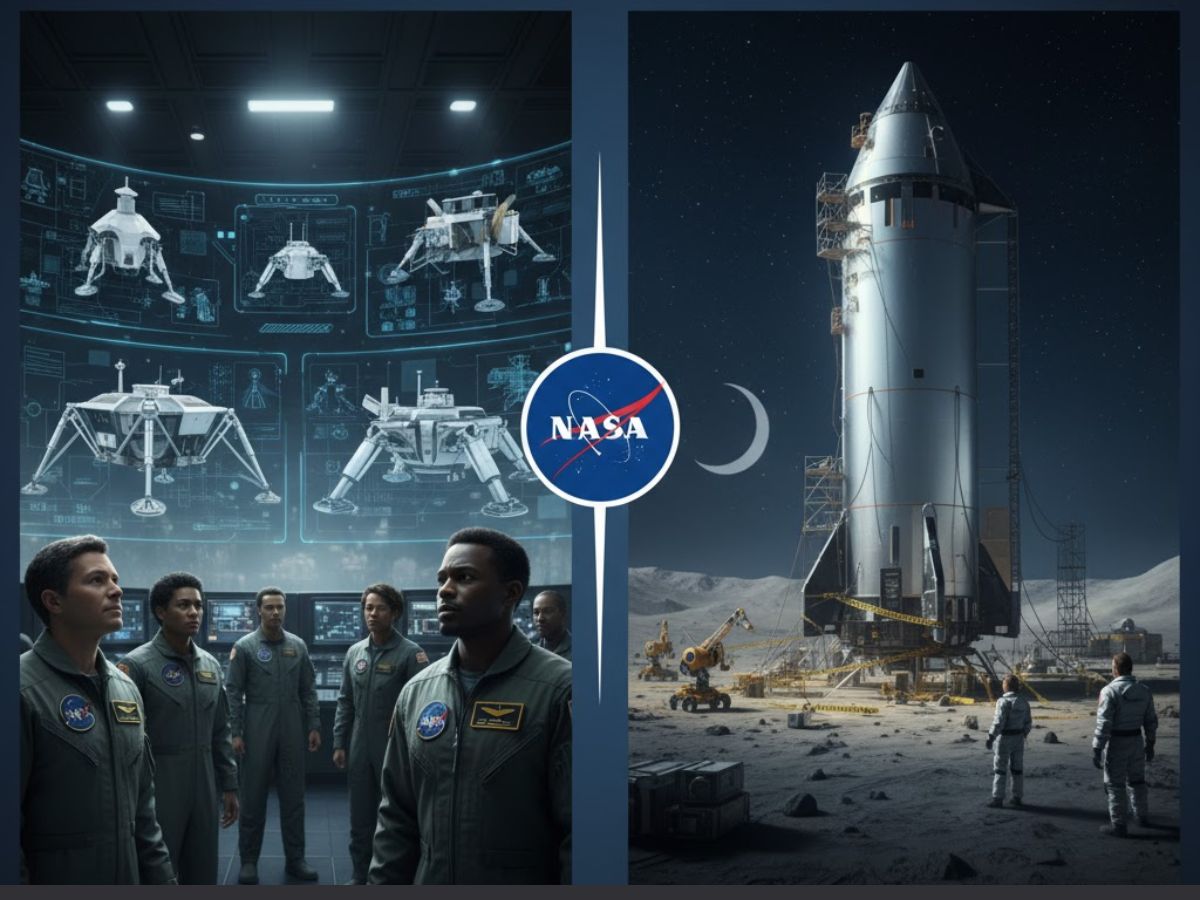
In a major shift for America’s moon program, NASA is opening its flagship moon landing contract to new bidders. By making this decision, authorities are challenging SpaceX, which has had delays with its lunar Starship. This gives competitors like Jeff Bezos’ Blue Origin an opportunity to try landing astronauts on the Moon first since 1972.
Why is NASA Making This Change Now?
The urgency comes from a tight timeline and worries about progress. NASA’s acting chief, Sean Duffy, said that SpaceX is “behind schedule” on its Artemis 3 work, planned for 2027. Advisors fear this deadline could slip by years. With China pursuing its own crewed moon landing by 2030, NASA is under pressure to accelerate its Artemis program. Duffy’s move to open the contract starts a new competitive phase just two years before the targeted landing, signaling a significant change in strategy.
Who Are the Potential New Competitors?
Jeff Bezos’ Blue Origin is the most anticipated new bidder. The company had previously protested NASA’s 2021 decision to award the contract solely to SpaceX. Blue Origin has been working on its Blue Moon lander under a separate contract for future missions. Other aerospace companies are expected to join the race. Lockheed Martin said it will form an industry team to respond to NASA, showing strong commercial interest in this historic mission.
How Has SpaceX Responded to the News?
Elon Musk dismissed the threat of increased competition. On his social media platform X, the SpaceX CEO asserted, “SpaceX is moving like lightning compared to the rest of the space industry.” He confidently predicted that “Starship will end up doing the whole Moon mission. Mark my words.” This sets the stage for a fierce competition between some of the world’s most powerful aerospace companies and billionaires.
Also Read: Your Next Spiritual Guide Might Be a Bot: Can AI Chatbots Truly Guide Our Spiritual Lives?
What Happens Next in the Moon Race?
NASA has taken concrete steps to formalize this new competition. The agency has directed both SpaceX and Blue Origin to present accelerated moon landing plans by October 29. Furthermore, NASA will request plans from the entire commercial space industry on how to increase the mission cadence to the moon. This suggests NASA is building a more robust and competitive framework for its lunar ambitions, ensuring it has backup options as it races against an international competitor and a demanding timeline.