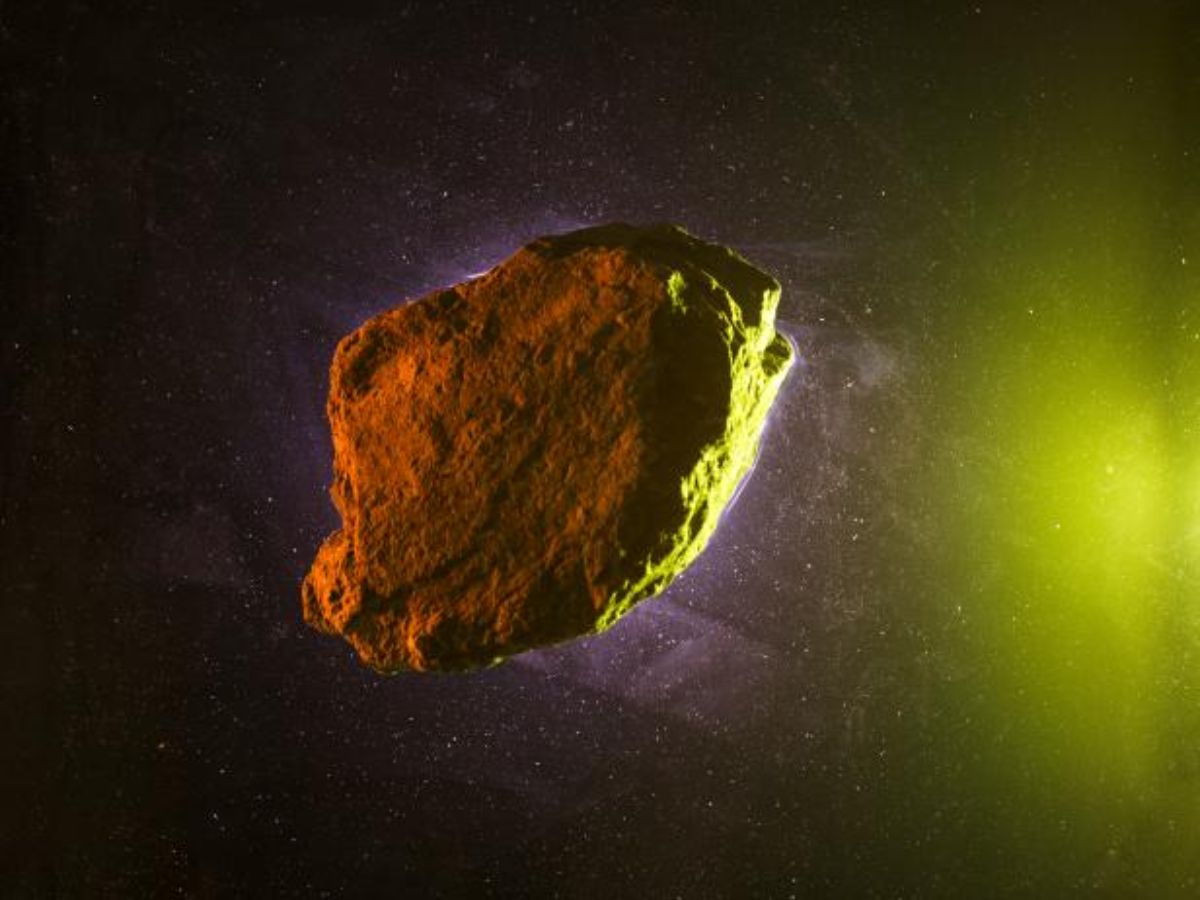
NASA has discovered a celestial material that is older than the Sun. The scientists collected samples of dust and rock from Asteroid Bennu, located about 322 million kilometres from Earth and analyzed them to find out that some particles outdate the Sun itself, opening a window to the early solar system and possibly the origins of life.
The study reveals that the pre-solar grains or the ‘stardust’ were formed years ago around dying stars. They have remained almost untouched forever.
ALSO READ: NASA Confirms Fastest Interstellar Object: Mysterious Comet Enters Solar System
The findings were confirmed by the international teams, including researchers from the University of Arizona and London’s Natural History Museum. Professor Sarah Russel stated, “We are seeing a unique glimpse of the outer solar system at the time of the Sun’s birth. Some particles have remained almost untouched for billions of years, revealing the environment in which the planets were formed.”
NASA’s OSIRIS-REx Mission
NASA’s OSIRIS-REx Mission launched in 2016, gathered around 120 grams of material from the asteroid in a matter of seconds through a robotic hand. The sample was safely returned to Earth after being collected for thorough analysis in 2023.
Scientists believe that the asteroid body was possibly formed beyond Saturn’s orbit, in the region with cold gas and dust. The sample contains a mix of matter ranging from high-temperature particles to interstellar dust, and gases from the far region.
ALSO READ: NASA Spots Giant Gas Planet Near Earth, Possible Life on Moons
Possibility of Life on Bennu
The tests conducted at the National History Museum reveal signs of water particles dating back to 4.5 billion years, when Earth was not completely formed. Earlier research also hints that Bennu may also contain essential ingredients for life, supporting the theory that life originated from space.
The discovery of this matter, which is older than the Sun, is a milestone in space exploration and science. The untouched particles remain as pure today as they were billions of years ago.