
Businessman and social worker Atirek Kumar is a member of the Janata Dal (United) party. He has been involved in Bihar politics, especially in the Darbhanga district’s Kusheshwar Asthan (SC) seat. He is still a well-known political personality in the area and ran for this seat in the 2021 by-election.
What Makes This Satellite Launch So Significant?
The CMS-03 satellite, weighing a massive 4,410 kilograms, is now the heaviest object India has ever launched from its own soil. This milestone is a major demonstration of the growing power and reliability of Indian launch vehicles.
The satellite lifted out from the Satish Dhawan Space Center in Sriharikota, Andhra Pradesh, and was carefully inserted into a Geosynchronous Transfer Orbit (GTO). ISRO Chairman S. Somanath acknowledged the achievement, emphasizing that it is “yet another great example of Atmanirbhar Bharat” (self-reliant India).
Also Read: Who is Atirek Kumar? Age, Net Worth, Party, Criminal Cases, Property, and More | Bihar Election 2025
What is the ‘Bahubali’ Rocket and Why is it Called That?
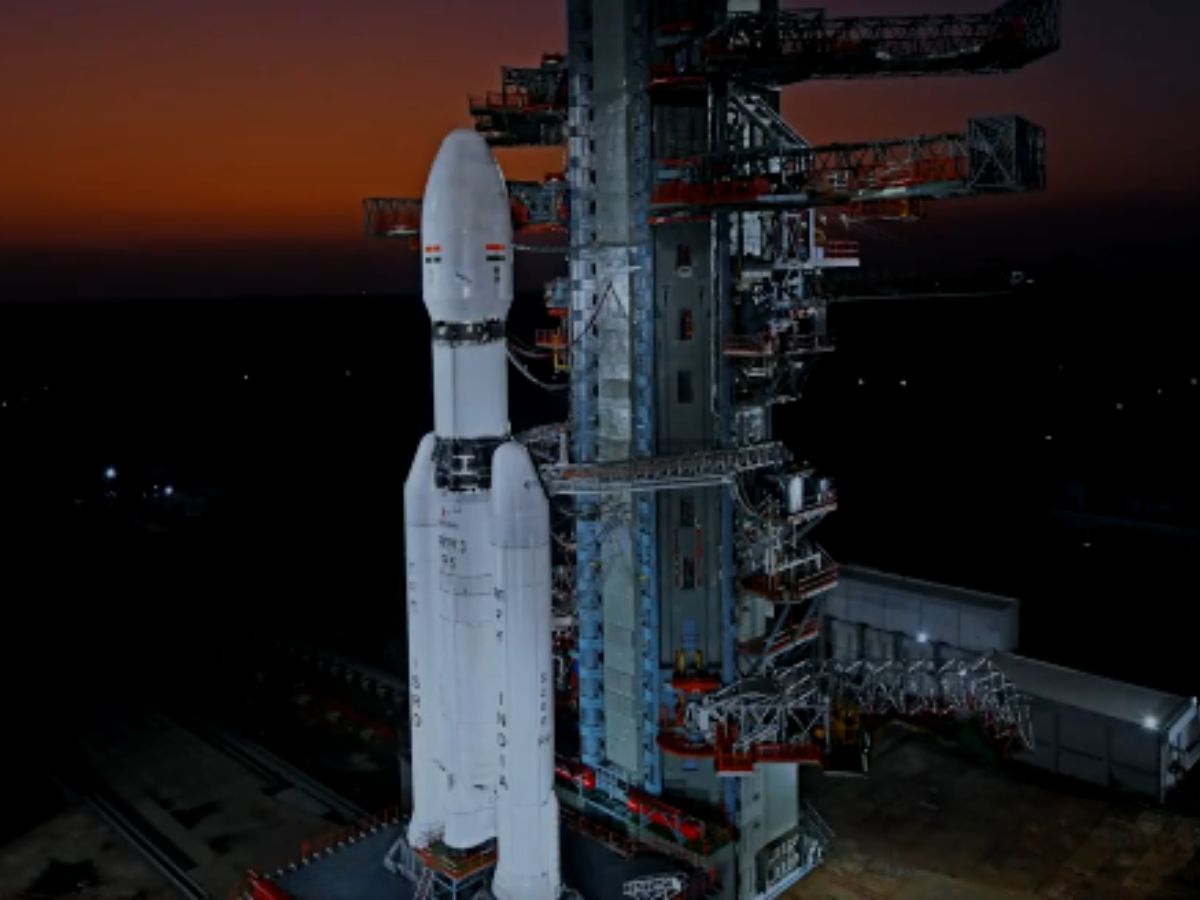
ISRO’s trusted LVM3-M5 rocket, nicknamed ‘Bahubali’ after the mighty film hero, was at the heart of this mission. The name reflects its strong lifting power. The same rocket launched Chandrayaan-3 in 2023. With two S200 solid boosters for initial thrust and an L110 liquid core stage with twin Vikas engines, the LVM3 has now completed eight successful missions in a row without failure.
What is the Purpose of the CMS-03 Satellite?
CMS-03 is a next-generation communication satellite designed for a key purpose — to expand India’s coverage area. According to ISRO, it will provide communication services throughout a large area, encompassing the Indian subcontinent and the nearby oceans. The satellite, which has a 15-year lifespan, will improve national infrastructure in areas like communication, data transport, and broadcasting.
Also Read: Congress Bets on Veteran Mohan Joshi to Revive Fortunes Ahead of Civic Elections
How Does This Launch Fit Into ISRO’s Track Record?
This mission continues ISRO’s record of reliable and affordable achievements in space exploration. The successful placement of a 4.4-tonne satellite proves India’s ability to launch large payloads without foreign help. With the LVM3 functioning flawlessly once more, ISRO has shown that its flagship rocket is now ready for innovative projects like interplanetary exploration and human space flights.