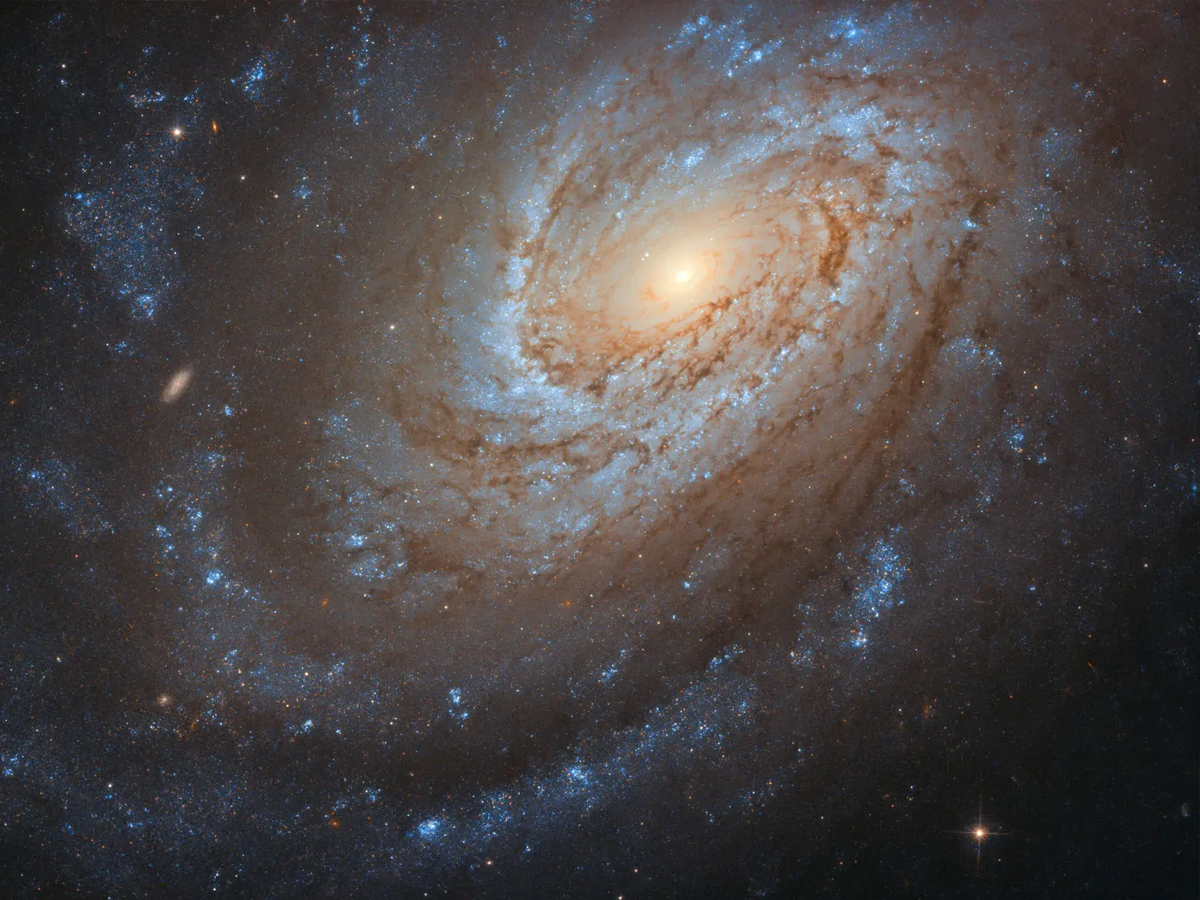
October 2025 is a dream month for skywatchers and stargazing lovers. The night sky will light up with rare celestial events, from a glowing Super Harvest Moon to meteor showers and planetary meetings. Several galaxies will also be visible, making this month one of the most exciting times for astronomy enthusiasts.
Andromeda Galaxy and Ceres in the Night Sky
On October 2, the Andromeda Galaxy (M31), our closest neighboring galaxy, will be visible under dark skies. You may spot it with the naked eye, but a telescope will give a clearer view. Around the same time, the dwarf planet Ceres, the largest object in the Asteroid Belt, will shine brightly in the constellation Cetus.
Moon Meets Saturn and Neptune
October is a great month to track Saturn’s movements across the night sky. On October 5-6, the nearly full moon will come close to Saturn, just 3.33 degrees apart. Neptune will also be near the moon during this time. While Saturn can be spotted easily, binoculars or a telescope will be needed to view Neptune.
The Super Harvest Moon
One of the highlights of the month is the Super Harvest Moon. This year’s full moon will appear bigger and brighter because it coincides with the moon’s closest point to Earth, called perigee. The full moon rises on October 6 and will reach its full phase at 03:48 GMT on October 7. On this night, the moon will glow warmly just after sunset, lighting up the sky in golden shades.
Draconid Meteor Shower
The Draconid meteor shower will peak on October 8. It occurs when Earth passes through the debris trail of Comet 21P/Giacobini-Zinner. The shower will be active between October 6 and 10. While the bright moonlight may affect visibility, keen observers may still catch glimpses of meteors streaking across the sky.
Moon and the Pleiades Star Cluster
On October 10, the moon will align closely with the Pleiades star cluster, also known as the Seven Sisters or Messier 45. The cluster is in the constellation Taurus, about 444 light-years from Earth. Although six stars are usually visible to the naked eye, the group contains over 1,000 stars. This pairing will be less than one degree apart, making it a spectacular sight.
Triangulum Galaxy (M33)
On October 15, the Triangulum Galaxy will be visible. While it may be seen without aid under very dark skies, a telescope or binoculars will best reveal its spiral shape.
Moon with Venus; Mercury with Mars
On October 19, skywatchers will witness the moon appearing close to Venus in the pre-dawn sky. They will be less than four degrees apart. On the same day, Mercury will be visible near Mars, adding more beauty to the morning view.
Orionid Meteor Shower
The Orionid meteor shower peaks on October 20-21. With the New Moon providing dark skies, expect 15 to 20 meteors per hour. This shower is famous for its fast-moving meteors, which leave bright trails behind.