
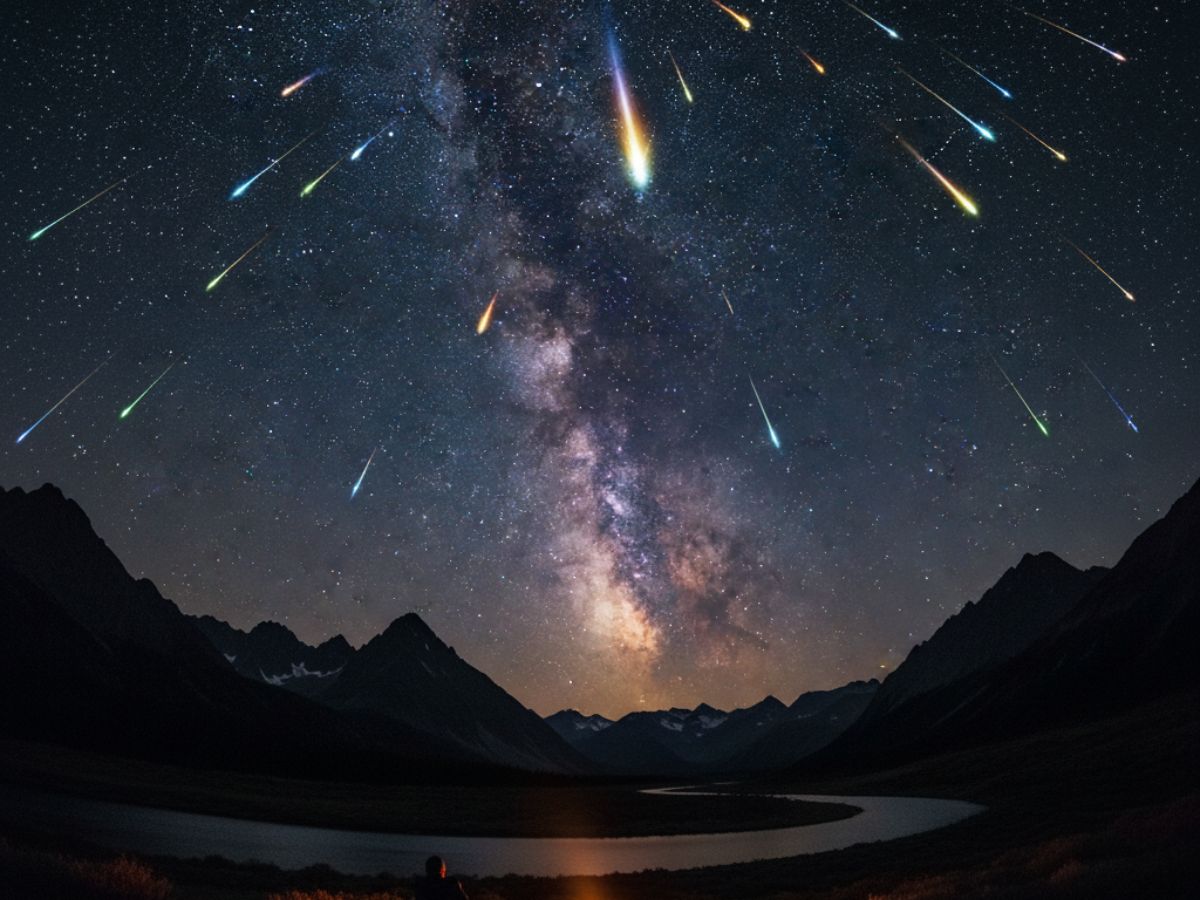
The annual Draconid meteor shower will light up the night sky from October 6 to 10, 2025, treating viewers to a show of “shooting stars.” This shower is renowned for its bright, slow-moving meteors, but there is a big obstacle to seeing this year. The fainter traces of light will be threatened by a bright supermoon that will share the sky.
What Causes the Draconid Meteor Shower?
The comet 21P Giacobini-Zinner is responsible for the Draconids‘ formation.As it orbits the sun, this comet leaves a trail of dusty debris in its wake. Every year in early October, Earth passes straight through this cloud of comet particles as it circles the sun. These tiny particles—no bigger than a grain of sand—burn when they crash into our atmosphere, creating the brief, glowing streaks known as meteors or shooting stars.
How Will the Supermoon Affect Visibility?
This year, the peak of the Draconid shower on October 8 faces a major obstacle: a supermoon. On this night, the moon will be 96% illuminated, appearing larger and up to 30% brighter than a typical full moon. The faintest meteors will be obscured and rendered invisible by the bright moonlight, which will behave as a natural light pollution. However, the brighter Draconid meteors should still be seen, especially from locations with very dark skies far from town and city lights.
Where and How Can I Get the Best View?
Unlike most meteor showers, which are best observed after midnight, the Draconids are best seen in the evening, just after sunset. In the northern sky, the meteors will seem to be emanating from the Draco constellation. For the best experience, you should find a wide-open area far from city lights. No special equipment is needed; your eyes are the perfect tool. NASA advises giving your eyes 20–30 minutes to get used to the dark. Avoid phones or white-light flashlights so your night vision isn’t affected. Bring a blanket or reclining chair and wear warm clothes for the cool autumn weather.
Also Read: Scientist Claims US Hid Evidence of Ancient City on the Moon, Says India and China Will Reveal It
What If I Miss the Draconids This Year?
If the weather is poor or the supermoon proves too bright, there is no need to worry. The night sky has more celestial shows in store for the remainder of 2025. The Orionid meteor shower in late October, followed by the Leonids in November and the Ursids in December, will all occur when the moon is dimmer. These showers will offer better opportunities to see fainter meteors under darker conditions.
Disclaimer: This report is based on information from official statements and international news agency reports.