
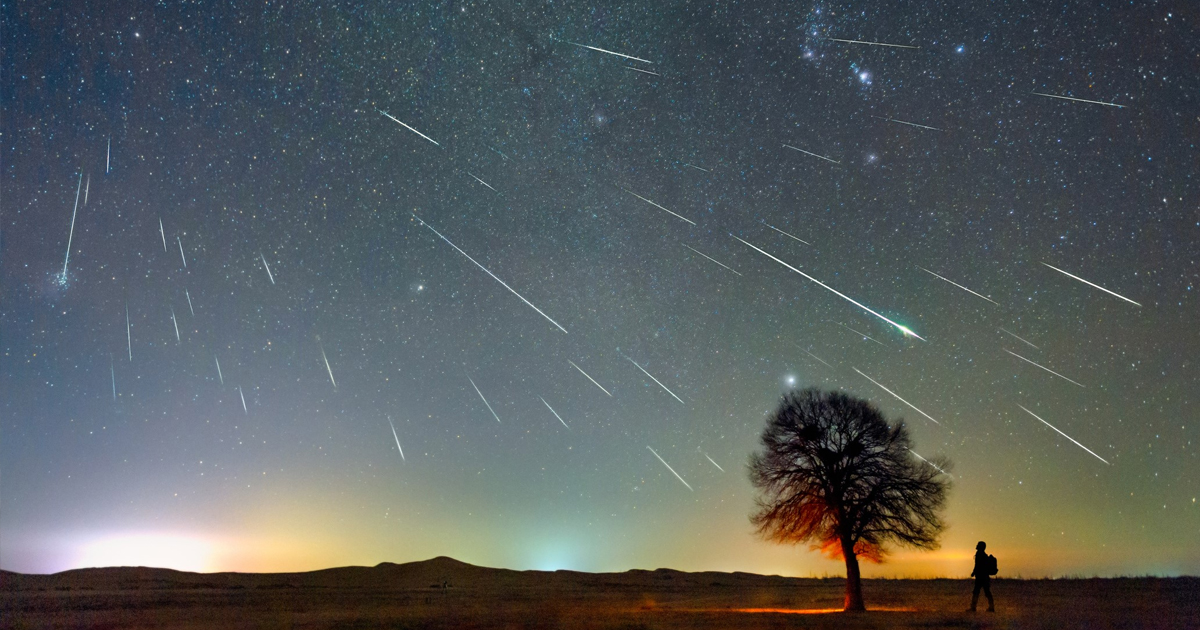
This one’s a double bonanza for the stargazers! You don’t need a Coldplay concert to see a “sky full of stars”—tonight, the cosmos is delivering a rare double meteor shower, lighting up the sky with the Southern Delta Aquariids and Alpha Capricornids peaking together.
This cosmic double-feature promises up to 25 meteors per hour, with occasional bright fireballs streaking across the sky. Best of all, no telescope is needed to witness this spectacle.
Why This Meteor Shower Pair Is So Unique
During the night of July 29–30, Earth crosses the debris streams of two separate comets at the same time. The Southern Delta Aquariids, created by Comet 96P/Machholz, will provide pale but consistent meteors, mostly seen from the Southern Hemisphere.
The Alpha Capricornids, which hail from Comet 169P/NEAT, are characterized by their infrequent but powerful fireballs. The less numerous meteors of this shower are a sight to behold because of their bright glow.
As per the American Meteor Society (AMS), Aquariids cross the sky at 25 miles per second and are most visible in southern latitudes. The Alpha Capricornids, however, which were first sighted by Hungarian astronomer Miklos von Konkoly-Thege in 1871, provide more intense and slower fireballs that appear anywhere in the sky.
When and Where to Observe the Meteor Showers
Time:
The optimum viewing times are between midnight and before dawn. The Alpha Capricornids are more intense near midnight, while the Southern Delta Aquariids will be brighter around 2–3 a.m. local time. The waxing crescent moon with just 23–27% of its illuminated surface will set early, providing perfect dark-sky viewing.
Look Direction:
Direct your eyes towards the south sky. Although showers both have their radiant locations in south constellations, Capricornus in the case of Alpha Capricornids and Aquarius in the case of Delta Aquariids, the showers flash anywhere in the sky.
Location Tips:
Select a location distant from town lights, for example, rural areas, hilltops, or Dark Sky Parks. Let your eyes take 20–30 minutes to get used to the dark, and do not watch bright lights or screens in the meantime.
No Equipment Required—Simply Patience and a Clear Sky
“A telescope or binoculars are not needed to observe the meteors; your eyes will do,” say astronomers. The Alpha Capricornids will be less plentiful but are characterized by their stunning fireballs, whereas the Delta Aquariids take some more time and effort to spot.
If you miss this celestial light display, don’t panic—the iconic Perseid meteor shower is coming up, peaking on August 12–13. Although a bright full moon will likely impact viewability this year, you may still see some early Perseid or Eta Aquariid meteors tonight, particularly from northern latitudes.