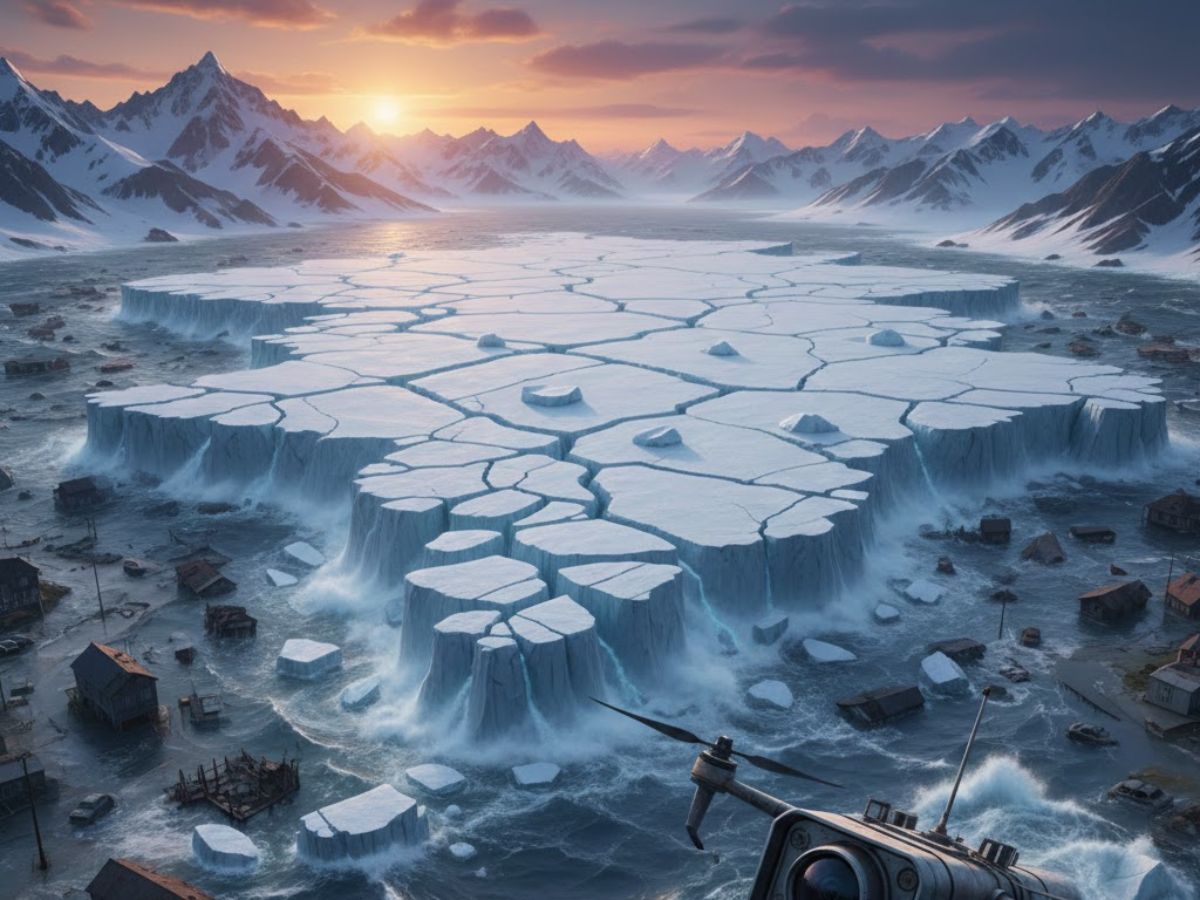
WASHINGTON D.C., December 30 — New satellite analysis reveals fractures on Antarctica’s Thwaites Glacier have dramatically expanded over two decades, critically weakening its structure and accelerating concerns over its potential collapse. The so-called “Doomsday Glacier” is a key focus of scientists due to its capacity to trigger significant global sea-level rise.
What did the new satellite research find?
A University of Manitoba research team, analyzing satellite imagery from 2002 to 2022, documented a severe deterioration in the Thwaites Ice Shelf. Their paper states progressive fracturing around a critical shear zone has “gradually compromis[ed] its structural integrity.” The total length of fractures grew from approximately 100 miles to over 200 miles in those two decades. A separate study by the International Thwaites Glacier Collaboration confirmed these large cracks are actively weakening the shelf.
Why is Thwaites called the ‘Doomsday Glacier’?
Thwaites Glacier earns its alarming nickname due to its pivotal and unstable role in the West Antarctic Ice Sheet, which scientists describe as its “weak underbelly.” Its potential collapse is considered a point of no return; the damage is irreversible and could occur even under relatively little stress. If the glacier fully destabilizes, it could ultimately contribute up to 11 feet (about 3.4 meters) of global sea-level rise.
When could a key part of the glacier collapse?
Researchers highlight the Thwaites Ice Shelf, which braces the eastern portion of the glacier, is expected to collapse by 2032. This shelfserves as an essential stopper; if it were to fail, the outflow of inland ice into the ocean would be significantly accelerated, causing the glacier system to break down more quickly and completely.
Also Read: Joke’s on the Bullies: Tara Sutaria, Veer Pahariya React to Viral AP Dhillon Concert Video | Watch
How are warming oceans contributing to the melt?
The threat extends beyond Thwaites. Warming ocean waters are undercutting Antarctic ice shelves through a potent feedback loop. Studies show warm, salty currents are flowing hundreds of feet deep, moving upward onto the continental shelf. There, they mix with cold meltwater, creating turbulent conditions that melt ice even faster. Notably, circular currents nearly 10 kilometers wide are carving cavities underneath glaciers, with observable melting occurring over just hours and days.
FAQs:
Q: How much have the fractures grown?
A: The total area length of fractures on the Thwaites Ice Shelf doubled from about 100 miles to over 200 miles between 2002 and 2022.
Q: What is the worst-case sea-level rise from Thwaites?
A: Global sea levels may increase by roughly 11 feet (3.4 meters) if the Thwaites Glacier were to completely collapse, although this would take time.
Q: What is the significance of the 2032 timeline?
A: Around 2032, scientists predict that the Thwaites Ice Shelf, which supports it, may collapse. This would greatly accelerate the glacier’s movement into the sea by removing a substantial obstacle.
Q: Is the damage reversible?
A: No. Researchers state the processes damaging Thwaites Glacier are irreversible, and its collapse would continue even if further warming were halted.