
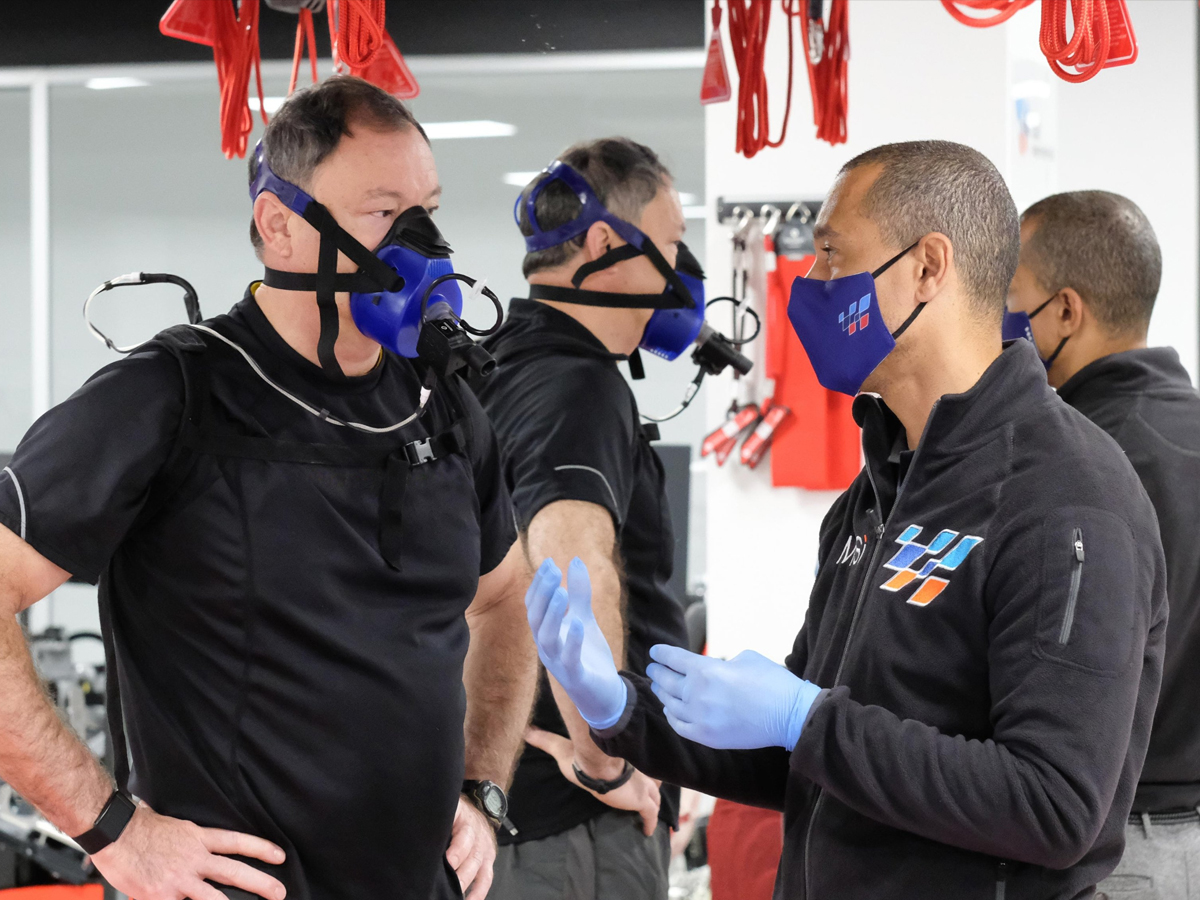
Axiom Space, the company that launched Indian astronaut Group Captain Shubhanshu Shukla to the International Space Station, has announced a new program called Project Astronaut. The initiative was introduced at the 2025 International Astronautical Congress (IAC) in Sydney. It aims to combine astronaut training with human performance science.
Portuguese physiologist Emiliano Ventura has been chosen as the first participant in this pilot program.
What Is Project Astronaut?
Project Astronaut is a six-month training program that goes beyond traditional astronaut preparation. Instead of focusing only on mission-specific skills, the program also looks at how to optimize human performance in space.
The training includes:
- Reduced gravity flights
- Centrifuge runs
- Altitude chamber tests
- Outdoor leadership and expedition exercises
- High-performance jet flights
- Underwater escape drills
- Payload operations and spacesuit handling
- Biomedical and physiological testing
The goal is to understand how the human body adapts to microgravity and to improve astronaut readiness for both professional and commercial space missions.
Emiliano Ventura’s Journey
Emiliano Ventura has spent two decades studying human performance in extreme environments. He has worked with astronauts before and after their space missions, helping them recover and adapt physically. He also has experience training elite athletes.
Now, Ventura will bring this knowledge into astronautics. He aims to make long-duration space missions more sustainable for the human body.
“I am honoured to participate in Axiom’s first Project Astronaut initiative,” Ventura said. “This program not only advances scientific research but also inspires the people of Portugal and the global community to engage with the future of space exploration.”
A New Chapter in Space Training
Axiom Space says the project marks its commitment to advancing astronaut training methods. Chief Astronaut Michael Lopez-Alegria explained that Project Astronaut represents a new step in blending research with operational training.
Ventura will train alongside veteran astronauts Peggy Whitson, Koichi Wakata, and Lopez-Alegria himself. Their combined experience ensures a mix of traditional space knowledge and new scientific approaches.
Why Project Astronaut Matters
Project Astronaut highlights a major shift in how space agencies and companies approach astronaut training. It is not only about preparing astronauts for missions but also about studying how humans can thrive in space.
By merging science and training, Axiom Space hopes to:
- Improve astronaut health and recovery
- Prepare for longer missions to the Moon and Mars
- Make commercial space travel safer and more effective
This initiative shows how commercial spaceflight can drive innovation once limited to government programs. Project Astronaut may set the foundation for future training systems worldwide.