
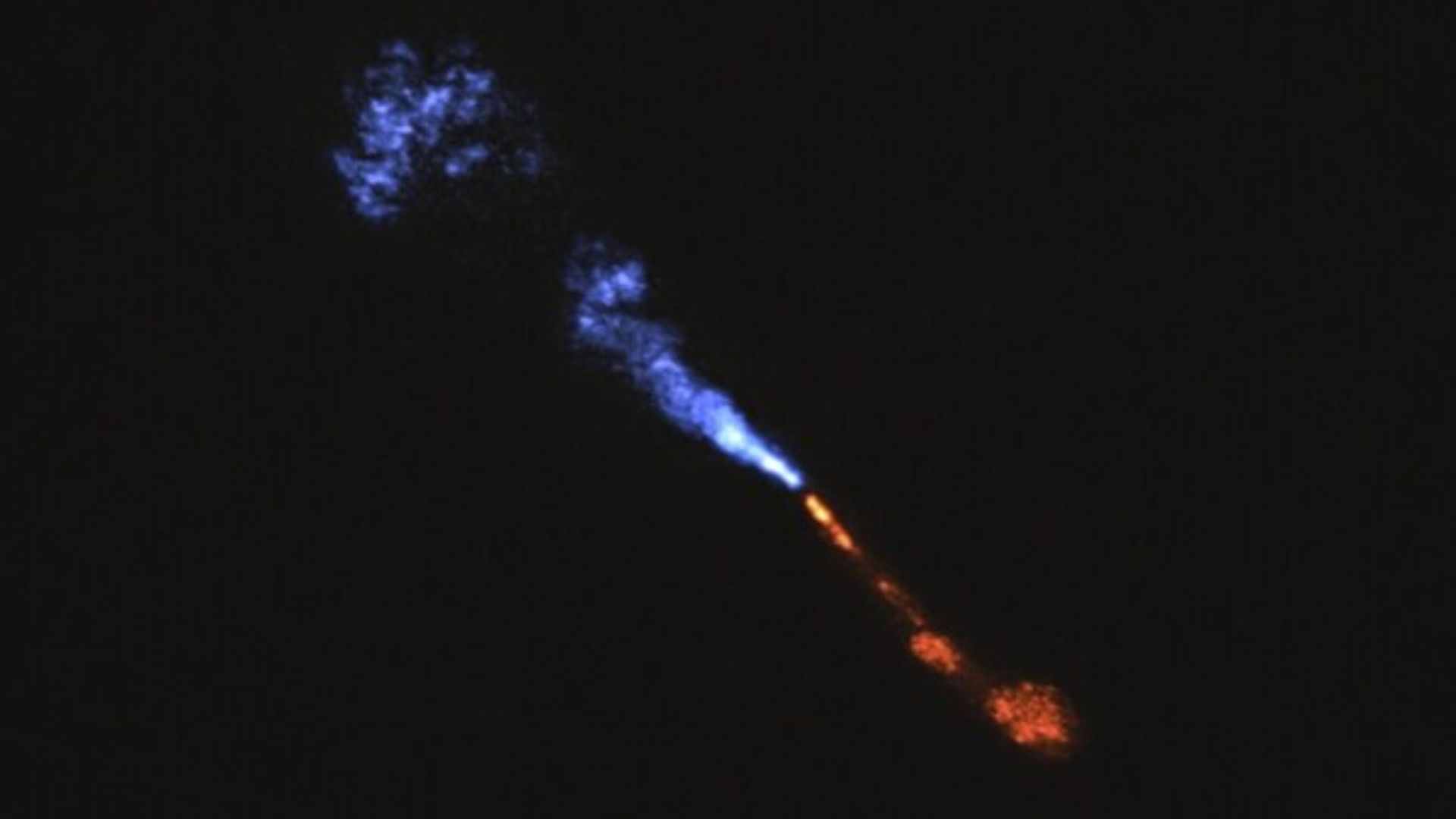
In a historic milestone for space travel, astronomers have, for the first time, imaged the early stages of planet development around a star that is similar to the Sun. This achievement was made possible with data from the James Webb Space Telescope (JWST) and the Atacama Large Millimeter/submillimeter Array (ALMA).
The star in question, designated as HOPS-315, is located around 1,300 light-years away from Earth. It is already at the protostar stage, the first stage of star evolution. A disc of dust and gas, or a protoplanetary disc, orbits it, where planets are thought to form.
‘Childhood Photo’ of Our Solar System
What is so impressive about this discovery, however, is the presence of hot mineral molecules within the disc, earliest indications that planets are in the process of formation. The minerals are cooling and solidifying slowly and creating planetesimals, the foundation stones of planets.
“This is the first time we’ve observed when and how planet formation begins. It offers a crucial insight into the origins of our own solar system,” said Melissa McClure of Leiden University, who led the study.
Calling it ‘a childhood photo of our solar system’, Merel van ‘t Hoff from Purdue University emphasized the discovery’s deep significance in understanding our cosmic past.
Clues From Familiar Minerals
One of the most important observations was the detection of silicon monoxide (SiO), a mineral present in the oldest rocks of Earth and other planets. Furthermore, this signal was detected from the same region in HOPS-315’s disc that maps to the asteroid belt in our solar system.
“We’re finding the same minerals in the same place as we find them in our solar system. It’s a great parallel,” said Logan Francis from Leiden University.
Glimpse Into Planetary Origins
As the European Southern Observatory’s Elizabeth Humphreys explains, “HOPS-315 gives us the chance to examine the cosmic past of our own solar system.” The disc of the star is essentially a natural laboratory that aids scientists in searching for the way planetary systems such as our own exist.
This finding doesn’t only open a new book in astronomy—it allows humankind a firsthand glimpse of how planetary life might start in the universe.